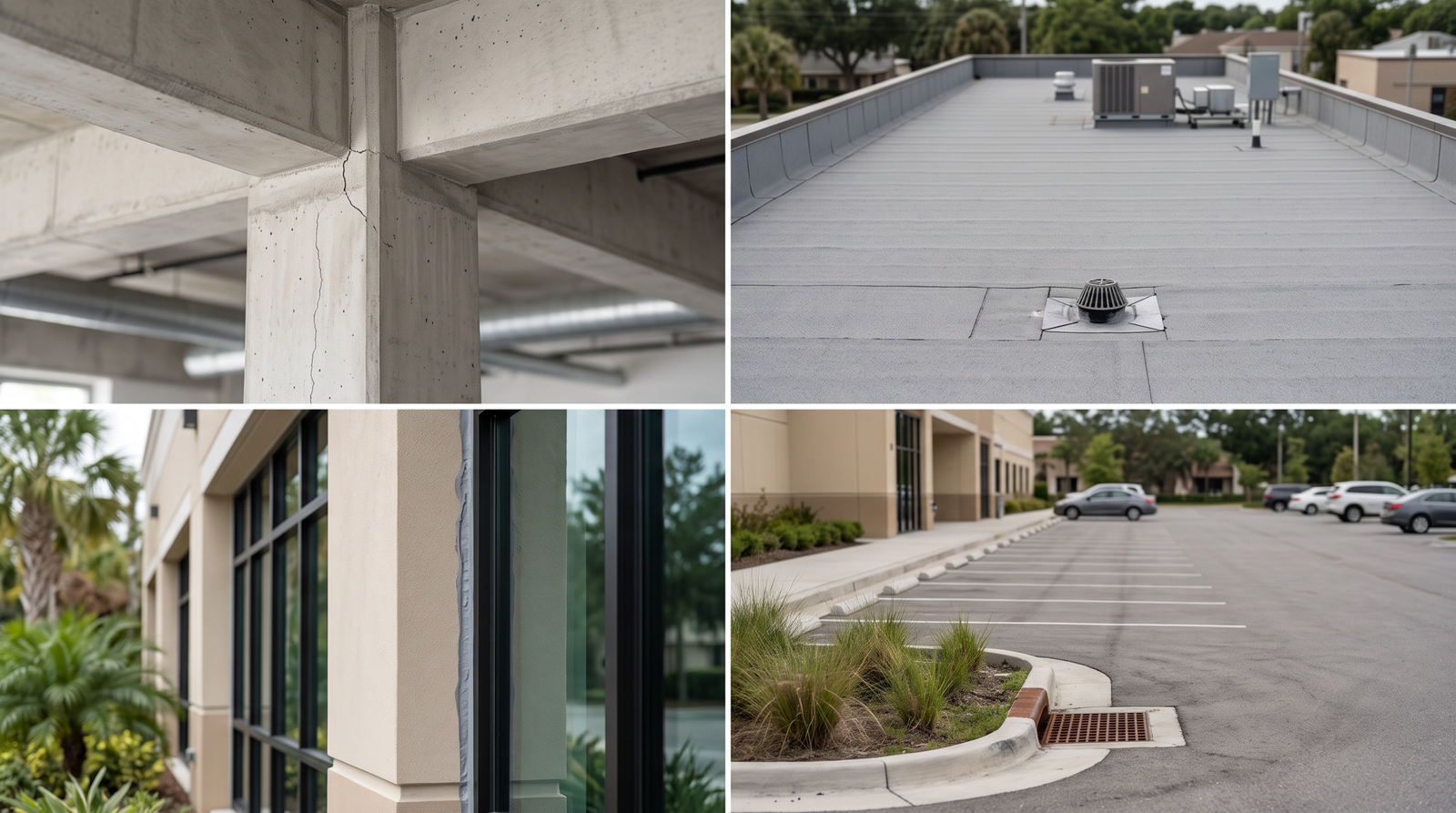
Forensic engineers and technical specialists investigate suspected construction defects in commercial property claims. The appropriate professional depends on the affected building system, the questions requiring resolution, and the expertise needed to evaluate the evidence.
A claim involving roof leakage may require different expertise from one involving foundation movement or equipment-related water damage. Some assignments can be addressed by one qualified investigator; others require several disciplines.
For claims professionals asking who investigates construction defects, the starting point is a clear technical question. Reported damage does not automatically establish a defect. The investigation evaluates physical conditions, supported causes, and documented extent within the assigned scope.
How Forensic Engineering Relates to Technical Disciplines
Forensic engineering describes the investigative application of engineering expertise. A structural, mechanical, or other engineer may perform forensic work within their area of competence.
The title “forensic engineer” does not, by itself, establish expertise in every building system. Selecting an investigator requires consideration of relevant experience, qualifications, and the work needed to answer the assignment questions.
Commercial buildings contain interconnected systems. Investigators must also recognize when a question extends beyond their expertise and additional input is appropriate.
Which Professionals May Be Needed?
Structural Engineers
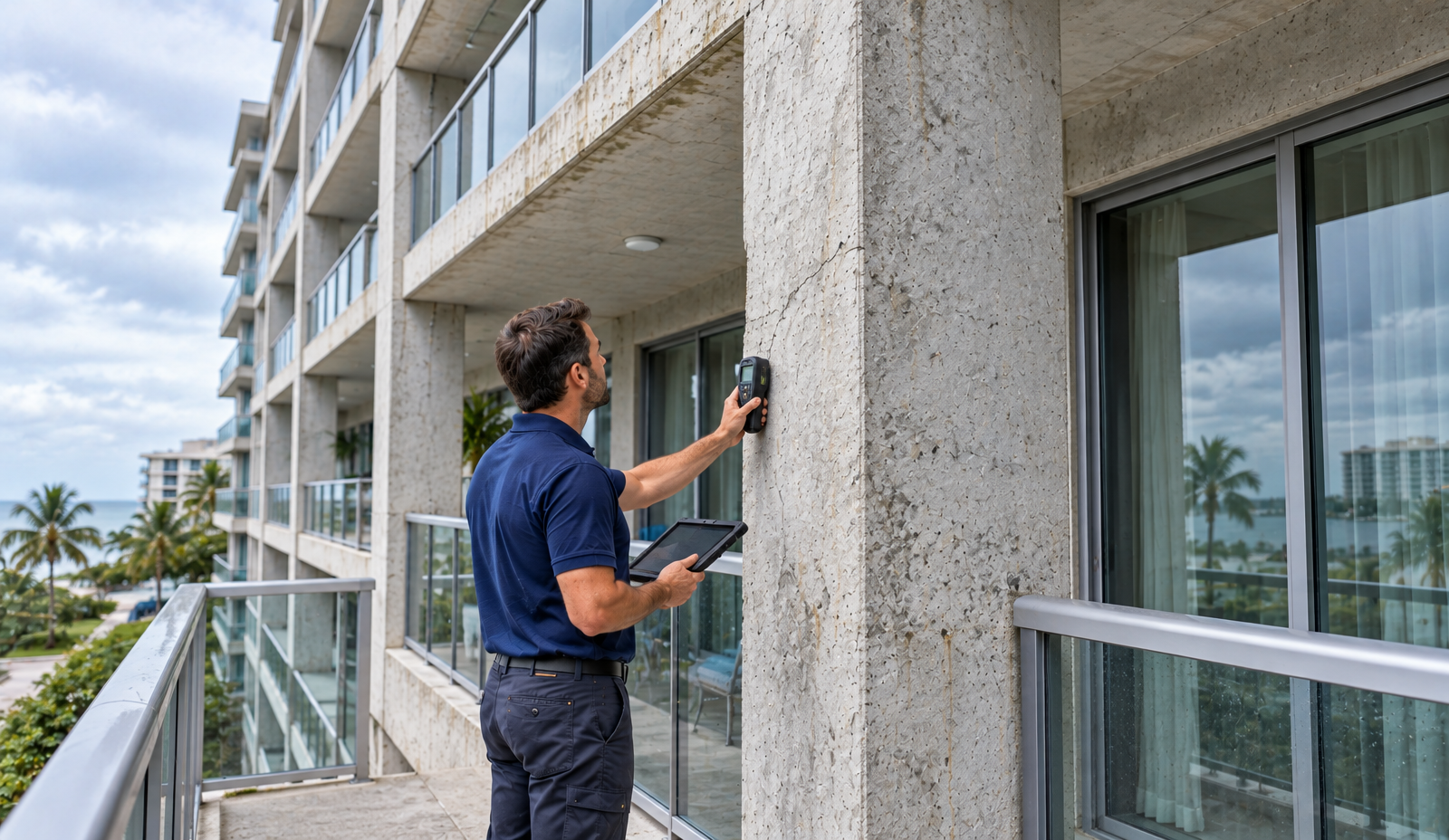
Structural engineers evaluate framing, concrete, steel, connections, foundations, and load paths.
Assignments may involve:
- Cracking, deformation, or building movement
- Deteriorated structural members or connections
- Removed or modified framing
- Added equipment or changes in loading
The evaluation addresses how the building is performing and whether observed conditions affect serviceability, strength, or stability. Subsurface questions may require geotechnical coordination.
Building Envelope Specialists
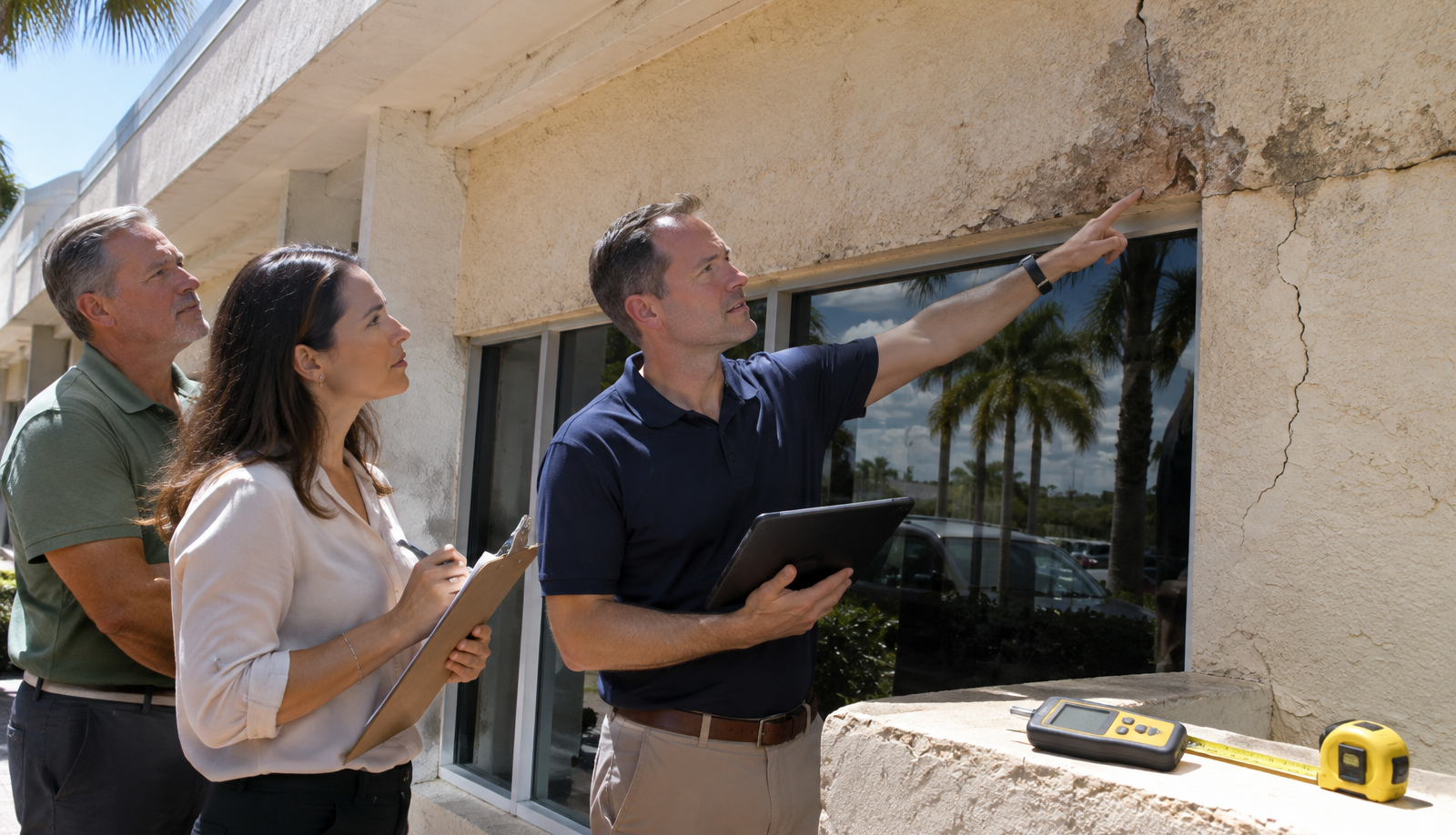
Building envelope specialists investigate exterior assemblies and the interfaces that manage environmental exposure.
Relevant areas may include:
- Exterior walls and window interfaces
- Flashing, sealants, and transitions
- Waterproofing and drainage within assemblies
- Potential water entry pathways
Envelope expertise helps evaluate how components work together. A stain location alone does not establish the source of leakage or a construction deficiency.
Roofing Specialists
Roofing investigations may address coverings, seams, flashing, penetrations, edge details, drainage, and installation conditions.
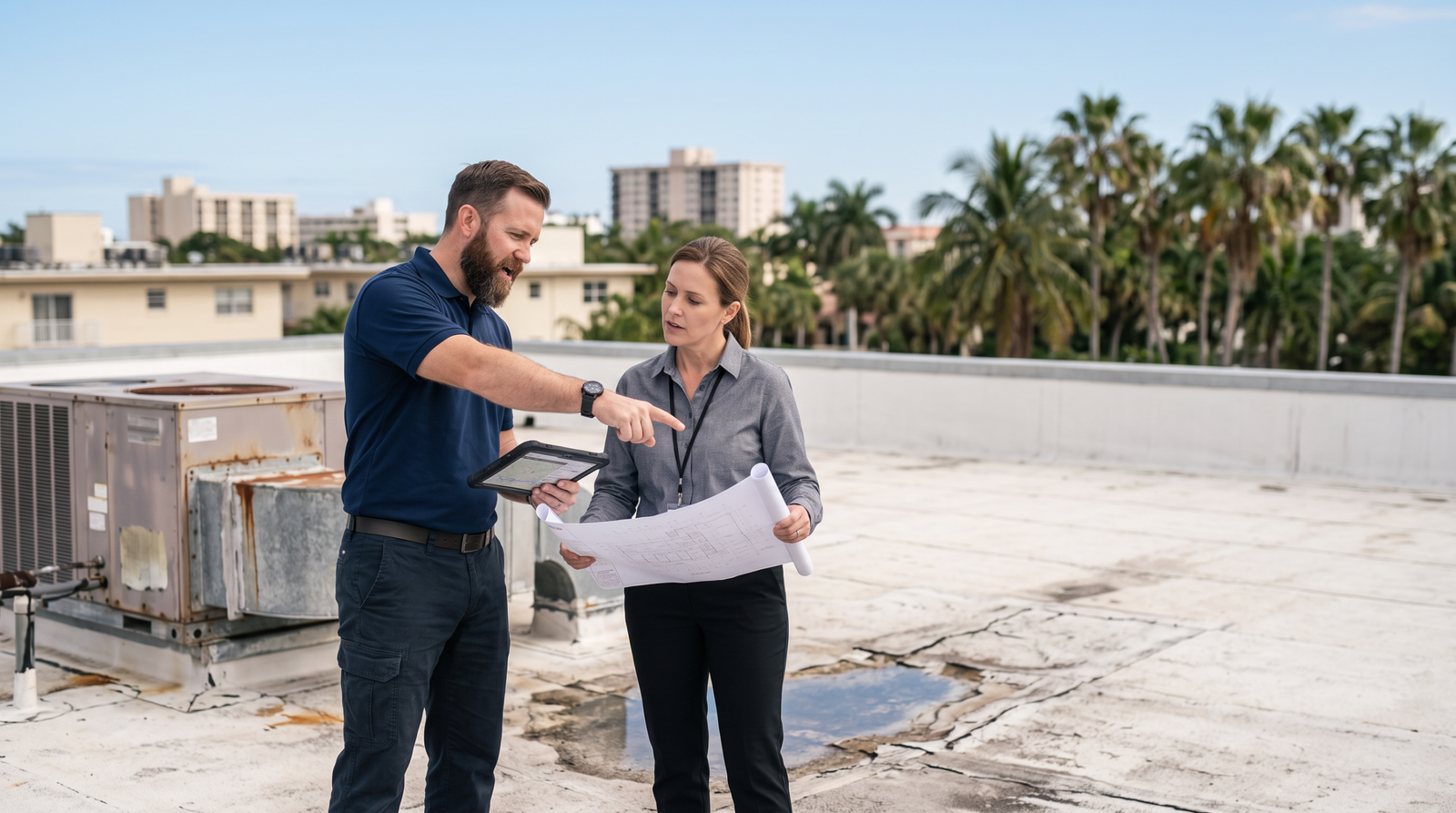
Roofing and envelope expertise can overlap at roof-to-wall transitions and other interfaces. Structural input may be needed when the questions involve supporting framing, attachment capacity, or load transfer.
The assignment should identify which parts of the roof system are being evaluated rather than assume that one specialist will address every related issue.
Materials Specialists
Materials specialists may investigate concrete deterioration, metal corrosion, coatings, compatibility, or suspected product-related conditions.
Their work may help evaluate:
- Deterioration mechanisms
- Material properties and condition
- Results from sampling or laboratory testing
- The relationship between material findings and observed damage
Structural engineering input may be needed to determine how a material condition affects component or system performance.
Geotechnical Professionals
Geotechnical professionals evaluate soil, subsurface conditions, bearing support, and ground behavior.
In a movement investigation, a structural engineer may assess the building’s response while a geotechnical professional evaluates supporting conditions. Neither visible cracking nor uneven floors alone establishes a particular subsurface cause.
Coordination helps connect the building observations with relevant ground information where the assignment requires both.
Mechanical, Electrical, and Plumbing Engineers
Mechanical, electrical, and plumbing expertise may be needed when the reported concern involves equipment, piping, or related building systems.
Examples include:
- Plumbing leakage and piping connections
- HVAC condensate drainage
- Equipment installation and system performance
- Electrical system conditions
Each professional evaluates questions within their expertise. Structural input may be needed for equipment support, while envelope expertise may help distinguish exterior leakage from a source associated with piping or equipment.
How Claims Professionals Select Qualified Expertise
Selection should reflect the assignment rather than the professional title alone.
Useful considerations include:
- Experience with the affected systems and materials
- Experience investigating comparable reported conditions
- Appropriate credentials and licensure for the assigned work
- Ability to explain methods, evidence, findings, and limitations
- Capacity to coordinate additional expertise when necessary
Titles such as “roofing specialist” and “envelope specialist” do not identify a uniform credential. Claims professionals should review the qualifications relevant to the proposed work.
The investigator should also clarify what the initial scope can address and which questions may require testing, additional access, or another discipline.
Matching Reported Conditions With Initial Expertise
The following examples are starting points for scoping an assignment. The initial investigator may identify a need for additional input as evidence develops.
Reported condition | Potential expertise | Example question |
Cracking or building movement | Structural; geotechnical input where warranted | How is the building responding, and do supporting conditions require investigation? |
Leakage near windows | Building envelope | Which pathway and interface explain the observed leakage? |
Roof damage or leakage | Roofing or envelope; structural input where warranted | Are covering, flashing, attachment, or supporting components involved? |
Corrosion or concrete deterioration | Structural and materials | What deterioration mechanism is supported, and how does it affect performance? |
Leakage near mechanical equipment | Mechanical or plumbing; envelope input as needed | Is the source equipment, piping, condensate drainage, or an exterior pathway? |
The reported location of damage should guide the initial inquiry without predetermining its cause. For example, moisture near mechanical equipment may originate from condensate drainage, piping, an exterior pathway, or another source that requires investigation.
What Coordinated Investigation Involves
Where multiple disciplines are needed, coordination should establish how their findings will address the shared assignment questions.
A coordinated approach may include:
- Defining each professional’s scope and technical questions
- Planning inspections, testing, and access together
- Documenting conditions before openings or sampling alter evidence
- Reviewing findings at interfaces between building systems
- Identifying unresolved questions and responsibility for further evaluation
A lead investigator may organize the work where appropriate. Each specialist remains responsible for their technical findings, and the report should identify the basis and limits of conclusions that rely on another discipline’s work.
For example, an envelope investigation may identify a moisture pathway, materials evaluation may assess deterioration, and structural analysis may address the effect on an affected member. Coordination connects those findings without presuming that one observation answers all three questions.
What Claims Professionals Should Provide
A useful assignment package identifies the reported concern and the questions requiring resolution.
Helpful information includes:
- Affected locations and descriptions of reported damage
- Specific questions about cause, extent, or performance
- Available plans, photographs, and prior evaluations
- Maintenance, repair, and alteration history
- Known access restrictions and completed testing
- Planned mitigation or work that may change site conditions
- Relevant deadlines and coordination contacts
Distinguish reported information from documented observations. Early review of this material can help the investigator identify evidence gaps and refine the proposed scope.
What Happens During the Investigation?
Depending on the assignment, the investigation may involve records review, field documentation, targeted testing, and technical analysis.
The methods should follow the questions being evaluated. Additional access or testing may be appropriate when relevant conditions are concealed or the available evidence does not distinguish between possible explanations.
Findings should reflect the areas inspected and information obtained. A limited inspection should not imply that the same concealed condition exists throughout the property without a supported basis.
What the Technical Report Should Communicate
A useful report explains:
- The assignment scope and disciplines involved
- Observed conditions and evidence reviewed
- Investigation and testing methods
- Relevant technical criteria
- Supported causes and contributing factors
- Documented extent, assumptions, and limitations
- Unresolved questions and recommended further investigation
The report should distinguish observations, reported history, and engineering interpretation. Technical findings inform claim review without independently determining coverage or legal responsibility.
Investigation, repair design, and construction-phase services have different responsibilities. Design documents or construction support require a defined scope and should not be assumed to be included in a forensic evaluation.
Discuss an Assignment With Our Forensic Engineering Team
Prema evaluates construction-related conditions within the assigned forensic scope and coordinates additional technical expertise where appropriate to the systems and questions involved.
Our forensic engineering team supports claims professionals with documented observations, technical analysis, and clear findings addressing complex commercial property conditions.
Contact Prema to discuss a commercial construction defect investigation assignment.
Frequently Asked Questions
Who investigates construction defects in commercial buildings?
−Forensic engineers and technical specialists evaluate suspected defects according to the affected systems and assignment questions. Expertise may include structural, envelope, roofing, materials, geotechnical, mechanical, electrical, or plumbing evaluation.
Does every investigation require multiple experts?
+No. One qualified investigator may address a focused assignment. Additional disciplines may be appropriate when the questions involve different systems or expertise.
How should claims professionals select an investigator?
+Review relevant system experience, investigation experience, qualifications, and the proposed scope. Ask how the investigator will address the technical questions and identify any need for additional expertise.
Does a forensic investigation include repair design?
+Not automatically. A forensic evaluation may identify findings or considerations that inform repair planning, but construction-ready design and construction-phase services require an expressly defined scope.
Our Related Services
Need Expert Forensic Engineering & Building Assessment Insights?
Get our accurate, evidence-based analysis to identify root causes, assess structural integrity, and make confident decisions.
Get in Touch →