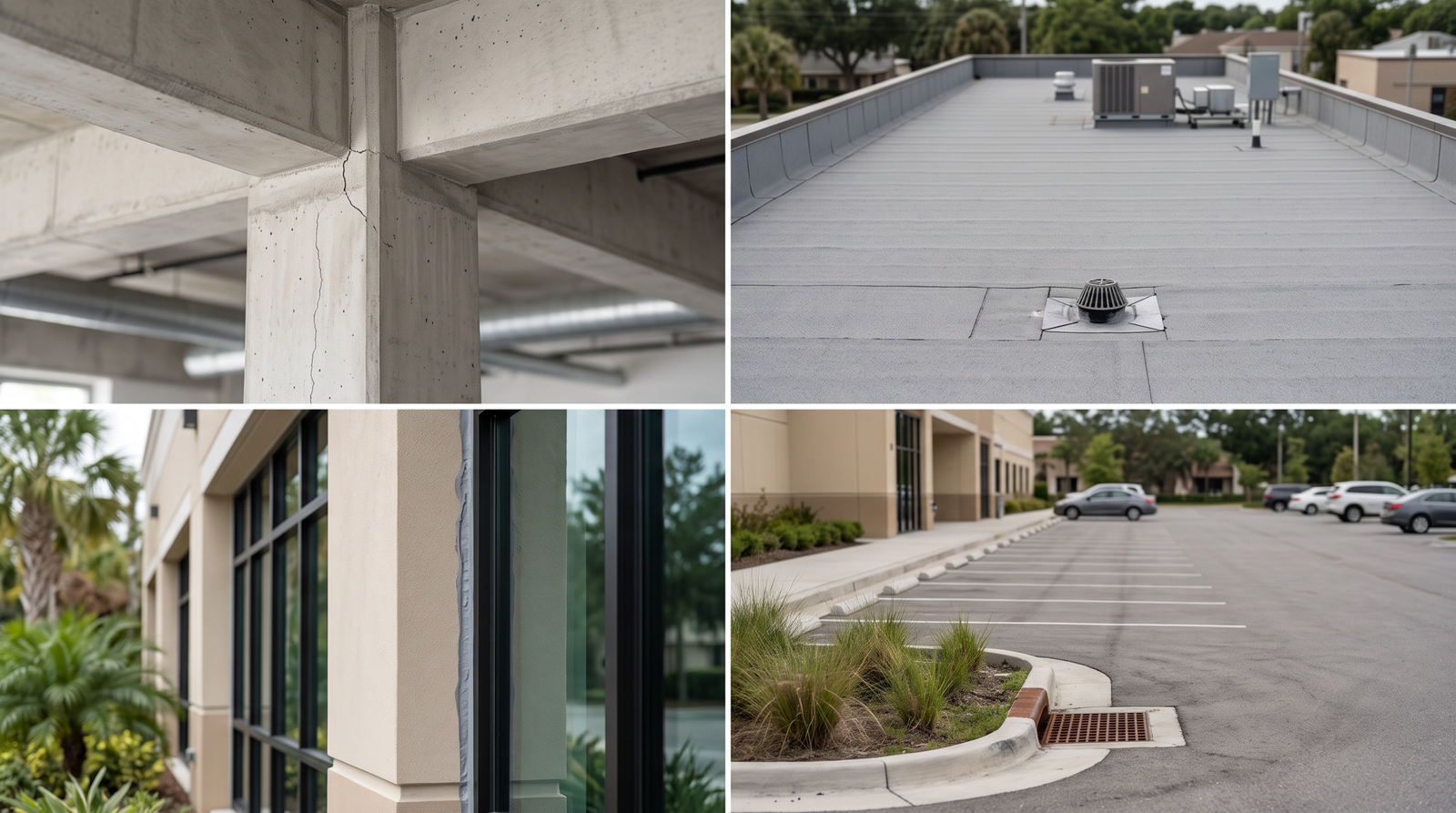
Florida milestone inspections give condominium and cooperative associations technical information about aging structural systems and needed maintenance or repairs. For boards and community association managers, an effective inspection program requires preparation, access coordination, clear reporting and follow-through.
Start by confirming the requirements for each building with the local enforcement agency. An association with several buildings may need separate inspection schedules, records and access plans.
This article summarizes current requirements and practical preparation steps. Requirements were reviewed on October 7, 2026. Confirm current statutes and local procedures immediately before publication and during future updates.
Which Buildings Require Florida Milestone Inspections?
Section 553.899 applies to residential condominium and cooperative buildings with three or more habitable stories, including qualifying mixed-ownership buildings. Single-family through four-family dwellings with three or fewer habitable stories above ground are exempt. [1]
Have the local building department confirm applicability when the story count, occupancy or ownership arrangement is unclear. Gather certificates of occupancy and identify which portions of a mixed-ownership building the association maintains.
What Associations Should Know About 2026 Deadlines
The general schedule is December 31 of the year a building reaches 30, then every 10 years. Age is based on the certificate of occupancy. Local agencies may require an initial inspection at 25 because of local circumstances, including environmental exposure. The initial deadlines for older buildings were in 2024 or 2025; there is no universal new milestone deadline for all associations in 2026. [1, 2]
For example, a qualifying building with a 1996 certificate of occupancy generally reaches its 30-year milestone in 2026. Confirm any earlier local requirement or previously accepted inspection before setting the schedule.
Do not assume an older overdue inspection has received an extension. Obtain written confirmation of the building’s status from the local enforcement agency and retain it with association records.
Who Performs a Milestone Inspection?
A Florida-authorized licensed architect or engineer performs the inspection. A professional team may participate under a registered design professional in responsible charge. [2]
When selecting a professional, discuss experience with the building’s structural system, access needs, reporting scope, anticipated testing and communication with the building department. Request applicable written disclosures concerning potential follow-on services and relationships. [1]
Understanding Phase 1 and Phase 2
Phase 1 Structural Assessment
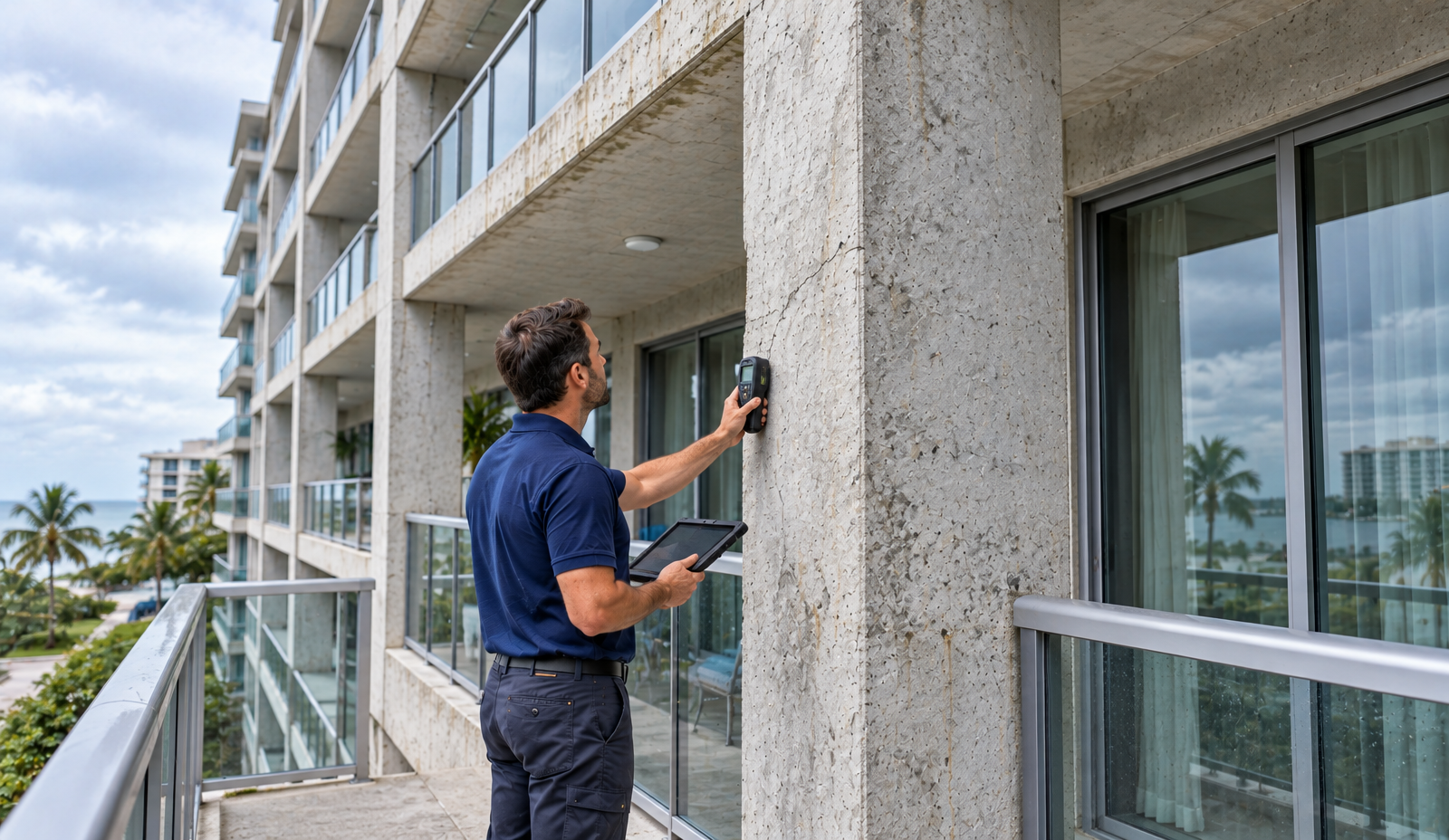
Phase 1 visually assesses structural conditions. Phase 2 is required if substantial structural deterioration is identified; otherwise, it is not required. Phase 1 completion requires report submission to the local agency within 180 days after the owners receive its written inspection notice. [2]
Substantial structural deterioration concerns structural distress or weakness affecting structural integrity. Visible surface imperfections alone do not establish that condition; the inspector evaluates their significance. [1]
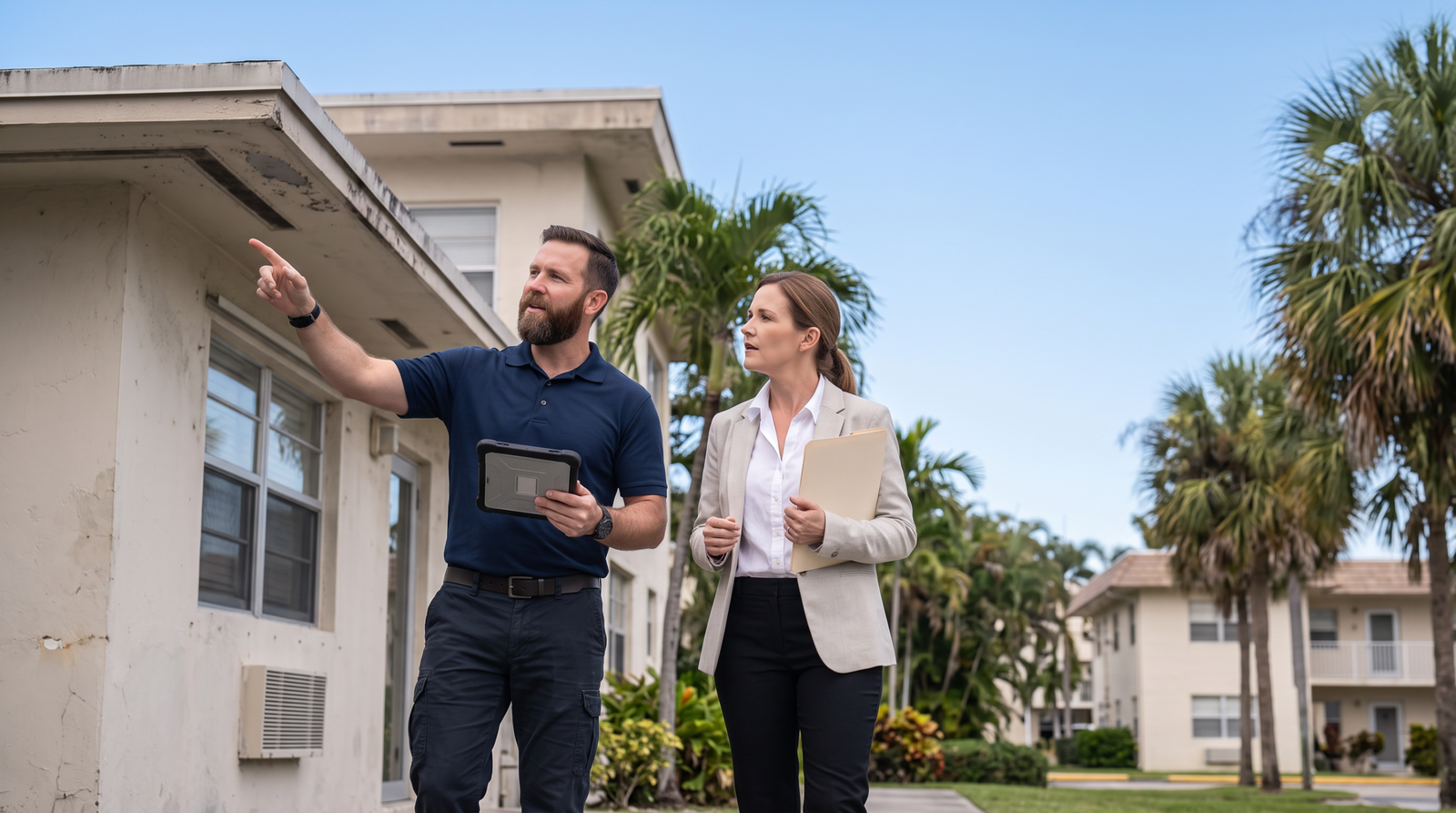
Before the visit, identify inaccessible areas and arrange entry to spaces the inspector needs to examine. Explain existing repairs, recurring leaks and known distress without treating those observations as established causes.
Phase 2 Further Investigation
Phase 2 may use destructive or nondestructive testing. Within 180 days of the Phase 1 report submission, the Phase 2 professional must submit a progress report with a completion timeline. This is a progress-report deadline, not a universal Phase 2 completion deadline. [1]
If testing is needed, clarify its purpose, locations, access arrangements and restoration responsibilities. Ask how the findings will inform repair recommendations and what additional expertise may be needed.
Reporting and Follow Through
The inspector provides a signed, sealed report and separate summary. Associations must distribute the summary within 45 days, post it conspicuously and publish the report and summary on their website when a website is required. Required repairs for substantial structural deterioration must commence within 365 days of report receipt; local requirements may be earlier. [2]
Associations must notify unit owners of the required inspection within 14 days after receiving the local agency’s written notice. [2]
Confirm the required delivery methods, recipients and local submission procedures. Track recommendations individually, assign responsibility and preserve evidence of notices, submissions and repair progress.
An inspection report can lead to further evaluation, repair design, permits or construction coordination. Ask the inspector to explain the next technical steps and address any urgent conditions promptly.
Milestone Inspections and Other Association Studies
A structural integrity reserve study addresses reserve planning, while a milestone inspection addresses structural condition. They are distinct requirements. [2]
Coordinate these assignments so useful records and findings can be shared. Confirm each assignment’s deadlines independently. Also ask the local agency whether a separate building recertification program applies and how its submissions relate to the milestone process.
Association Checklist for a Milestone Inspection
Before Engaging the Inspection Team
- Confirm applicability and the inspection schedule for each building.
- Locate certificates of occupancy and prior inspection acceptance records.
- Identify the local enforcement agency and a designated association contact.
- Gather structural drawings, previous reports, repair records and maintenance history.
- Record known leaks, corrosion, cracking or movement for the inspector’s review.
- Compare proposals by scope, qualifications, access needs and deliverables.
Before the Site Visit
- Coordinate access to units, common areas and structural spaces as requested.
- Identify locked, concealed or otherwise inaccessible areas.
- Share prior repairs and recurring maintenance concerns.
- Explain the inspection schedule to residents and building staff.
- Establish procedures for additional access or targeted testing.
After Receiving the Report
- Review findings and recommendations with the inspection professional.
- Confirm whether further investigation or Phase 2 is required.
- Calendar applicable report distribution and local submission obligations.
- Identify repair design, permitting and contractor coordination needs.
- Assign responsible parties and track completion of recommended actions.
- Retain reports, summaries, notices and repair documentation together.
How Prema Supports Florida Associations
Prema supports Florida condominium and cooperative associations with milestone inspections performed by qualified professionals, clear documentation of observed structural conditions and guidance on appropriate next steps within the project scope.
Discuss the building’s age, structural system, previous evaluations and local notices at the start of an assignment. This helps establish a useful scope and gives the association a clearer understanding of access, documentation and follow-up needs.
Primary Sources and Update Information
[1] Florida Legislature, Section 553.899, Florida Statutes. Review the current statutory text and applicable local requirements before publication or reuse.
https://www.leg.state.fl.us/Statutes/index.cfm?App_mode=Display_Statute&URL=0500-0599/0553/Sections/0553.899.html
[2] Florida Department of Business and Professional Regulation, Inspections: Milestone Inspections and Structural Integrity Reserve Studies.
Inspections
Discuss Your Milestone Inspection Needs
Prema helps condominium and cooperative associations understand observed structural conditions and plan appropriate next steps through qualified inspection services and clear technical reporting.
Frequently Asked Questions
Does every Florida condominium have the same deadline in 2026?
−No. Confirm the building's age, applicable local requirements and inspection history with the local enforcement agency.
Does a Phase 1 inspection always lead to Phase 2?
+No. The Phase 1 findings determine whether Phase 2 is required. Ask the inspector to explain the findings and any recommended follow-up.
What should an association provide to the inspection team?
+Useful records include certificates of occupancy, structural drawings, prior reports, maintenance history and repair documentation. Also identify known concerns and access restrictions.
What should a board do after receiving the report?
+Review recommendations, complete required communications and coordinate the next technical steps. Maintain a written action log so responsibilities and progress remain clear.
Discuss Your Milestone Inspection Needs
+Prema helps condominium and cooperative associations understand observed structural conditions and plan appropriate next steps through qualified inspection services and clear technical reporting.
Our Related Services
Need Expert Forensic Engineering & Building Assessment Insights?
Get our accurate, evidence-based analysis to identify root causes, assess structural integrity, and make confident decisions.
Get in Touch →