A Florida commercial property assessment helps owners understand building conditions, identify significant deficiencies and organize maintenance, repair and capital-planning priorities. The review should connect visible findings with practical next steps and identify where additional investigation is needed.
Florida exposure makes roofing, moisture management, drainage and material deterioration relevant considerations. However, a property’s location or storm history does not establish the cause or significance of every observed condition. Building systems, records and site-specific evidence must be evaluated together.
This checklist helps commercial owners, facility managers and asset managers define an assessment across structure, roof, building envelope and site conditions. It is a planning guide for an appropriately scoped evaluation, rather than a substitute for engineering analysis.
Prema Consulting Group evaluates commercial properties across these systems to help Florida owners and facility teams identify deficiencies and plan next steps.
Define the Assessment Before the Site Visit
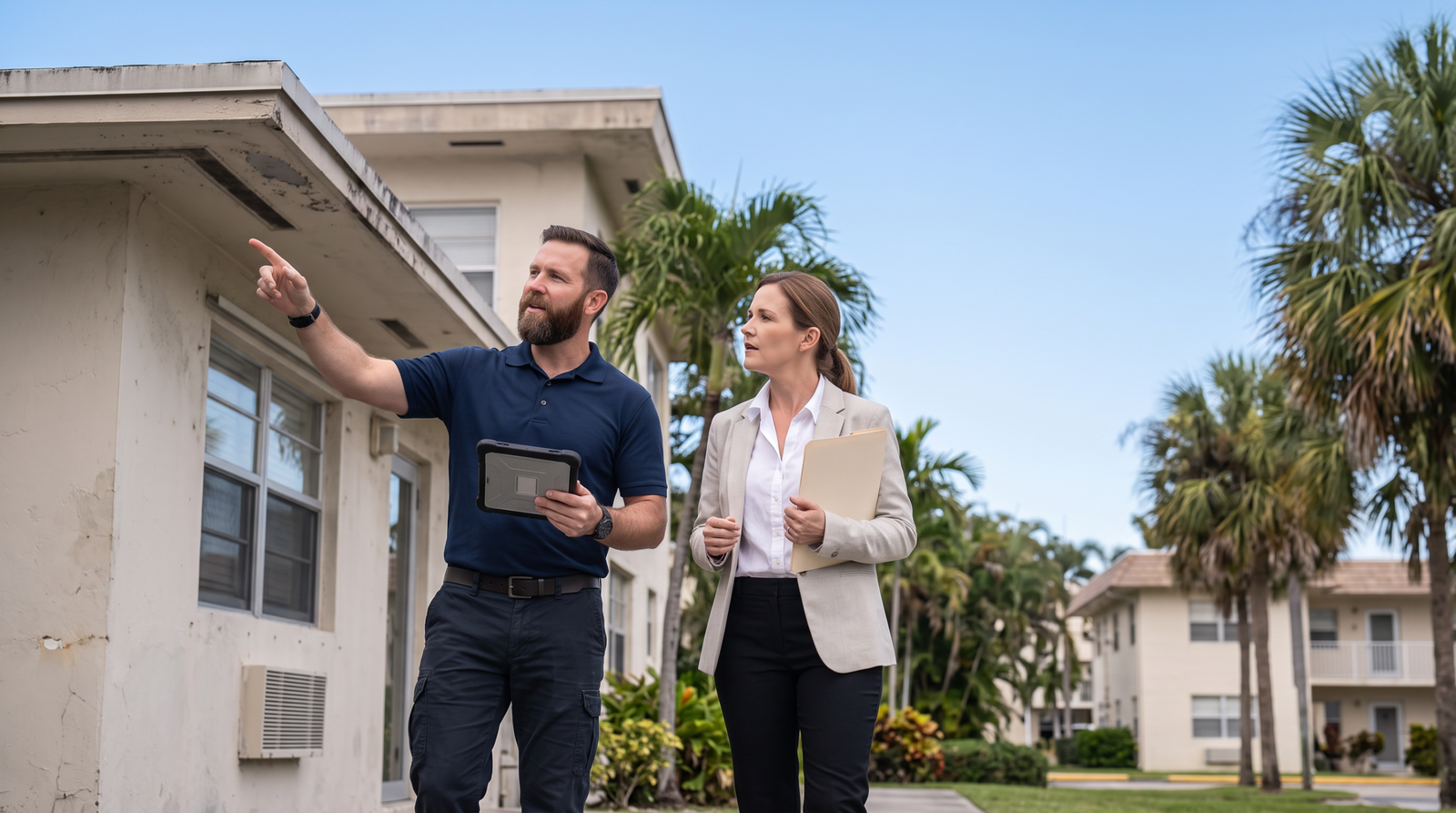
A property condition assessment, or PCA, can provide a broad commercial condition overview. Specific concerns may require targeted engineering evaluation, diagnostic testing or specialist coordination.
Before work begins:
- Identify the buildings and site improvements included.
- Explain the decision the assessment must support.
- Provide known concerns, proposed alterations and operating constraints.
- Confirm required reporting, planning periods and cost information.
- Define access, testing and specialist services.
- Identify recipient requirements and scope exclusions.
A visual review should not be assumed to verify concealed assemblies, all structural capacities or complete code compliance. Clearly defined deliverables help owners understand how to use the findings.
1. Review Records and Property History
Available records can explain recurring concerns and work that is not apparent during a single visit.
Checklist:
- Request available construction drawings and prior assessments.
- Review roof installation and repair records.
- Obtain maintenance logs and relevant equipment information.
- Document reported leaks and their locations.
- Request records of significant alterations and structural repairs.
- Identify documented storm impacts and subsequent corrective work.
Reported information should be distinguished from direct observations. A past repair does not establish that a condition was fully resolved without information about the work and subsequent performance.
Storm history provides context, but current deterioration should not automatically be attributed to a particular event.
2. Assess Accessible Structure and Foundation Indicators
Structural observations help identify distress that warrants further evaluation.
Checklist:
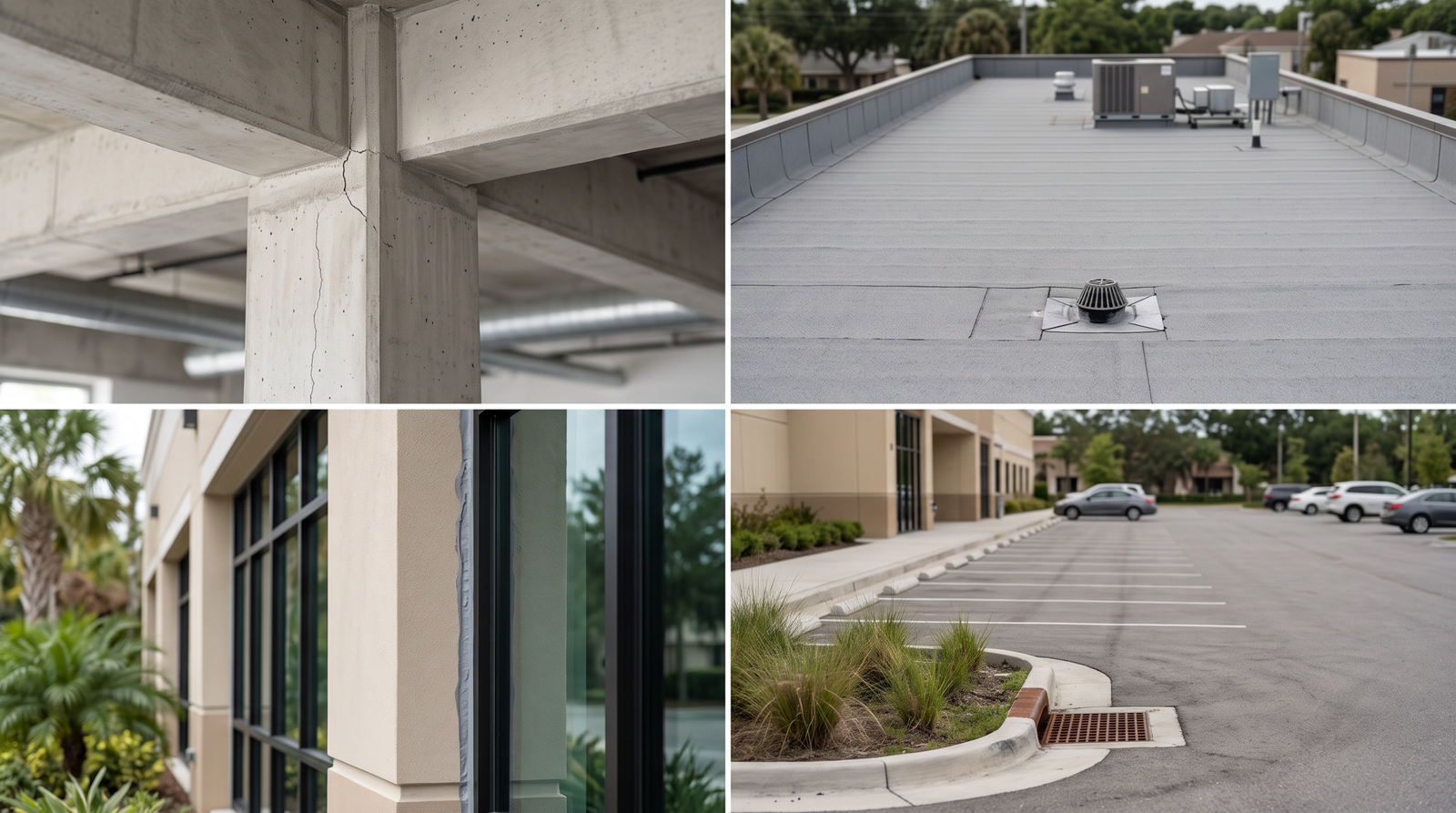
- Document significant cracking, displacement and deformation.
- Review accessible framing, supports and connections.
- Note corrosion, decay and other material deterioration.
- Identify separation or alignment changes between components.
- Review available information about alterations and added equipment.
- Determine whether focused structural or geotechnical evaluation is needed.
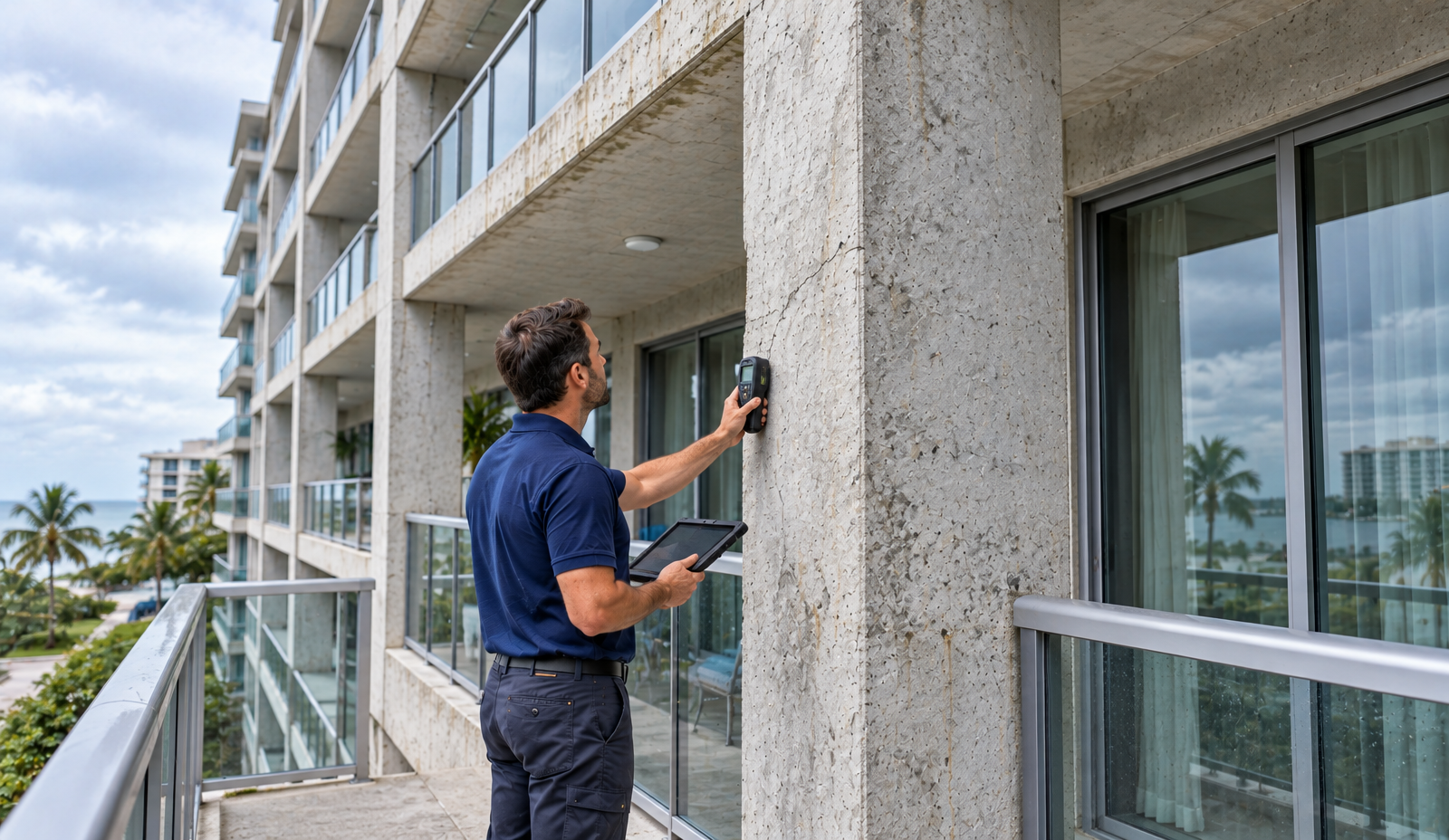
Cracking does not establish structural failure by itself. Its location, pattern, related movement and effect on the component matter.
Where concrete spalling or reinforcement exposure is observed, the review should consider the affected element and visible extent. Concealed reinforcement condition or remaining capacity may require additional work.
Proposed changes in use or new equipment loads also require an appropriate analysis; documenting current conditions does not automatically establish suitability for those changes.
3. Review Roof Coverings, Flashing and Attachments
A roof evaluation should consider the system as a whole, including its interfaces and reported performance.
Checklist:
- Identify roof-system type and available installation history.
- Document accessible membrane or covering conditions.
- Review seams, flashing and termination details where accessible.
- Observe penetrations, equipment curbs and perimeter conditions.
- Document prior repairs and reported leakage.
- Identify concerns requiring moisture testing or attachment evaluation.
Florida wind and storm exposure can make roof edges, attachments and transitions relevant areas of review. A general walk-through does not verify wind resistance or every concealed connection.
A roof’s age is useful context, but repair or replacement planning should also consider condition, leak history and system characteristics. Concealed moisture may need targeted evaluation before a major decision is made.
4. Evaluate Roof Drainage
Rainfall makes effective water management an important part of roof performance.
Checklist:
- Observe accessible drains, scuppers and discharge locations.
- Document debris, obstructions and visible deterioration.
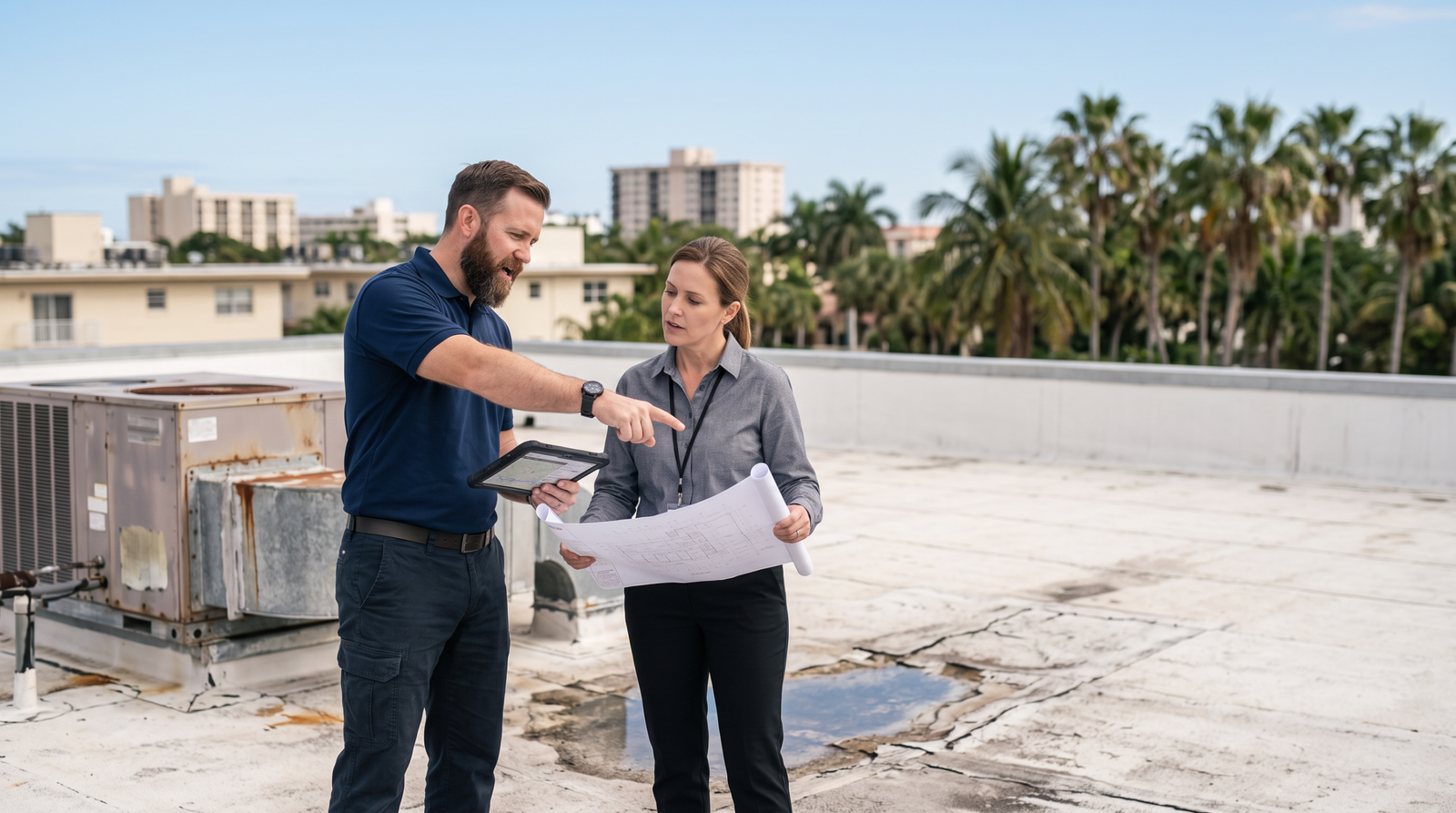
- Note staining or other evidence of recurring water accumulation.
- Review reported ponding and drainage maintenance history.
- Identify whether slope, drainage configuration or structural concerns require further review.
A blocked drain and a configuration problem may require different responses. The assessment should identify the technical question before recommending a corrective approach.
Significant water accumulation or related deformation can warrant focused evaluation. A visual drainage review is not a complete calculation of system capacity.
5. Review Exterior Walls and Façades
Exterior wall performance depends on materials, transitions, openings and water-management details working together.
Checklist:
- Document stucco, concrete, masonry or cladding deterioration.
- Map relevant cracking, displacement and loose materials.
- Review accessible joints, sealants and material transitions.
- Observe window, door and penetration interfaces.
- Identify visible flashing and drainage details within the scope.
- Compare exterior findings with interior moisture indicators.
Visible façade cracking does not automatically identify a construction defect or water-entry pathway. Loose materials and significant deterioration may warrant prompt evaluation of their consequences.
Wind-driven rain may reveal weaknesses at openings or transitions, but the investigation should establish the actual pathway rather than assume the visible interior damage marks the entry point.
6. Investigate Moisture Indicators and Concealed Concerns
Moisture-related findings may involve roofing, walls, plumbing, condensation or several interacting conditions.
Checklist:
- Locate staining, damp materials and recurring leakage reports.
- Record when symptoms occur and any relationship to rainfall or operations.
- Review accessible adjoining systems and prior repairs.
- Identify areas where moisture mapping or targeted testing may help.
- Determine whether selective openings or specialist evaluation are warranted.
Florida humidity is relevant context for condensation questions, but it does not explain every moisture symptom. Rainwater entry and condensation require different diagnostic approaches.
Staining alone does not confirm active wetting, concealed deterioration or structural impairment. Additional evaluation should address the specific uncertainty.
7. Consider Coastal Exposure and Corrosion Where Applicable
Salt exposure and moisture can contribute to corrosion at coastal properties. The assessment should reflect actual materials, exposure and protective details rather than use a fixed assumption for all Florida buildings.
Checklist:
- Document visible corrosion at exposed metals and connections.
- Review coating condition and areas of repeated wetting.
- Note concrete cracking, spalling and exposed reinforcement.
- Identify localized material loss or related distress.
- Determine whether measurements, testing or structural analysis are needed.
Surface corrosion does not establish remaining capacity. Conversely, accessible observations may not reveal deterioration within enclosed connections or concrete assemblies.
Repair planning should consider both affected materials and contributing exposure conditions where supported by the evaluation.
8. Review Site Improvements and Surface Drainage
Site conditions influence access, use and ongoing maintenance.
Checklist:
- Observe pavement, parking areas and sidewalks.
- Document settlement, erosion and visible deterioration.
- Review grading near buildings and accessible drainage features.
- Note recurring water collection and discharge concerns.
- Observe retaining walls and other site structures within scope.
- Identify questions requiring further investigation.
Standing water may involve obstructions, grading, drainage configuration or other factors. Surface observations do not establish subsurface soil behavior or underground utility condition.
A site condition review also does not replace a flood-risk study, survey or other separately scoped service.
Turn Findings Into Priorities and Planning Inputs
The report should identify significant findings with locations, photographs, supporting information and recommended next steps.
Useful deliverables include:
- Defined repair priorities and the basis for recommended timing
- Recommendations for maintenance, repair or further investigation
- Planning-level cost opinions when included in the assignment
- Cost assumptions, exclusions and planning periods
- Access limitations and unresolved questions
An investigation allowance is different from an estimate to complete repairs. Planning-level opinions are not contractor bids, and developed scopes or concealed conditions may change the eventual cost.
Potentially unsafe conditions should be communicated clearly and addressed appropriately. Other work can be sequenced around occupancy, operating needs and related projects, with priorities updated as information improves.
Prepare for an Efficient Assessment
Property teams can support the evaluation by providing records, arranging access and making knowledgeable personnel available. Include recurring problems even when no symptoms are visible on the inspection date.
Clarify any need for specialized equipment review or comprehensive code evaluation. A broad assessment may identify concerns without resolving every technical question.
The result should help owners distinguish established findings from information gaps and decide what to address next.
Supporting Florida Commercial Property Decisions
A useful Florida property assessment combines regional exposure considerations with evidence from the specific property. Structural, roof, envelope and site findings should be evaluated in context and translated into practical recommendations.
Prema documents observed conditions and significant deficiencies to help Florida commercial property teams organize maintenance, repair and further evaluation within the agreed scope.
Discuss Your Building Assessment Needs
Prema Consulting Group evaluates commercial properties across structural, roof, envelope and site conditions to help Florida owners and facility teams identify deficiencies and plan next steps.
Our team works with commercial owners, property and facility managers, and asset managers to define an assessment suited to their property and objectives.
Frequently Asked Questions
What does a Florida commercial property assessment include?
−It may include records review and accessible observations of structure, roofing, building envelope and site conditions. Reporting, testing, specialist services and cost information depend on the agreed scope.
Does storm history establish the cause of current damage?
+No. Storm history provides context. Findings should be based on property-specific observations, records and appropriate analysis.
Does visible concrete spalling mean structural failure?
+Not automatically. Its significance depends on the affected component, extent of deterioration, reinforcement condition and structural role. Focused evaluation may be needed.
Can an assessment locate every concealed leak?
+No. A baseline review may document symptoms and recommend targeted testing or selective access to evaluate unresolved pathways and concealed conditions.
Are all Florida commercial properties affected by coastal corrosion?
+Exposure varies by location, materials and building details. Coastal corrosion considerations should be applied where relevant to the actual property.
Does this assessment replace required inspections or compliance reviews?
+An ordinary condition assessment should not be assumed to satisfy a separately required inspection or comprehensive compliance review. Applicable requirements need their own defined scope.
Our Related Services
Need Expert Forensic Engineering & Building Assessment Insights?
Get our accurate, evidence-based analysis to identify root causes, assess structural integrity, and make confident decisions.
Get in Touch →