

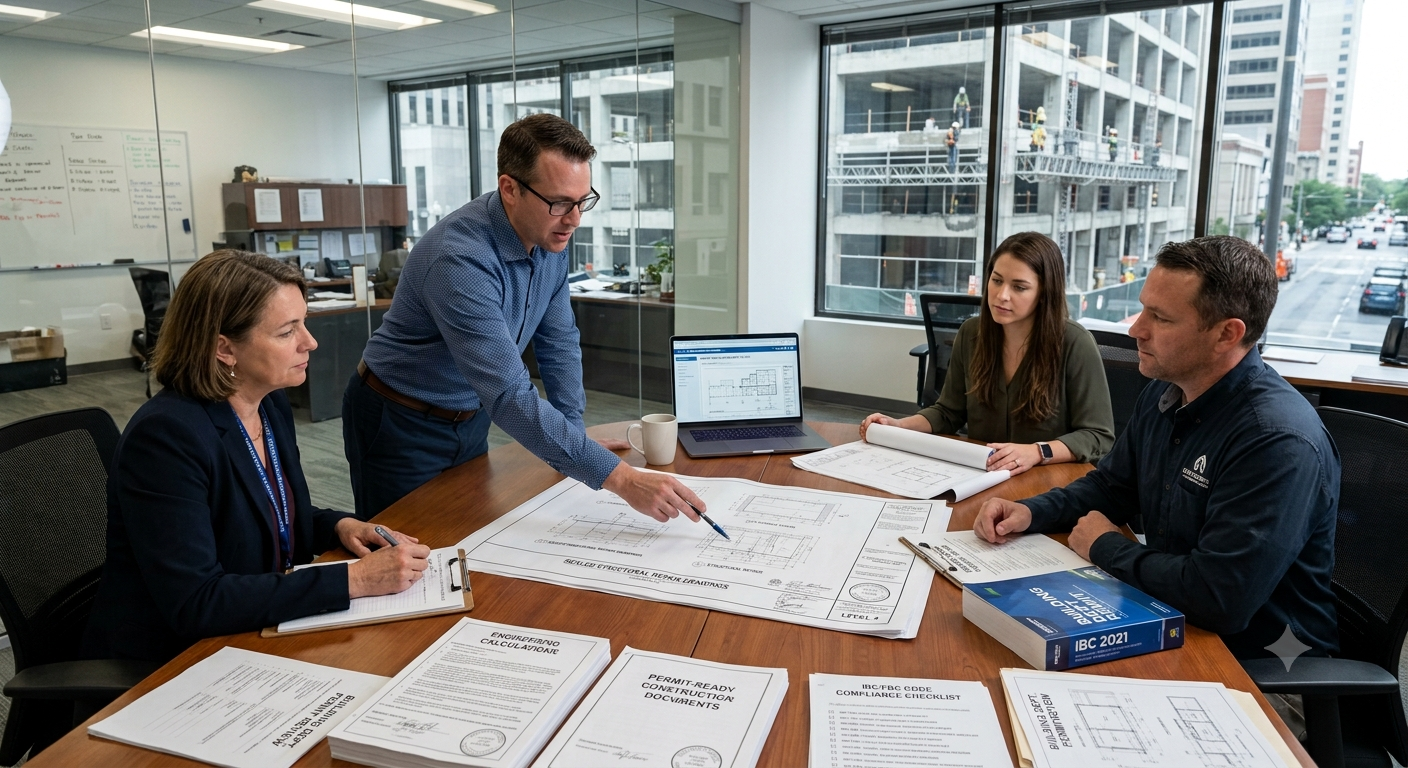
Understanding the Engineer of Record’s Role in Remediation Design Projects
Introduction:
While the EOR term is commonly used on remediation and restoration projects, many property owners, community associations, contractors, and even project stakeholders are unclear about what the Engineer of Record actually does. Some assume the EOR simply reviews plans and applies a professional stamp. In reality, the role carries far greater responsibility.
An Engineer of Record is accountable for the engineering design behind the repair strategy. From developing repair documents and supporting permitting efforts to answering contractor questions during construction, the EOR plays a critical role in helping remediation projects move from identified problems to successful implementation.
Understanding that role can help project teams improve coordination, reduce uncertainty, and achieve better long-term outcomes.
From Building Assessment to Repair Design
Many remediation projects begin with a building assessment, forensic investigation, or engineering evaluation.
An engineer may identify structural deterioration, water intrusion, facade distress, concrete damage, corrosion, or other conditions affecting a building’s performance. While this investigation establishes what is wrong, it does not automatically define how the issue should be repaired.
This is where the Engineer of Record becomes essential.
The EOR takes investigation findings and develops a repair strategy that can be constructed in the field. Their responsibility is to transform observations and recommendations into engineered solutions that contractors can execute and permitting authorities can review.
In practical terms, the difference looks like this:
- An investigation identifies deteriorated balcony components.
- The Engineer of Record develops the repair design.
- Construction documents communicate how the repairs should be performed.
- Contractors use those documents to execute the work.
Without this step, project teams may know what needs attention but lack a clear path forward.
The Engineer of Record Across Every Project Phase
Successful remediation projects rarely end with design documents. They require coordination across multiple phases, each of which benefits from engineering continuity.
Design Development
One of the primary engineer of record responsibilities is developing the repair design itself.
Depending on the project scope and building type, the EOR may develop repair solutions for a variety of structural and building envelope systems. This may involve:
- Structural repair design
- Concrete restoration details
- Building envelope remediation
- Waterproofing improvements
- Facade rehabilitation
- Corrosion mitigation strategies
The goal is to create practical, constructible solutions that address the identified conditions while supporting the owner’s project objectives.
This phase often results in stamped repair drawings, specifications, repair details, and supporting documentation required for permitting and construction.
Permitting and Code Compliance Support
Many remediation projects require permits before repairs can begin. Because the EOR is responsible for the design, they often play a key role in preparing permit-ready documents and responding to technical comments during the review process.
While permitting requirements vary by jurisdiction, owners should understand that engineer of record services frequently extend beyond the design phase. Supporting permit applications and addressing review comments are often important components of project delivery.
Construction-Phase Engineering Support
One of the most misunderstood aspects of the EOR role occurs after construction begins. Existing buildings frequently reveal hidden conditions once repairs are underway. Contractors may uncover damage that was not visible during the investigation phase, or they may require clarification regarding repair details. Construction-phase engineering support helps address these situations efficiently.
Typical support activities include:
- Responding to Requests for Information (RFIs)
- Reviewing contractor submittals
- Evaluating unforeseen site conditions
- Providing clarification on design intent
- Issuing supplemental repair details when required
- Participating in project meetings and site observations
This involvement helps keep projects moving while maintaining alignment with the original engineering objectives.
It is important to note that the EOR does not guarantee contractor performance or direct construction means and methods. Contractors remain responsible for how the work is executed. The EOR’s role is to provide engineering guidance and technical oversight related to the design.
The Value of Early Engineer-of-Record Engagement
One of the most common challenges in remediation projects is the disconnect between investigation findings, repair design, and construction execution.
When different teams handle each phase independently, project information can become fragmented. Important observations may not be fully carried into design development, and contractors may have limited access to the engineering rationale behind certain decisions.
Early involvement from a remediation design engineer can help improve continuity.
Benefits often include:
- Better-defined repair scopes
- Improved constructability
- Fewer design assumptions
- More efficient coordination among stakeholders
- Faster resolution of field issues during construction
For owners managing complex repair programs, this continuity can lead to fewer surprises and more informed decision-making throughout the project.
The EOR as a Coordination Resource
Remediation projects often involve multiple stakeholders, including owners, board members, property managers, contractors, consultants, attorneys, and insurance representatives.
Each stakeholder plays a different role and brings different project priorities. The Engineer of Record frequently serves as a technical resource that helps connect these groups. Because the EOR understands the investigation findings, repair objectives, and design requirements, they can provide clarity when technical questions arise.
This role becomes especially valuable on projects involving structural repairs, building envelope rehabilitation, and large-scale restoration programs where coordination is critical to maintaining schedules and controlling project risk.
What Owners Should Clarify Before Engaging an EOR
Not all engineer of record for repairs engagements include the same level of service.
Owners should clearly understand:
- What design services are included
- Whether permitting support is provided
- The extent of construction-phase engineering support
- Expectations for site visits and observations
- Procedures for addressing unforeseen conditions
Clarifying these responsibilities early helps establish realistic expectations and
supports smoother project execution.
Turning Engineering Evaluations into Executable Repairs
Every remediation project reaches a point where identified problems must be translated into actionable solutions.
The Engineer of Record helps bridge that gap. By taking responsibility for the design, supporting permitting efforts, providing construction-phase engineering support, and helping stakeholders navigate technical decisions, the EOR plays an important role in delivering successful repair outcomes.
For property owners, community associations, contractors, and consultants, understanding the EOR’s role is not simply about understanding project terminology. It is about recognizing the value of engineering continuity throughout the lifecycle of a remediation project—from initial findings to completed repairs.
Key Takeaways
- The Engineer of Record is responsible for the engineering design and technical integrity of a remediation project.
- Engineer of Record services typically extend beyond stamped repair drawings and may include permitting support and construction-phase engineering services.
- Early EOR involvement can improve scope definition, coordination, and constructability.
- Continuity between investigation, design, and construction helps reduce project risk and improve communication.
- Owners should clearly understand which engineering responsibilities are included within an EOR engagement before a project begins.
Conclusion
The Engineer of Record plays a central role in translating investigation findings into practical, code-compliant repair solutions. By providing continuity from design through construction, the EOR helps improve coordination, address technical challenges as they arise, and support informed decision-making throughout the remediation process.
For property owners and project teams, understanding the scope of the EOR’s responsibilities is an important step toward achieving successful, long-term repair outcomes. At Prema Consulting Group, our licensed engineers deliver Engineer of Record services for structural remediation and building envelope projects, helping owners move from engineering evaluation and repair planning to practical, long-term solutions.
Recent Blogs


Our Related Services
Need Expert Forensic Engineering & Building Assessment Insights?
Get our accurate, evidence-based analysis to identify root causes, assess structural integrity, and make confident decisions.
Get in Touch →