
Roof leakage, displaced materials, and deterioration may raise questions about construction quality. These observations alone do not establish roof construction defects or identify the cause of reported damage.
For claims professionals, an engineering investigation should explain which parts of the roof assembly are involved, what mechanisms the evidence supports, and what remains unresolved.
A forensic engineering evaluation examines the installed system, relevant details, available records, and potential contributions from weather, maintenance, aging, and alterations. The approach varies by roof type and assignment scope.
What Are Roof Construction Defects?
A roof construction defect investigation may assess suspected deficiencies in design, materials, installation, or detailing and their relationship to roof performance.
A roof is an assembly of interacting components. Depending on the system, these may include coverings, underlayment, insulation, flashing, drainage, attachments, substrate, decking, and supporting framing.
Conditions that may warrant evaluation include:
· Installation details that differ from available project documents
· Flashing or termination discontinuities
· Roof covering or attachment concerns
· Drainage configuration questions
· Material compatibility or integration concerns
· Suspected deterioration or damage within concealed layers
The investigation distinguishes a suspected deficiency from an observed symptom and evaluates whether the condition contributed to the reported damage.
Roof Conditions Engineers May Evaluate
Roof Drainage and Water Accumulation
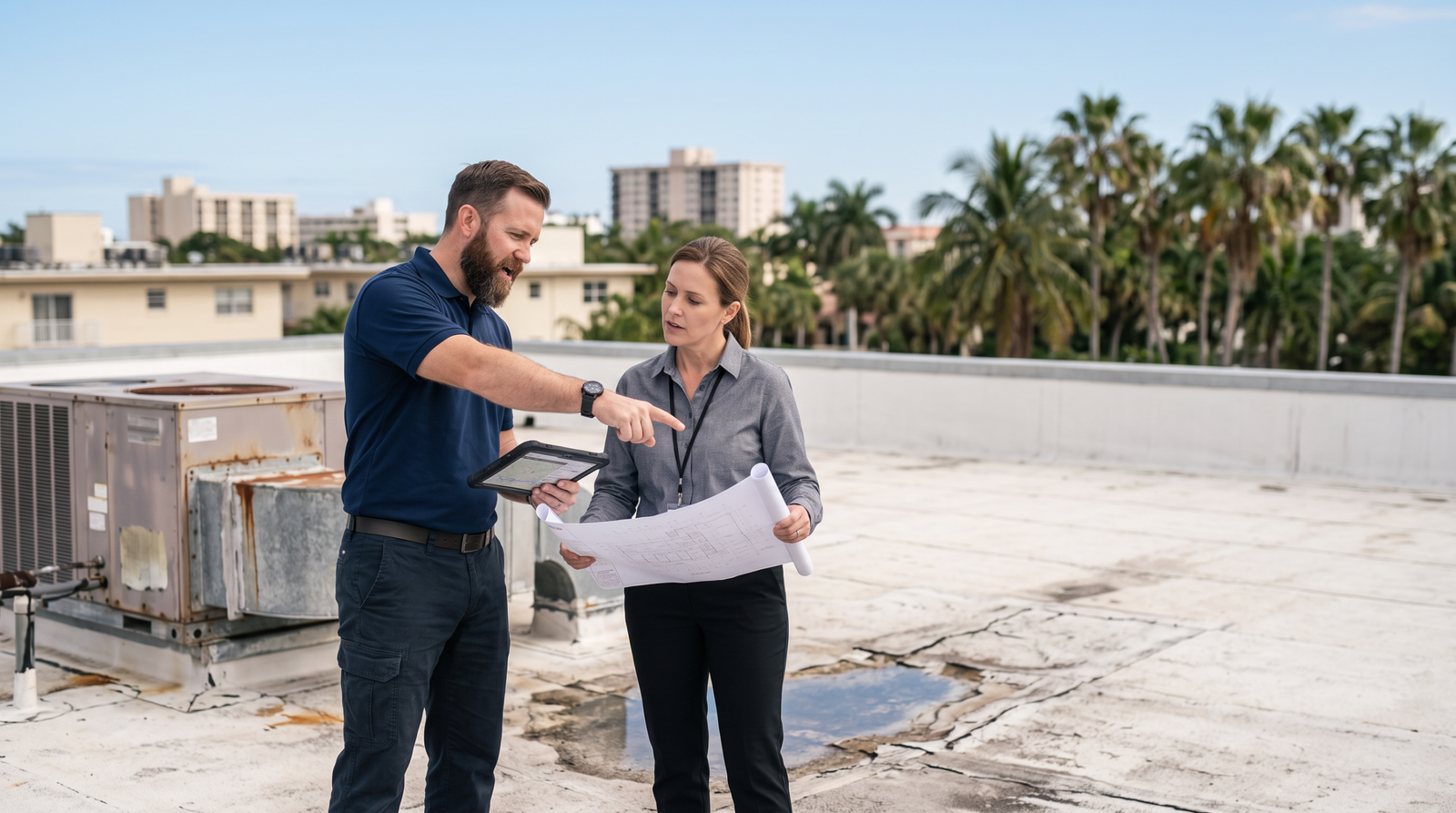
Standing water, overflow, or repeated leakage may prompt questions about drainage performance.
Engineers may evaluate:
· Roof slope and accessible drainage pathways
· Drains, scuppers, and discharge conditions
· Evidence of obstructions or maintenance concerns
· Changes to roofing or drainage components
· Available evidence about the location and persistence of water accumulation
Ponding is an observation, not proof of deficient construction. The analysis considers the installed system, applicable criteria, roof configuration, and other potential explanations. A single universal threshold should not be assumed for every roof.
Flashing, Penetrations, and Terminations
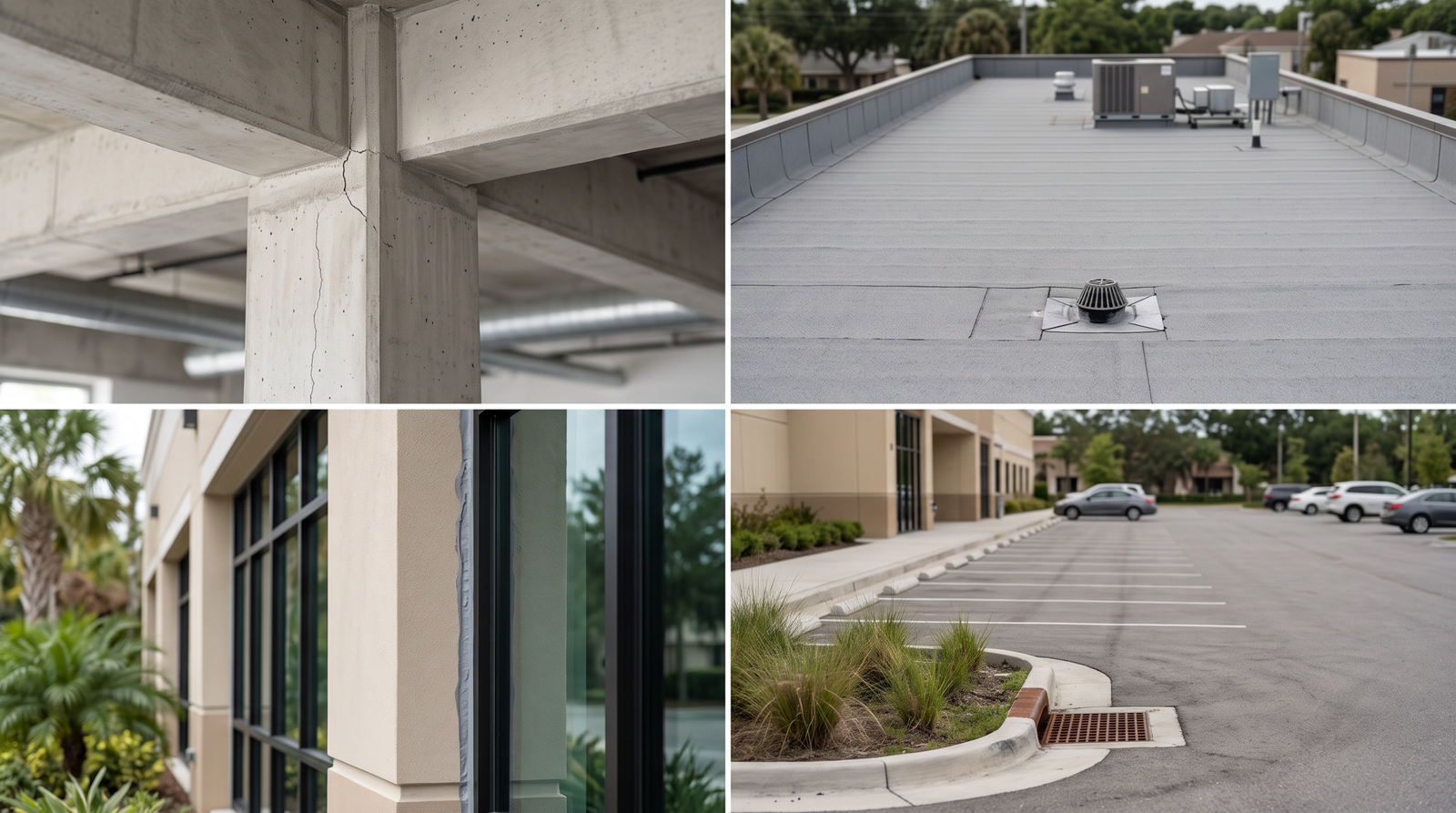
Roof-to-wall interfaces, edges, equipment curbs, vents, and other openings require integration with the roof assembly.
Engineers may examine:
· Flashing continuity and accessible installation details
· Roof covering transitions and termination points
· Penetration interfaces and adjoining materials
· Sealant condition and previous repairs
Leakage near a penetration does not establish that the penetration is the entry point. Water may travel through an assembly before becoming visible elsewhere.
Findings should distinguish installation-related concerns from deterioration, damage, maintenance conditions, or later modifications.
Roof Covering Installation and Attachment
The relevant details depend on whether the roof uses a membrane, shingles, tile, metal panels, or another covering.
Evaluation may address:
· Covering condition and damage distribution
· Accessible fastening, adhesive, or other attachment details
· Connections and integration between components
· Repairs, replacements, and changes to the assembly
For membrane roofs, engineers may also evaluate seams, laps, terminations, and accessible evidence of adhesion or fastening. Other coverings require system-specific review of relevant connections and details.
Observed separation or displacement must be analyzed in context. It does not, by itself, establish deficient installation or attribution to a particular event.
Substrate, Deck, and Supporting Conditions
Surface observations may suggest a concealed concern without confirming its nature or extent.
Where accessible and relevant, engineers may evaluate:
· Deck or substrate deterioration
· Deformation and supporting conditions
· Attachment interfaces
· Moisture-related impacts within the assembly
· Relationships between roofing and supporting framing
A roof surface inspection does not automatically establish the condition of insulation, substrate, decking, or concealed attachments throughout the roof. Additional access or structural analysis may be appropriate when those questions are part of the assignment.
Evaluating Reported Storm Damage Alongside Construction Conditions
Storm-related roof claims may involve more than one contributing mechanism. Construction details, deterioration, repairs, and weather exposure can interact.
Engineers may consider:
· Displacement, separation, and attachment conditions
· The distribution of damage across the roof
· Photographs and records before and after the reported event
· Repair and maintenance history
· Relevant weather and event information
· Alternative or interacting damage mechanisms
A condition discovered after a storm is not automatically attributable to that event. The report should explain the supported relationship and any limits concerning timing.
Identifying a construction concern does not automatically exclude a weather contribution. Each proposed mechanism must be evaluated against the available evidence.
How Engineers Investigate Suspected Roof Deficiencies
Step 1: Review Available Information
Useful records may include:
· Reported damage descriptions and chronology
· Plans, specifications, and approved revisions
· Manufacturer installation instructions relevant to the installed system
· Construction photographs and inspection records
· Prior reports, repair records, and maintenance history
· Event information where relevant to the assignment
Engineers distinguish documented evidence from reported information and identify gaps that may affect the analysis.
Step 2: Document Accessible Roof Conditions
Field documentation may include photographs, measurements, location mapping, and observations of affected and comparable areas.
The investigation records the components inspected, damage characteristics, accessible details, prior repairs, and areas that could not be evaluated.
Documentation should connect findings to specific locations within the roof assembly rather than describe the roof as having a single uniform condition.
Step 3: Determine Whether Additional Access or Testing Is Needed
Concealed details or competing explanations may warrant targeted methods, such as:
· Selective openings to examine roof layers or attachment interfaces
· Targeted water testing
· Moisture measurements or surveys appropriate to the assembly
· Material or attachment evaluation
· Specialist input for supporting structural components
The methods should follow the technical questions. Additional access and testing require coordination with the appropriate project parties and documentation before work alters the evidence.
Each method has limits. Findings from a particular opening or test should not be treated as confirmation of conditions throughout the roof without a supported basis.
Step 4: Compare Conditions With Relevant Criteria
Engineers may compare observed details with project documents, relevant manufacturer instructions, assembly requirements, and requirements applicable to the original work or later modifications.
The report should identify the criterion evaluated and explain its relationship to roof performance.
A detail that differs from a documented requirement does not, by itself, establish the cause of reported damage. Engineers evaluate whether and how the condition contributed, considering other reasonable explanations.
Step 5: Assess Cause, Extent, and Timing Evidence
The analysis connects field observations, records, testing results, and system behavior to supported damage mechanisms.
Findings should reflect inspected locations and available evidence. When representative areas are evaluated, the report should explain their selection and the limits of applying results elsewhere.
The first report of leakage or discovery of deterioration may not establish when the underlying condition originated. Where timing or broader extent remains uncertain, the report should identify the limitation and any further investigation needed.
Environmental Exposure and Florida Examples
Florida properties may present questions involving wind-driven rain, heavy rainfall, coastal exposure, and reported wind events. These conditions provide context for evaluating the installed roof system.
Exposure may interact with a suspected deficiency or contribute to damage independently. Climate or event occurrence alone does not establish the cause of a specific condition.
The same investigative approach applies to assignments in other regions, with attention to the roof type, property history, and available evidence.
What Claims Professionals Should Expect From the Findings
A useful roof investigation report should communicate:
· The assignment scope and roof systems evaluated
· Documented conditions and affected locations
· Supported water entry pathways and damage mechanisms
· Technical criteria used in assessing suspected deficiencies
· Construction, exposure, maintenance, and alteration contributions
· Documented extent and supported timing conclusions
· Access limitations, assumptions, and unresolved questions
· Further investigation needed where appropriate
Engineering findings inform claim review without independently determining coverage or legal responsibility. Repair design and construction-phase services require a defined scope beyond the forensic investigation.
Claims professionals can assist by providing dated photographs, available roof records, repair history, known access restrictions, and information about planned mitigation or work that may change the evidence.
Discuss an Assignment With Our Forensic Engineering Team
Prema Consulting Group evaluates roof conditions involving drainage, flashing, penetrations, covering installation, attachment, and accessible evidence concerning substrate, decking, and supporting components.
Our forensic engineering team supports claims professionals with documented observations and technical findings addressing supported damage mechanisms, contributing factors, extent, timing evidence, and investigation limitations within the agreed scope.
Contact Prema to discuss a roof construction defect investigation assignment.
Frequently Asked Questions
What roof conditions may warrant engineering investigation?
−Recurring leakage, displaced coverings, separation, drainage concerns, or suspected deck deterioration may warrant evaluation. These observations do not, by themselves, establish a construction defect or a particular cause.
Are all roof leaks caused by construction defects?
+No. Leakage may involve installation details, deterioration, maintenance, weather exposure, repairs, or other factors. The investigation evaluates the evidence for the specific roof and reported condition.
Can construction conditions and storm effects both contribute to damage?
+Yes. More than one mechanism may contribute. Engineers evaluate how the available observations and records support each explanation and whether attribution to a specific event can be established.
Can a surface inspection establish the condition of the complete roof assembly?
+Not necessarily. Concealed insulation, substrate, decking, and attachments may require additional access or testing. Findings should state what was inspected and what remains unverified.
Our Related Services
Need Expert Forensic Engineering & Building Assessment Insights?
Get our accurate, evidence-based analysis to identify root causes, assess structural integrity, and make confident decisions.
Get in Touch →