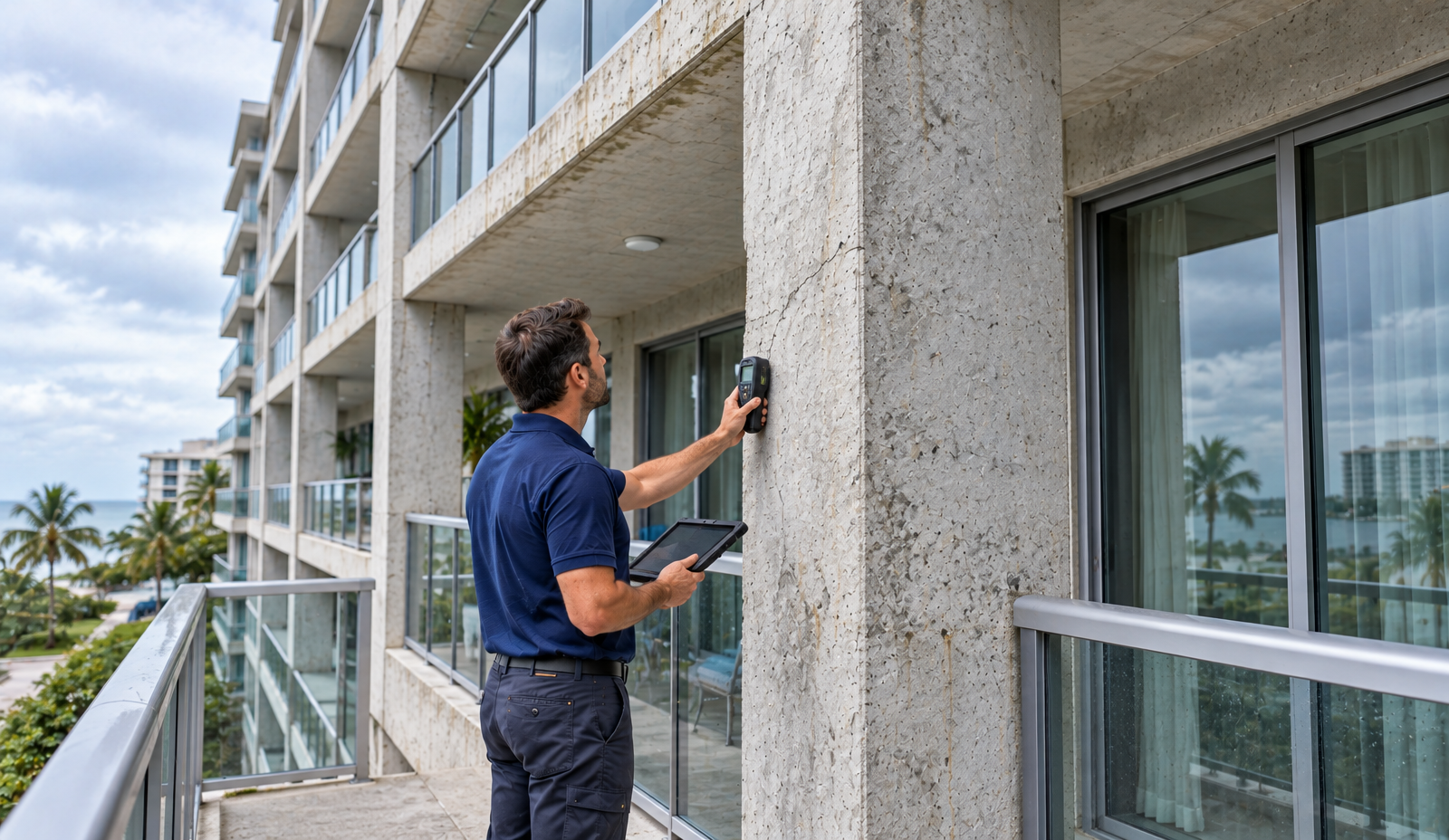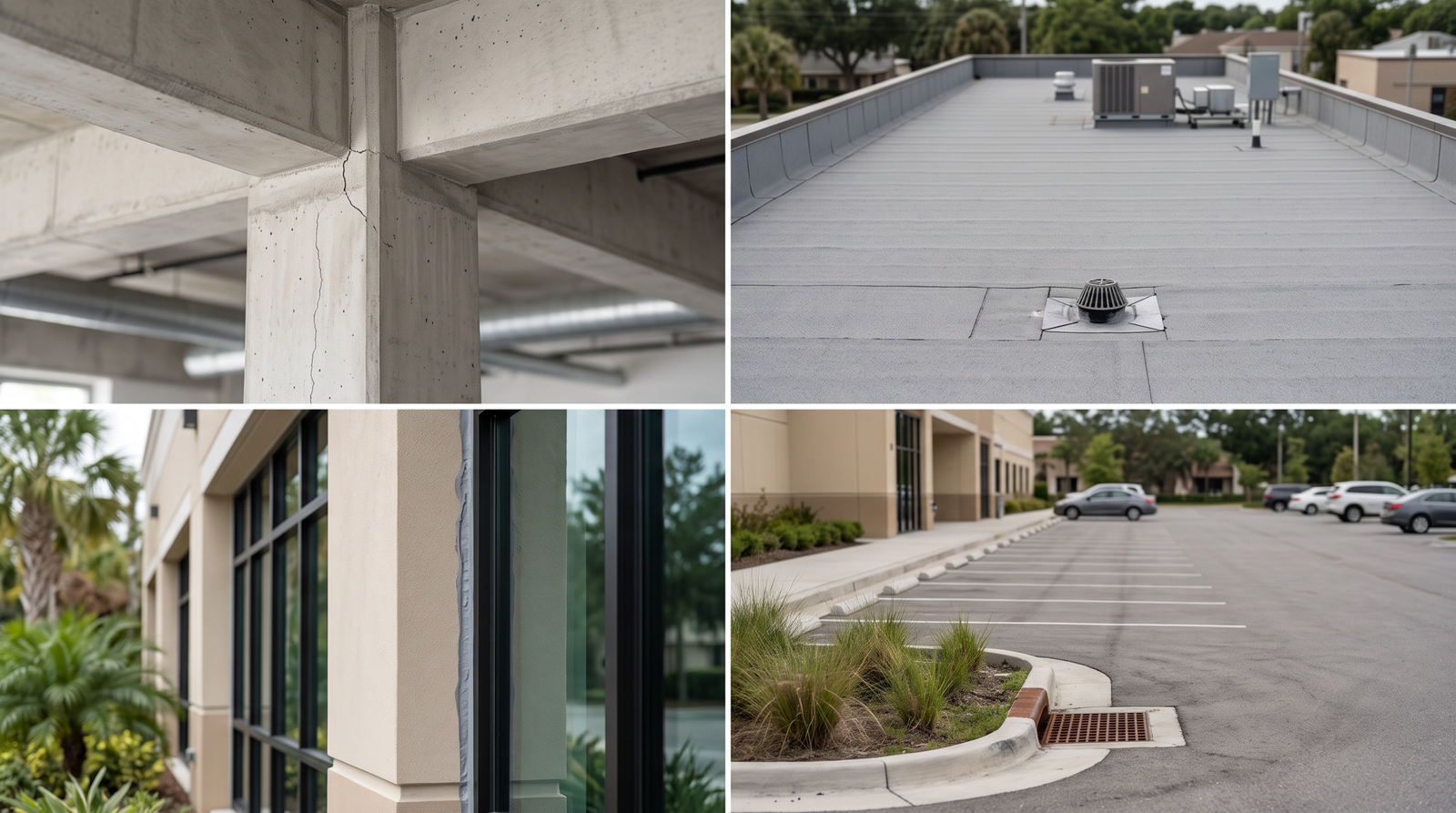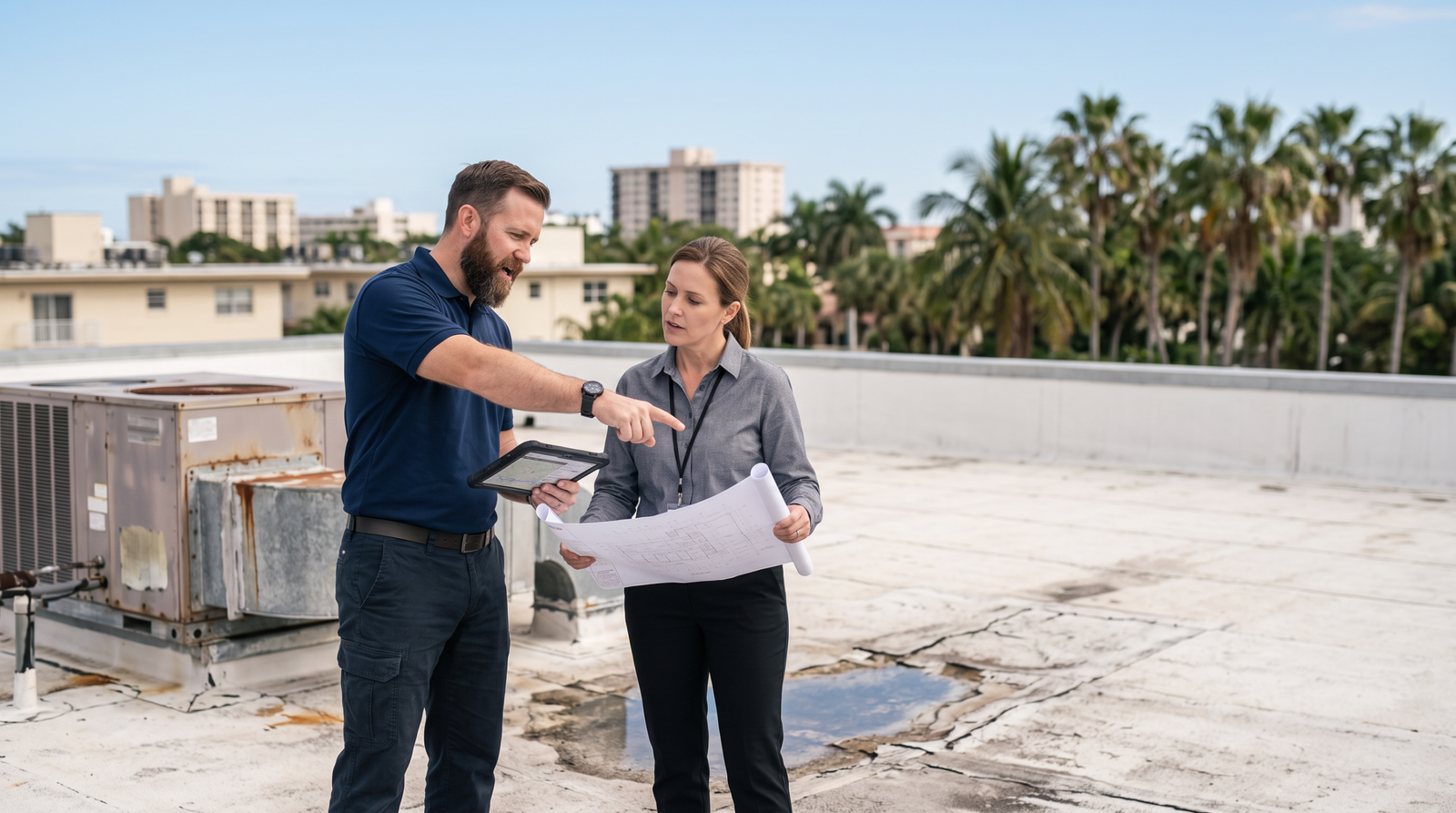

The right property evaluation starts with the decision you need to make. A commercial acquisition may call for a broad overview of building and site conditions. A recurring leak or concern about structural movement may require a focused technical investigation.
When comparing a property condition assessment vs building inspection, the terminology alone does not establish the scope. “Building inspection” can describe several different services, and some commercial inspections overlap with a PCA. The proposal and deliverables determine what the evaluation will address.
For commercial owners, facility managers and asset managers, the practical question is whether the service will provide the evidence, recommendations and planning information needed for the property decision.
Prema Consulting Group helps commercial clients determine when a broader PCA, targeted engineering evaluation or other specialist assessment is appropriate.
What Is a Property Condition Assessment?
A property condition assessment, or PCA, evaluates the physical condition of a commercial property’s buildings and site improvements within an agreed scope.
A baseline PCA typically combines a walk-through survey with available document review and interviews. Its written deliverable, often called a property condition report or PCR, communicates observed conditions, significant deficiencies, recommendations and limitations. Cost opinions and longer-term planning information should be defined in the assignment.
ASTM E2018 provides a voluntary framework for baseline commercial PCAs and their reports. Clients should confirm whether that framework applies and whether additional services are included.
A PCA can support acquisition due diligence, financing requirements, ownership planning and prioritization of repair needs. It provides an overview of the assessed systems rather than a detailed diagnosis of every potential problem.
What Does “Building Inspection” Mean?
Building inspection is a broad term. In a commercial setting, it may refer to:
- A general condition inspection of accessible building systems
- A focused review of a roof, exterior wall or other component
- A construction or permitting inspection
- A specialist equipment inspection
- An inspection required by a specific program or jurisdiction
These services have different objectives and deliverables. A permitting inspection evaluates work within its assigned regulatory scope. A roof inspection may document roof conditions without assessing the property’s other systems. A general commercial inspection may provide an extensive condition report, depending on its scope.
Because the term is not sufficiently specific on its own, owners should ask what will be reviewed, by whom, using which methods and with what reporting.
Commercial PCAs and Residential Home Inspections
A residential home inspection addresses a different property type and client context. Residential inspection terminology and service packages should not be assumed to satisfy commercial due diligence or asset-management requirements.
Commercial properties may involve multiple tenant spaces, larger mechanical systems, site infrastructure and operational constraints. Financing or acquisition assignments may also specify report formats, cost opinions and planning periods.
For a commercial assignment, confirm that the provider’s experience, scope and deliverables match the property and intended use.
Comparing Scope, Use and Deliverables
The following comparison illustrates typical differences. Individual proposals may overlap or provide additional services.
Property Condition Assessment
Typical purpose: Develop a broad understanding of commercial building and site conditions for due diligence, ownership decisions or planning.
Typical scope: Accessible observations across multiple property systems, supplemented by available records and property personnel information.
Typical deliverable: A property condition report with significant findings, recommendations, photographs and limitations. Defined cost opinions and planning information may be included.
Important limitation: A baseline assessment generally does not diagnose every concealed condition or verify the performance and capacity of every system.
General Commercial Building Inspection
Typical purpose: Document conditions for a defined commercial property need.
Typical scope: Varies by provider and assignment. It may cover several systems or a narrower group of components.
Typical deliverable: An inspection report or other documented findings. Repair priorities, cost opinions and planning periods require confirmation.
Important limitation: The service name does not establish how comprehensive the review will be or whether engineering analysis is included.
Targeted Engineering or Specialist Evaluation
Typical purpose: Answer a specific technical question, such as the source of recurring leakage or the significance of structural distress.
Typical scope: Focused observations, records review and appropriate analysis or testing related to the concern.
Typical deliverable: Technical findings, limitations and recommendations addressing the defined question. Repair design may require a separate scope.
Important limitation: A focused investigation does not necessarily provide a condition overview of the entire property.
When a Broader PCA May Be Appropriate
A PCA may be appropriate when the decision requires information about several building and site systems together.
Examples include:
- Evaluating a commercial property before purchase
- Meeting specified financing or refinancing requirements
- Establishing an overview of an existing asset’s condition
- Identifying significant repair needs across multiple systems
- Organizing near-term repair and capital-planning considerations
- Reviewing several properties using a consistent assessment scope
For example, an owner considering an office building may need to understand roofing, exterior walls, equipment, pavement and accessible structural conditions together. A focused roof inspection would address only part of that decision.
The scope should specify the buildings and systems to be reviewed, required cost information, planning period and any recipient requirements.
When a Targeted Evaluation May Be More Appropriate
A broad condition overview may not answer a specific question that requires diagnostic work or engineering analysis.
Focused evaluation may be appropriate for:
- Recurring water intrusion with an unresolved source
- Significant cracking, displacement or building movement
- Corrosion or deterioration affecting structural components
- Roof concerns requiring moisture testing or attachment evaluation
- Equipment performance problems requiring specialist testing
- Uncertainty about the condition or function of prior repairs
For example, a PCA may document staining and a reported history of leaks. Tracing the entry point and concealed moisture pathway may require targeted envelope testing and access to selected assemblies.
Similarly, documenting visible foundation distress does not establish its cause or structural implications. A focused structural evaluation, potentially coordinated with geotechnical expertise, may be needed.
When Both Services May Be Needed
A PCA and a targeted evaluation can serve complementary purposes. The broader assessment identifies concerns across the property; specialist work addresses questions that need more detail.
In an acquisition, a PCA might identify roof deterioration and signs of recurring leakage. A focused roof or envelope investigation could then clarify repair needs before the buyer relies on a preliminary allowance.
Known concerns may justify arranging specialist work at the outset. Waiting for a broad assessment to rediscover a documented issue can leave less time for meaningful follow-up before a transaction deadline.
Deliverables to Confirm Before You Engage a Provider
The proposal should explain what information you will receive and how it will support the intended decision.
Confirm whether the assignment includes:
- An executive summary and system descriptions
- Photographs and locations of significant findings
- Identification of observed deficiencies
- Recommended actions and defined repair priorities
- Opinions of probable costs and their assumptions
- A specified planning period
- Documentation of reviewed records and reported history
- Access limitations, exclusions and recommended follow-up
Also confirm who will perform the work and whether the relevant technical expertise is included. A professional credential alone does not establish that a proposal includes structural calculations, diagnostic testing or repair design.
If a lender or other recipient has requirements, provide them before the scope is finalized.
Understanding Access, Testing and Limitations
Both broad assessments and focused inspections can be constrained by inaccessible areas, concealed construction and incomplete records.
A single site visit may not capture an intermittent leak or equipment problem. Representative observations may not establish the condition of every tenant space or repetitive component. These limitations should be documented and considered when relying on the findings.
Testing should address a defined question. Moisture testing, selective openings, material measurements or equipment diagnostics can provide additional information, but their inclusion should be explicit.
A report should distinguish areas where no deficiency was observed from areas that were not evaluated. That distinction helps owners identify information gaps before committing to repairs or budgets.
How Cost and Planning Information Differ
Some evaluations include planning-level opinions of probable costs; others document conditions without estimating corrective work. Owners should confirm this before comparing proposals.
Where cost opinions are provided, review the assumed scope, quantities, planning period and exclusions. An allowance for further investigation is different from an estimate to complete a developed repair.
Preliminary cost opinions can support budgeting, but contractor pricing and repair design may be needed before implementation. Unresolved concealed conditions can materially affect the eventual scope and cost.
Choosing the Evaluation That Fits Your Decision
A practical selection process begins with four questions:
- What decision must the evaluation support?
- Do you need a property-wide overview or an answer about a specific condition?
- What report, cost information or testing is required?
- What must be resolved before the transaction or project proceeds?
For a broad commercial condition review, a PCA may be suitable. For a known technical concern, a focused engineering or specialist evaluation may provide the needed information. Some assignments benefit from both.
Scope, methods, qualifications and deliverables provide a more reliable basis for comparing services than the label or price alone.
Supporting Commercial Property Evaluation Decisions
Commercial properties require evaluations aligned with their systems, operational needs and ownership objectives. Clearly defining the assignment helps clients understand what the assessment will establish and where additional investigation may be necessary.
Prema helps commercial clients identify an appropriate evaluation approach, whether that involves a broader PCA, targeted engineering work or specialist coordination. The objective is to provide usable technical information for the property decision at hand.
Discuss Your Property Condition Assessment Needs
Prema Consulting Group helps commercial clients determine when a broader PCA, targeted engineering evaluation or other specialist assessment is appropriate for the property decision at hand.
Our team works with commercial owners, property and facility managers, and asset managers to define the assessment scope, reporting needs and potential follow-up evaluations.
Contact Prema to discuss your property condition assessment needs.
Frequently Asked Questions
What is the difference between a property condition assessment and a building inspection?
−A PCA generally provides a broad commercial property condition overview within a defined scope. Building inspection is a wider term that may describe a similar review or a more focused service. The proposal determines the actual differences.
Is a PCA more detailed than a building inspection?
+Not necessarily. A targeted inspection or investigation may examine one system in greater detail than a baseline PCA. A PCA may cover more systems while providing a different depth of evaluation.
Can a commercial building inspection meet PCA requirements?
+It may, if its methods, scope and deliverables satisfy the assignment requirements. Confirm the applicable framework and recipient expectations before relying on the service name.
Does a PCA include structural engineering analysis?
+A baseline PCA may document visible structural concerns. Detailed analysis of capacity, movement or deterioration requires an appropriate engineering scope and should not be assumed to be included.
Which evaluation should I request for a recurring leak?
+If the main question is where water enters and how it travels through the building, a targeted moisture or envelope investigation may be appropriate. A broader PCA may also be useful if other property systems need assessment.
Is a residential home inspection suitable for commercial due diligence?
+A residential inspection package should not be assumed to meet commercial requirements. The evaluation should match the commercial property, relevant systems, intended use and required reporting.
Our Related Services
Need Expert Forensic Engineering & Building Assessment Insights?
Get our accurate, evidence-based analysis to identify root causes, assess structural integrity, and make confident decisions.
Get in Touch →