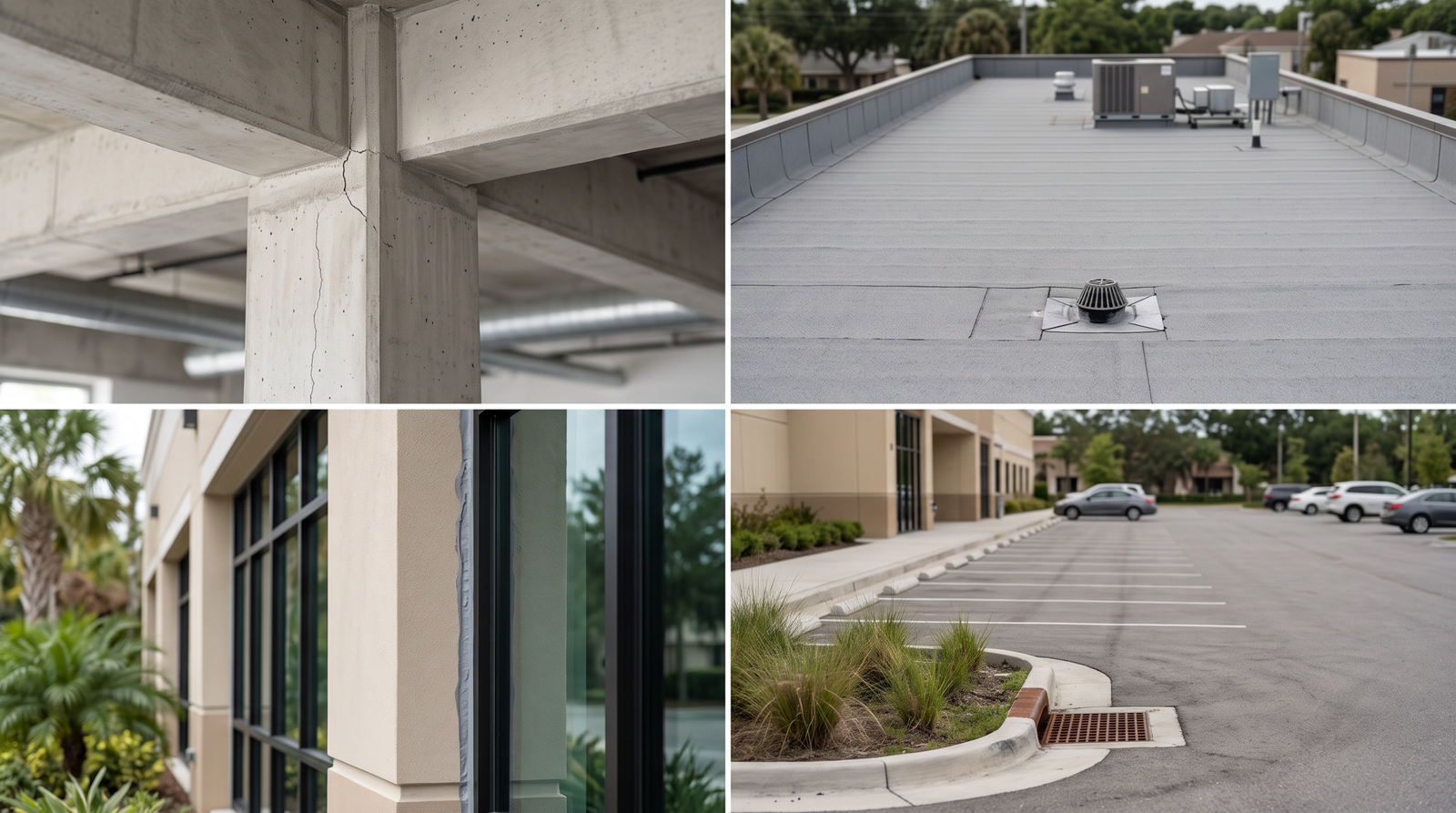

A commercial property’s physical condition can affect the work needed after acquisition and the capital required during ownership. A property condition assessment helps document those conditions so lenders, investors and property teams can review significant deficiencies and recommended next steps.
The most useful findings identify what needs attention, explain the evidence supporting that conclusion and communicate where uncertainty remains. A summary condition rating or repair total provides limited direction without the underlying scope, assumptions and priorities.
For commercial owners, facility managers and asset managers coordinating due diligence, a property condition assessment for lenders should be aligned with the recipient’s requirements and the actual property decision. The assessment provides technical information about physical condition; financing, valuation and investment decisions remain with the relevant decision-makers.
Prema Consulting Group provides clear technical documentation of observed property conditions, significant deficiencies and planning-level capital needs to support informed lender and investor review.
What a PCA Contributes to Lender and Investor Review
A property condition assessment, or PCA, evaluates a commercial property’s buildings and site improvements within an agreed scope. Its written deliverable is commonly called a property condition report, or PCR.
A baseline PCA generally combines accessible observations with available records and information from property personnel. ASTM E2018 provides a voluntary framework for this process. An assignment should identify the applicable framework, any recipient-specific requirements and additional services needed.
The report may help reviewers understand:
- Significant physical deficiencies
- Recommended repairs and their priorities
- Major system conditions relevant to ownership planning
- Planning-level cost opinions within the defined scope
- Issues requiring specialist evaluation
- Limitations that affect confidence in particular findings
A PCA does not establish property value, determine loan terms or resolve legal obligations. Its contribution is a documented technical basis for reviewing physical-condition concerns.
1. A Scope That Matches the Property and Review Requirements
Scope alignment is essential. A report that omits a relevant building, inaccessible system or required cost category may leave an important question unanswered.
Before the assessment begins, property teams should confirm:
- Buildings and site improvements to be evaluated
- Systems included and the level of review
- Applicable assessment framework and reporting requirements
- Recipient expectations for timing and deliverables
- Cost categories and planning period
- Known concerns requiring focused evaluation
A warehouse with specialized operations may require a different approach from a multi-tenant office property. Tenant equipment, process systems and other specialized assets should be specifically addressed if they are relevant to the assignment.
If a lender has a written checklist or scope, provide it before the proposal is finalized. A report’s title alone does not establish that it meets those requirements.
2. Significant Deficiencies With Clear Supporting Evidence
Reviewers need to know which conditions warrant attention and why.
A useful deficiency description identifies the affected component, location, observed condition and established extent. Photographs and available records should support the findings, while recommendations should explain the appropriate next step.
For example, repeated interior staining and reported leakage may warrant a targeted investigation. Those observations do not, on their own, establish the water-entry point or the extent of concealed damage.
The report should distinguish:
- Conditions directly observed
- Information reported by property personnel
- Conclusions supported by the available evidence
- Questions requiring additional investigation
That distinction helps reviewers understand the strength and limits of each finding. It also reduces the chance that an unconfirmed explanation becomes the basis of a repair budget.
3. Repair Priorities and the Consequences of Delay
A list of deficiencies is more useful when it explains recommended timing.
Some conditions may call for prompt attention. Others may be addressed through planned repairs, routine maintenance or further investigation before a corrective approach is selected.
Priority categories should be defined in the report. Recommendations may consider the condition’s severity, operational implications, potential progression and uncertainty. Where a potentially unsafe condition is identified, the concern and recommended next steps should be communicated clearly.
For example, an unresolved leak may need investigation before interior restoration. Deteriorated pavement may have a different planning priority depending on its location, extent and effect on use.
Owners should understand the basis for timing rather than assume that every item in the same cost schedule has equal urgency.
4. Planning-Level Capital Needs and Cost Assumptions
When included in the assignment, opinions of probable costs help reviewers understand the approximate financial implications of recommended work.
The report should explain:
- Work included in each allowance or estimate
- Assumed quantities and general scope
- Planning period and timing assumptions
- Basis of the cost opinion
- Significant exclusions and uncertainties
- Whether further investigation or design is needed
Planning-level opinions are different from contractor bids. The eventual cost can change as access requirements, repair details, concealed conditions and market pricing become clearer.
An allowance to investigate structural distress should be distinguished from a cost opinion to complete repairs. If a reliable repair scope cannot yet be established, the report should identify the information needed to refine the budget.
A single total can conceal these differences. Reviewers should look at the individual items and assumptions before using the schedule in financial planning.
5. Major Systems and Anticipated Work
Roofing, exterior walls, mechanical equipment, pavement and other systems can influence capital planning across the ownership period.
A PCA may document current condition, available age information, repair history and anticipated work within the agreed planning horizon. Recommendations should consider the evidence available rather than rely on age alone.
For example, a roof’s installation date provides context, but observed deterioration, recurring leaks, prior repairs and available documentation also matter. A replacement year should not be treated as a guaranteed failure date.
Where service-life assumptions are used, their basis and uncertainty should be stated. Missing records or limited access may warrant additional evaluation before a major replacement allowance is relied upon.
6. Limitations That Could Affect the Decision
A baseline assessment cannot reveal every concealed condition or verify every component’s performance.
Limitations may involve:
- Inaccessible roofs, rooms or tenant spaces
- Concealed framing, piping or envelope components
- Representative observations of repetitive areas
- Missing maintenance or construction records
- Weather conditions affecting observations
- Testing and specialist analysis outside the scope
The report should explain which limitations matter to the findings. An inaccessible roof with a reported history of leakage presents a different information gap from a locked storage room with no reported concern.
“No deficiency observed” and “not evaluated” convey different meanings. Clear reporting helps reviewers identify where additional access or investigation could materially improve the assessment.
7. Follow-Up Recommendations That Resolve Specific Questions
A PCA may identify conditions that require more detailed work before their significance or repair needs can be established.
Examples include:
- Structural analysis of significant movement or deterioration
- Targeted roof or envelope investigation for recurring leakage
- Geotechnical evaluation of relevant subsurface concerns
- Specialist testing of equipment performance
- Selective access to evaluate concealed deterioration
A recommendation should identify the question to be resolved. “Further evaluation recommended” is less useful than an explanation of the affected system, uncertainty and information needed.
Follow-up can occur alongside the broader assessment when concerns are already known. This helps property teams use transaction time efficiently and obtain more complete information before making commitments.
How Owners and Property Managers Can Support the Assessment
Property personnel often hold information essential to understanding recurring issues and prior work.
Useful preparation includes:
- Providing available construction and repair records
- Sharing maintenance logs and equipment information
- Identifying recurring leaks or operational problems
- Arranging access to relevant buildings and systems
- Making knowledgeable personnel available for interviews
- Providing the recipient’s written assessment requirements
Incomplete information should be acknowledged rather than filled in with unsupported assumptions. When records are unavailable, the assessment team can explain how that affects the findings and whether additional work is appropriate.
Reading the Report Beyond the Executive Summary
The executive summary highlights major findings, but supporting sections explain their basis and limitations.
Before relying on a report, reviewers should ask:
- Does the assessed scope match the required review?
- Are significant deficiencies located and documented?
- Are recommendations and priorities clear?
- Are cost opinions supported by defined assumptions?
- Are unresolved issues separated from confirmed findings?
- Could access limitations affect the proposed decision?
- What further information is needed before repair planning proceeds?
The condition narrative and cost schedule should be read together. A cost allowance may be preliminary even when the underlying observation is well documented.
Using PCA Findings During Ownership
The report can remain useful after a transaction by helping property teams organize follow-up evaluations, planned repairs and capital projects.
Owners can assign responsibility for recommended actions, obtain developed repair scopes and update budgets as information improves. Projects may also need coordination: roof work, rooftop equipment replacement and envelope repairs can affect one another’s sequencing.
A PCA is a snapshot of conditions at the time of assessment. Completed repairs, new leakage, equipment failures or other changes should be reflected in ongoing planning. The original report should not be assumed to describe the property’s condition indefinitely.
Clear Technical Documentation for Informed Review
For lenders and investors, the most important PCA information connects observed conditions with practical implications. Clear scope, supported findings, repair priorities and transparent cost assumptions make that information easier to evaluate.
Prema documents significant deficiencies and planning-level capital considerations while identifying the limits of the assessment and the need for additional investigation. This helps commercial property teams bring usable technical information to lender and investor review.
Discuss Your Property Condition Assessment Needs
Prema Consulting Group provides clear technical documentation of observed property conditions, significant deficiencies and planning-level capital needs to support informed lender and investor review.
Our team helps commercial owners, property and facility managers, and asset managers define an assessment scope suited to the property and intended use.
Contact Prema to discuss your property condition assessment needs.
Frequently Asked Questions
What is a property condition assessment for lenders?
−It is a commercial property evaluation scoped to support a lender's review of physical conditions. Required systems, reporting, cost information and assessment framework should be confirmed before the assignment begins.
Do all lenders require the same PCA scope?
+Requirements can differ by recipient and assignment. Property teams should provide written requirements and confirm that the proposed assessment addresses them.
Does a PCA determine property value or loan approval?
+No. A PCA provides technical information about physical conditions and recommended work. Valuation, underwriting and approval decisions are separate from the assessment.
Are PCA repair cost opinions final construction prices?
+No. They are planning-level opinions based on stated assumptions and scope. Developed repair details, concealed conditions, access and contractor pricing may change actual costs.
Can a PCA identify all hidden building problems?
+No. Accessible observations and available information have limits. Targeted testing, selective openings or specialist evaluation may be needed to address concealed or unresolved conditions.
What should an investor review first in a PCA report?
+Start with the scope and executive summary, then review significant deficiencies, priorities, cost assumptions and limitations. Follow-up recommendations should be considered before relying on unresolved repair allowances.
Our Related Services
Need Expert Forensic Engineering & Building Assessment Insights?
Get our accurate, evidence-based analysis to identify root causes, assess structural integrity, and make confident decisions.
Get in Touch →