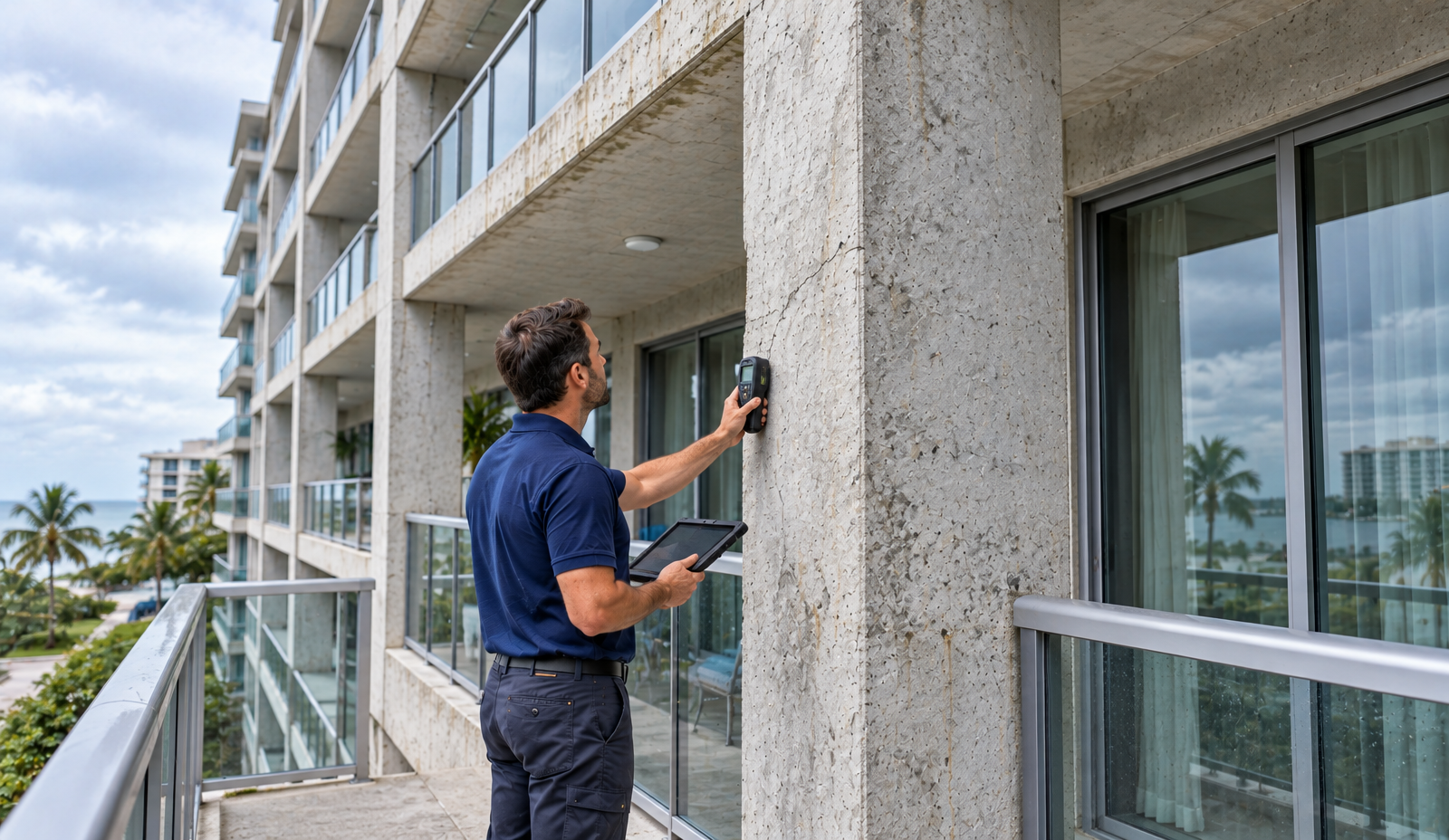

When comparing a milestone inspection vs building recertification, Florida associations should begin with applicability. A milestone inspection is a statutory structural evaluation for qualifying residential condominium and cooperative buildings. Building recertification is governed by the applicable local program and can cover different property types and inspection disciplines. [1–5]
An association may need to address both programs. Before commissioning an inspection, confirm the building’s ownership, height, age, location and accepted inspection history with the responsible building department.
Prema helps Florida property teams identify the appropriate engineering assessment pathway based on building type, jurisdiction and applicable requirements.
Confirm current statutory and local requirements immediately before publication and verify building-specific obligations with the local enforcement agency.
First Determine Which Requirements Apply to Each Building
Associations should evaluate each building separately, particularly on properties with multiple structures or mixed ownership. One inspection schedule should not automatically be assigned to every structure on the site.
Organize the following information:
Property address and responsible building department
Residential condominium or cooperative ownership configuration
Number of habitable stories
Available certificate-of-occupancy and age records
Local building classification and other eligibility information
Previous inspection reports and agency acceptance records
Current notices and confirmed due dates
This information helps establish whether the association needs a milestone inspection, local recertification, both programs or another assessment. Where applicability is uncertain, obtain clarification before defining the engineering scope.
When Florida Milestone Inspection Requirements Apply
Section 553.899 applies to buildings with three or more habitable stories that are subject, wholly or partly, to residential condominium or cooperative ownership. The statute exempts single-family through four-family dwellings with three or fewer habitable stories above ground. [1]
The general initial milestone age is 30 years, followed by 10-year intervals. A local enforcement agency may require an initial inspection at 25 years based on local circumstances, including environmental conditions. This is not a blanket statewide three-mile coastal rule. [1]
Older buildings, accepted prior inspections and approved extensions require review of the applicable schedule. A newly scheduled appointment does not resolve an overdue obligation.
When Local Building Recertification Requirements Apply
Local recertification programs use their own coverage criteria, exemptions and administrative requirements. They may apply to condominium buildings, commercial buildings and other structures.
Miami-Dade County
Miami-Dade’s published program generally uses a 30-year initial cycle and 10-year recurrence for covered buildings, with separate provisions for certain coastal condominium and cooperative buildings. Its required scope includes structural and electrical reporting. Properties within municipalities should confirm procedures with the responsible municipal building department. [3]
Broward County
Broward’s published Building Safety Inspection Program covers applicable buildings and structures at 25 years, followed by 10-year intervals. The amendment contains specific exemptions, including minor structures with building area below 3,500 square feet. Its recurring cycle is age-based and does not shift simply because an earlier report was filed later. [4]
Boca Raton
Boca Raton administers its own Building Recertification Inspection Program. The city publishes eligibility criteria, structural and electrical checklists, and property schedules. Its guidelines include agency review and repair-plan procedures. Associations should confirm their building’s classification and current schedule with the city. [5–6]
These examples show why a local program must be checked directly. They do not establish a uniform recertification schedule across Florida.
How the Inspection Scopes Differ
Milestone Inspection Scope
A milestone inspection evaluates structural condition. Phase 1 is a visual assessment; Phase 2 is required when substantial structural deterioration is identified and may involve testing. [2]
The statute states that the milestone inspection’s purpose is not to determine compliance with the Florida Building Code or firesafety code. [1]
Local Recertification Scope
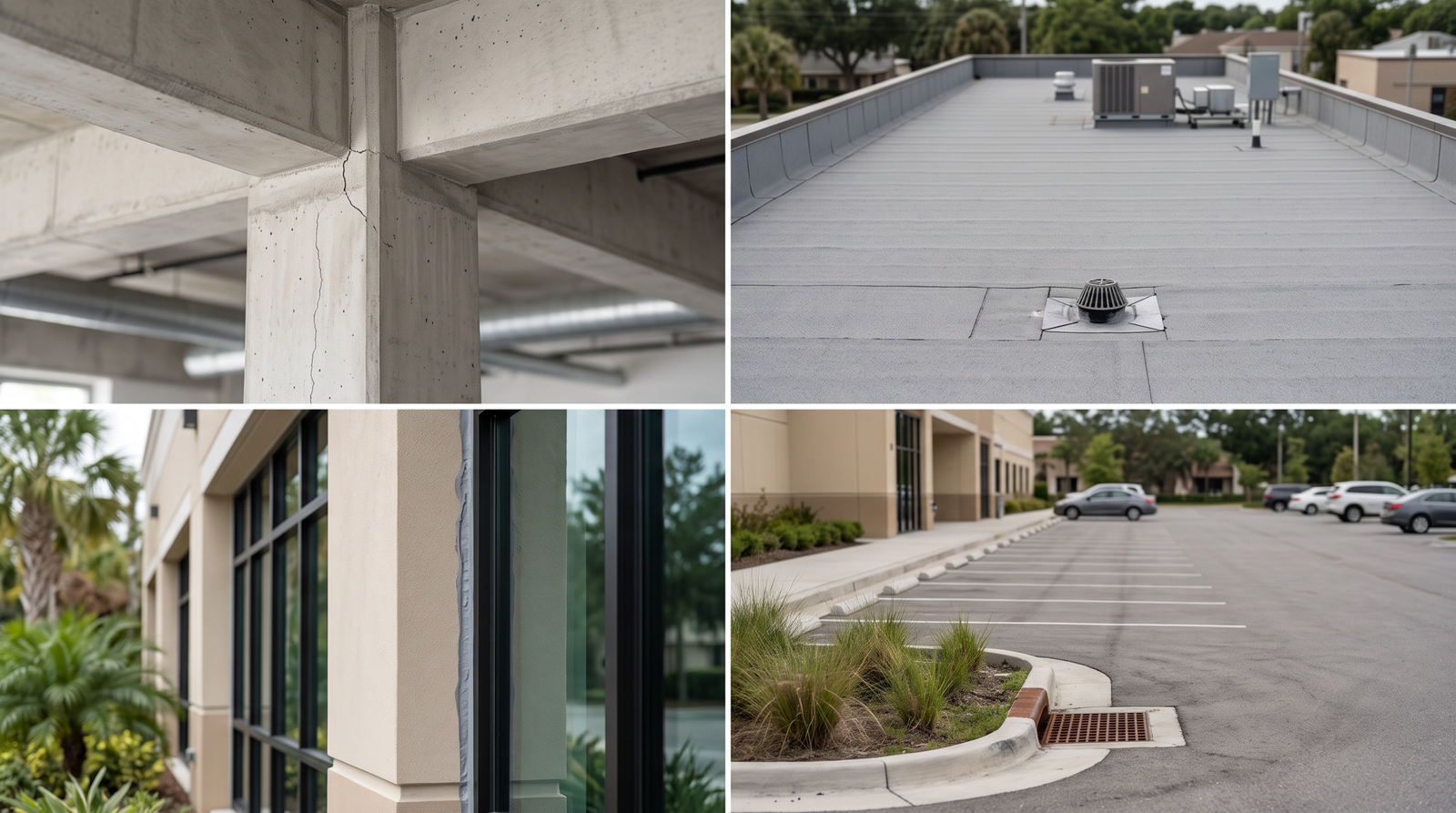
The applicable jurisdiction defines the recertification scope. Structural and electrical reporting are required in the local programs described above. Additional items may apply; Miami-Dade, for example, publishes requirements involving parking-lot illumination, waterway guardrails and structural glazing where applicable. [3–6]
Confirm required disciplines, professional qualifications, current forms and supporting documents before accepting a proposal. A report that addresses structural condition alone may leave other local requirements unresolved.
Can One Inspection Satisfy Both Programs?
Potentially, an engineering assignment can coordinate related fieldwork and documentation. However, associations should obtain confirmation of what the local enforcement agency will accept.
Ask the engineer and building department:
Does the proposed scope address both sets of requirements?
Are separate reports, summaries or forms required?
Is electrical or other specialist reporting needed?
Which deadline applies to each submission?
What agency review or acceptance is required?
Which association notices and follow-up obligations remain?
An older recertification report, a general condition assessment or a report labeled “milestone” should not be assumed sufficient solely because of its title. Confirm the accepted scope, documentation and inspection history.
Keep Deadlines and Follow-Up Obligations Separate
Maintain a record for each applicable program. Track the notice, due date, required reports, submission status, review comments and open repair items.
For milestone inspections, Phase 1 completion means submission of the report to the local enforcement agency within 180 days after receipt of the statutory notice. If Phase 2 is required, the subsequent 180-day provision concerns a progress report and completion timeline, not an automatic final completion deadline. [1]
DBPR explains that milestone findings are reported in signed and sealed documentation with a separate summary. Associations must distribute the summary to owners within 45 days of receipt and meet applicable posting and website requirements. [2]
Local recertification follows its own reporting and closeout process. Boca Raton’s guidelines, for example, describe review of report sufficiency and a repair plan when necessary. [6]
Report submission may be followed by further evaluation, repair design, permitting, construction or verification. Establish who will coordinate each task and confirm required timing with the agency. Urgent conditions should be addressed according to the findings rather than deferred to a routine administrative deadline.
Common Assumptions Associations Should Avoid
Using an old “40-year inspection” label to determine the current due date
Assuming a local coastal provision is the statewide milestone rule
Treating a structural report as a complete structural-and-electrical submission
Assuming agency acceptance under one program resolves all other obligations
Treating an inspection appointment as completion of the reporting process
Using one building’s eligibility or schedule for the entire property
Keep copies of agency determinations and accepted reports so future boards and managers can understand the building’s inspection history.
Questions to Resolve Before Hiring an Engineering Team
Give prospective professionals the current notice, prior reports and known building information. Ask for a proposal identifying the applicable assessment pathway, included disciplines, deliverables, access needs and anticipated follow-up.
Verify appropriate Florida licensure and experience for the building and required scope. Clarify whether testing, electrical evaluation, repair design, resubmittals or construction-phase services are included or require separate authorization.
This preparation helps associations compare proposals on the work required and coordinate a realistic project schedule.
Supporting Florida Associations With the Appropriate Assessment Pathway
The comparison between milestone inspections and recertification is most useful when it leads to a building-specific plan. Confirm applicability first, define the required scope and retain separate records of reporting and follow-up obligations.
Prema helps Florida property teams evaluate the engineering assessment pathway appropriate to their building type, jurisdiction and applicable requirements. Coordinated scope planning can help associations organize inspections, documentation and next steps.
Discuss Your Florida Building Assessment Needs
Prema helps Florida property teams identify the appropriate engineering assessment pathway based on building type, jurisdiction and applicable requirements.
Contact Prema to discuss your florida building assessment needs.
Primary Sources and Publication Review
Last reviewed: October 8, 2026
Recheck current statutory text, local program guidance, forms and building-specific notices before publication and during future updates.
Florida Legislature: Section 553.899, Florida Statutes
Florida DBPR: Milestone Inspections and Structural Integrity Reserve Studies
Miami-Dade County: Building Recertification Guidance
Broward County: Building Safety Inspection Program, Section 110.15 and Program Forms
City of Boca Raton: Building Recertification Inspection Program
https://myboca.us/2091/Building-Recertification-Inspection-Prog
City of Boca Raton: Recertification Guidelines
Frequently Asked Questions
Does every Florida condo building need both inspections?
−No. Milestone applicability depends on statutory criteria, while recertification depends on the relevant local program. Confirm each building’s requirements with the responsible agency.
Is a milestone inspection an electrical inspection?
+The milestone inspection is a structural evaluation. A local recertification program may also require separate electrical reporting. Confirm the complete assignment scope. [1, 3–6]
Can a previous recertification report replace a milestone inspection?
+Do not assume so. Ask the local enforcement agency whether the report and inspection history satisfy applicable requirements and how acceptance affects the next inspection date.
Does completing Phase 1 mean no maintenance or repairs are needed?
+Not necessarily. Phase 2 depends on substantial structural deterioration, but the report can identify other repairs or further inspection needs. Review all findings and recommendations. [2]
How is a structural integrity reserve study different?
+A structural integrity reserve study supports reserve planning. It has a different purpose from a milestone inspection or local recertification and should be evaluated as a separate obligation. [2]
Our Related Services
Need Expert Forensic Engineering & Building Assessment Insights?
Get our accurate, evidence-based analysis to identify root causes, assess structural integrity, and make confident decisions.
Get in Touch →