
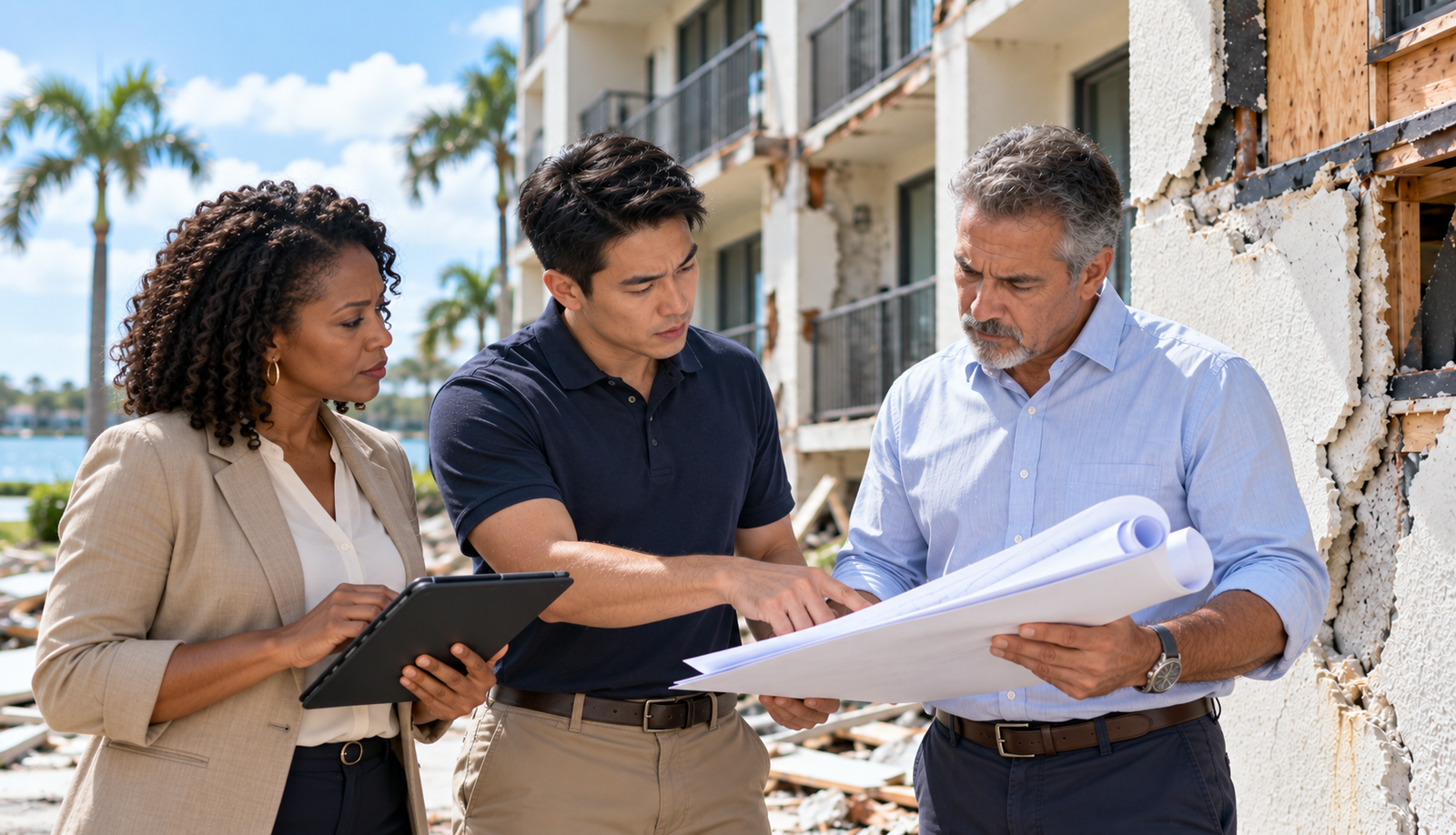
How to Read a Forensic Engineering Report What Claims Professionals Should Look For
A forensic engineering report should do more than document an inspection. It should answer the assignment questions, explain how the engineer evaluated the evidence, and show how the analysis supports the conclusions. For claims professionals, understanding that progression is essential to determining whether the report addresses the technical issues presented by the loss.
The following review framework helps claims teams evaluate the report’s scope, evidence, reasoning, limitations, and usefulness without treating the engineering findings as a coverage determination.
Start With the Assignment Scope
Before reading the conclusions, compare them with the questions the engineer was retained to evaluate. A technically detailed report may still be incomplete for the claim if it does not directly address the assignment.
The scope should identify:
- The specific technical questions presented
- The property areas, systems, and components evaluated
- Whether the assignment addresses causation, extent of damage, structural performance, or another issue
- Services or questions excluded from the evaluation
- Any information, access, or testing limitations known at the outset
Understand Observations Analysis and Conclusions
A clear report distinguishes among three different parts of the engineer’s work. Observations describe what the engineer saw, measured, photographed, or documented. Analysis explains how those observations were evaluated using engineering principles, records, data, and relevant technical references. Conclusions state the professional opinions supported by that analysis.
Claims professionals should be able to follow the report from documented fact to engineering reasoning to conclusion. When these elements are blended together, it becomes harder to determine which statements describe physical conditions and which represent professional opinions.
Seven Questions to Ask When Reviewing the Report
1. Does the Report Answer the Assignment Questions
The findings should respond directly to the defined scope. If the engineer was asked to evaluate whether observed damage is consistent with a reported event, the report should address that question rather than provide only a general description of property conditions. Unanswered questions should be identified, along with the reason they could not be resolved.
2. Is the Evidence Clearly Documented
The report should identify the inspection date, evaluated areas, documents reviewed, and significant observations. Photographs, measurements, moisture readings, testing, or other field information should support material findings when applicable. Inaccessible, concealed, altered, or repaired areas should also be disclosed.
3. Is the Methodology Appropriate and Understandable
Claims professionals should be able to understand how the investigation was conducted. The report may describe inspection procedures, testing methods, calculations, weather information, technical references, or other analytical tools. The level of detail should be appropriate to the assignment and sufficient to explain how the engineer developed the opinions.
4. Does the Analysis Connect the Evidence to the Conclusions
A conclusion should not appear without an explained technical basis. The analysis should connect damage location, severity, distribution, material behavior, building characteristics, event information, and other relevant evidence to the opinion. The reasoning should explain not only what the engineer concluded, but why the evidence supports that conclusion.
5. Were Alternative Explanations and Contributing Conditions Considered
Property damage may involve more than one potential mechanism. Depending on the assignment, the report may need to consider event-related forces, deterioration, prior repairs, installation conditions, construction characteristics, maintenance, or environmental exposure. A strong analysis explains which alternatives are consistent with the evidence and which are not.
6. Are Material Limitations Clearly Explained
Limitations may involve unavailable documents, restricted access, altered conditions, concealed components, missing weather data, or the absence of testing. A limitation does not automatically invalidate an opinion. Claims professionals should consider whether it is minor, whether it materially affects the conclusion, or whether additional evaluation is needed.
7. Does the Report Identify Unresolved Questions or Next Steps
When the available evidence does not support a definitive conclusion, the report should say so. It may identify additional records, destructive examination, material sampling, monitoring, specialist involvement, or further structural analysis that could address an unresolved question. Recommended next steps should explain what information the additional work is intended to provide.
How to Evaluate Conflicting Information
Claims investigations may include inconsistent loss descriptions, photographs, repair histories, inspection records, or statements from involved parties. When conflicting information affects the technical analysis, the report should identify the conflict and explain how it was considered. The engineer should not silently adopt one version of events without explaining why the physical evidence supports it.
Considerations for Florida Storm and Moisture Claims
For Florida storm and moisture assignments, report review may involve weather-event information, wind and wind-driven rain, roofing and exterior-envelope conditions, moisture pathways, prior deterioration, and repairs or emergency mitigation that may have changed the evidence. Building code provisions should be discussed only when they are relevant to the assignment and the condition being evaluated.
How Prema Approaches Forensic Engineering Reports
Prema’s forensic engineering reports are structured around the technical questions presented by the assignment. Our civil and structural engineers distinguish documented observations from engineering analysis and conclusions, identify material limitations, and explain the technical basis for their opinions in language claims professionals can understand and use.
When the available evidence does not support a definitive conclusion, the report explains what remains unresolved and whether additional information, testing, or evaluation may be appropriate. This approach supports objective, technically defensible reporting without making insurance coverage determinations.
Discuss a Forensic Engineering Assignment
When a property loss requires clear answers to complex technical questions, Prema Consulting Group can help define the appropriate investigation scope and reporting requirements.
Discuss an Assignment with Our Forensic Engineering Team
Recent Blogs


Our Related Services
Need Expert Forensic Engineering & Building Assessment Insights?
Get our accurate, evidence-based analysis to identify root causes, assess structural integrity, and make confident decisions.
Get in Touch →