

Signs Your Building Needs a Foundation Assessment
A foundation does not say it is failing. It does not send you a warning. Make a loud noise. You will see it in things. A door that is hard to close, a small crack near a window, a floor that does not feel right. People who own homes see these things one by one, and they think each one is not a deal so they do not think about how they are all related to the foundation. The foundation is just not working like it should. That is a problem. A foundation assessment exists precisely for that gap, catching the pattern before it becomes something structural and expensive.
The tricky part is that a lot of these signs are genuinely minor on their own. Houses settle a little. Doors stick in humid weather. None of that automatically means there’s a real problem. But when several of these signs show up together or get worse over time instead of staying the same, that’s usually the point where it’s worth having someone qualified actually look.
The Signs Worth Paying Attention To
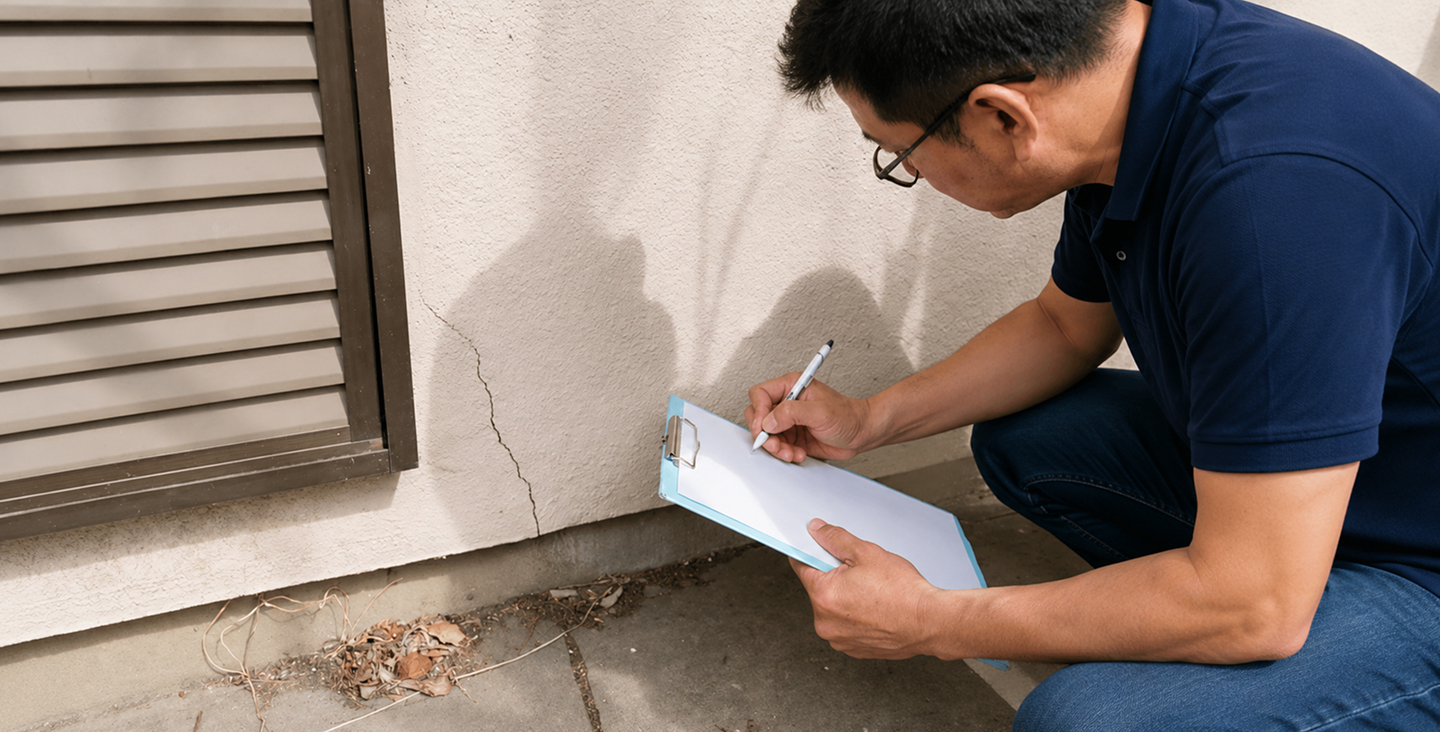
Cracks are the sign that something is going on, but not all cracks are the same. Little cracks in the walls the ones that go diagonally from the door or window, are pretty normal and do not usually mean anything is wrong. This is the building getting used to its weight. What is more worrisome is a crack that’s really wide, like more than a quarter inch, or one that gets bigger over time or one that shows up in the foundation of the building, not just the walls inside.
Doors and windows that stick are a problem. Sometimes they used to close, and now they do not. This is usually because the frame of the doors and windows has shifted slightly. The doors and windows’ frames have shifted because of movement that is happening below the doors and windows. The same thing happens with gaps that appear around the window frames or the exterior doors and windows. These gaps around the window frames or exterior doors and windows were not there when the building was new. The doors and windows are a sign that something is going on with the building.
Uneven or sloping floors are harder to notice gradually, since the change happens slowly enough that people living or working in the space adjust without realizing it. A dropped marble or ball rolling toward one side of a room is a simple way people sometimes first notice it, though a proper assessment measures this far more precisely than that.
When you are outside the building, look down at the ground. If you see water collecting near the foundation after it rains or you notice spaces between the foundation and the dirt or the yard is lower near the building, these are things you should pay attention to. The foundation of the building and water do not get along. Water gets into the soil. The soil gets all soggy. Then when the soil dries out, it shrinks. This makes the soil move. That makes the foundation of the building move too. The foundation of the building and the soil are connected. When the soil moves, the foundation of the building moves. Water is a problem for the foundation of the building because it makes the soil do things that are not good for the foundation of the building.
Why Foundation Issues Are Rarely Sudden
It’s worth understanding that foundation problems almost never appear overnight. What usually happens is a slow process—soil moisture changing with the seasons, tree roots drawing water unevenly from the ground, and poor drainage sending water toward the foundation instead of away from it—that takes months or years to show up as a visible crack or a sticking door.
This is actually good news in a sense. It means there’s usually a window where a foundation assessment can catch the issue while the fix is still manageable—sealing cracks, improving drainage, or underpinning a small section—rather than after it’s progressed into something that requires major structural work. The problem is that this window closes gradually and quietly, which is exactly why so many owners miss it until the damage is much further along.
What a Foundation Assessment Actually Involves
A qualified foundation inspection starts with a close visual review, both inside and outside the building. This means documenting every crack, measuring its width and direction, and checking whether doors and windows are square in their frames. Floor level gets checked as well, often using a laser level or similar tool to detect slopes that aren’t obvious just by walking through a room.
The assessment usually goes outside the building to look at the grading and drainage. Water management is a deal when it comes to foundation movement. So it gets a lot of attention. The main thing is where the rainwater goes. Is it staying near the foundation. Is it going somewhere else? Are the gutters and downspouts really doing their job and taking water away from the building?. Are they just putting water right next, to the wall?
Soil conditions are really important. They can make a difference in areas where the soil is made of clay that gets smaller and bigger when it gets wet or dry. Sometimes when people check the foundation of a building they also check the soil to see what is going on under the ground. This is because the same crack in the wall can mean things depending on the type of soil under the building. The type of soil like clay can affect what is happening with the foundation. Soil conditions and the type of soil such, as clay are very important to consider when checking the foundation of a building.
For bad cases an engineer will say we should keep an eye on the problem over time. We can put markers on the crack. See if it is getting bigger.. We can use simple tools to track if the crack is moving. This helps us figure out if the crack has been there, for a time and is not a problem or if the crack is getting worse. The engineer wants to know if the crack is a crack that is stable or a crack that is actively getting worse. This changes what we do next with the crack.
A Common Scenario
Imagine you have a story commercial building that is around 30 years old. The person in charge of the building starts to notice that a door near the office is becoming hard to close properly. At first they think it is because of the humidity. The property manager thinks that the humidity is the reason for the door being hard to latch. A few months go by. Then a crack appears in the drywall near the door. This crack is going from the corner of the doorframe down at an angle. The crack in the drywall is, near the door that the property manager of the building was having trouble with.
Individually, neither of these would necessarily prompt a call to an engineer. Together, and especially once the crack starts to widen slightly over a few weeks, they’re enough to justify a proper foundation assessment. The inspection finds that drainage on that side of the building has been poor for years — a downspout that was disconnected at some point and never reconnected, quietly sending roof runoff straight down next to the foundation every time it rains.
The fix here isn’t a major structural repair. It’s redirecting the water, sealing the existing crack, and monitoring the area for a few months to confirm things have stabilized. That’s a manageable, relatively inexpensive outcome — and it’s only possible because someone paid attention to the small signs early instead of waiting for the situation to get worse.
When It’s More Serious
Not every case resolves this simply, and it’s worth being honest about that. Buildings on expansive clay soils, older buildings with no modern foundation drainage system, or properties near large trees with aggressive root systems can develop foundation issues that require more involved solutions — underpinning, piering, or significant drainage work. A proper foundation inspection is what determines which category a given building actually falls into, rather than guessing based on how alarming the crack looks.
This is also where a foundation assessment connects naturally with broader building maintenance planning, since foundation issues rarely exist in isolation. A building with drainage problems severe enough to affect the foundation often has related issues with the roof, grading, or exterior waterproofing that are worth addressing at the same time.
Don’t Wait for the Crack to Get Bigger
The most common mistake with foundation issues isn’t misunderstanding the signs — it’s waiting too long after noticing them. A crack that gets watched for a year without any actual measurement or documentation isn’t being monitored; it’s just being ignored with extra steps.
If a building is showing more than one of the signs described here, especially if they’re new or getting worse, a foundation assessment is worth scheduling sooner rather than later. Foundations are expensive to fix once a problem has progressed and genuinely affordable to address while it’s still small. The only real cost to getting an assessment done is finding out nothing serious is wrong, which, for most buildings, turns out to be exactly the answer.
Choosing Someone Qualified
Not every contractor who offers to “check the foundation” is actually equipped to evaluate one properly. A structural or geotechnical engineer brings a level of measurement, documentation, and understanding of soil behavior that a general handyman inspection simply doesn’t. It’s worth asking directly what the assessment involves—whether it includes drainage evaluation, soil consideration, and some form of documented measurement, rather than just a walkthrough and a verbal opinion. A written report with specific findings is far more useful down the line, whether that’s for your own planning or for a future buyer who wants proof the issue was actually looked at rather than glossed over.
It’s also worth remembering that a foundation assessment isn’t just about catching problems. Plenty of inspections come back clean, or with only minor, expected settling that doesn’t need any action beyond continued observation. Getting that confirmation has real value too, especially for anyone who’s been quietly worried about a crack for months without knowing whether it actually mattered.
Recent Blogs

Our Related Services
Need Expert Forensic Engineering & Building Assessment Insights?
Get our accurate, evidence-based analysis to identify root causes, assess structural integrity, and make confident decisions.
Get in Touch →