
What Evidence Supports a Forensic Engineering Investigation
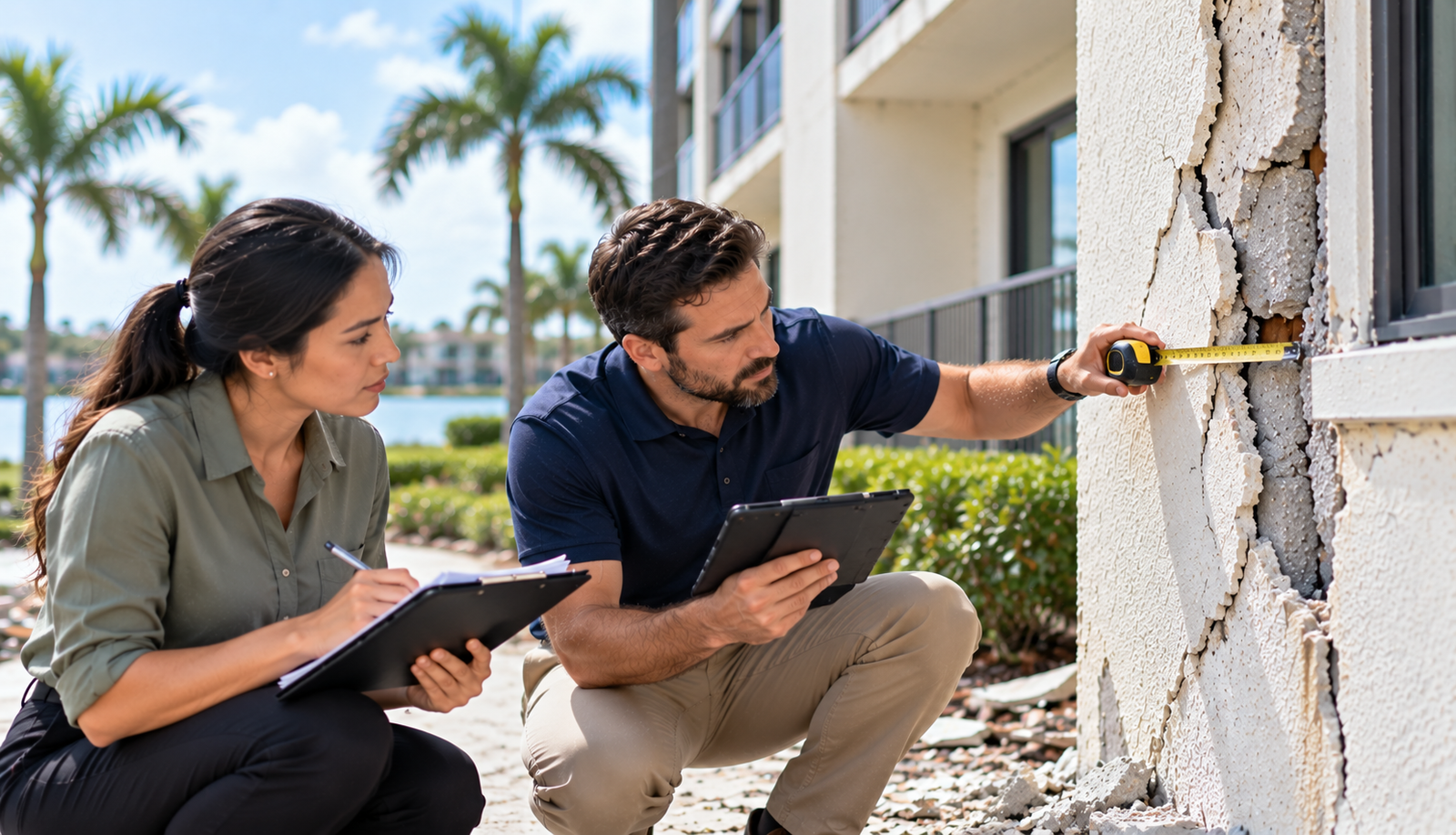
A forensic engineering opinion is only as reliable as the evidence available to support it. During a property damage investigation, engineers document physical conditions, review relevant records, and use testing or analysis when needed to answer the technical questions presented by the assignment.
Not every investigation requires the same information. Evidence must be relevant, reliable, and connected to the observed damage. Claims professionals can support the investigation by preserving available information and identifying the questions requiring engineering evaluation.
Evidence Must Relate to the Technical Question
Evidence collection should begin with the scope of the assignment. An investigation involving structural movement may require different measurements, records, and analysis than one involving wind damage or moisture intrusion. The engineer first identifies what must be evaluated, then determines what information may help answer that question.
A large volume of photographs or records does not necessarily create a stronger investigation. The engineer must understand the information’s source, date, meaning, and connection to the condition under evaluation.
Site Conditions and Damage Patterns
During the site evaluation, the engineer may document the location, distribution, direction, and severity of damage and the condition of nearby components. Undamaged or differently affected areas may provide important comparisons.
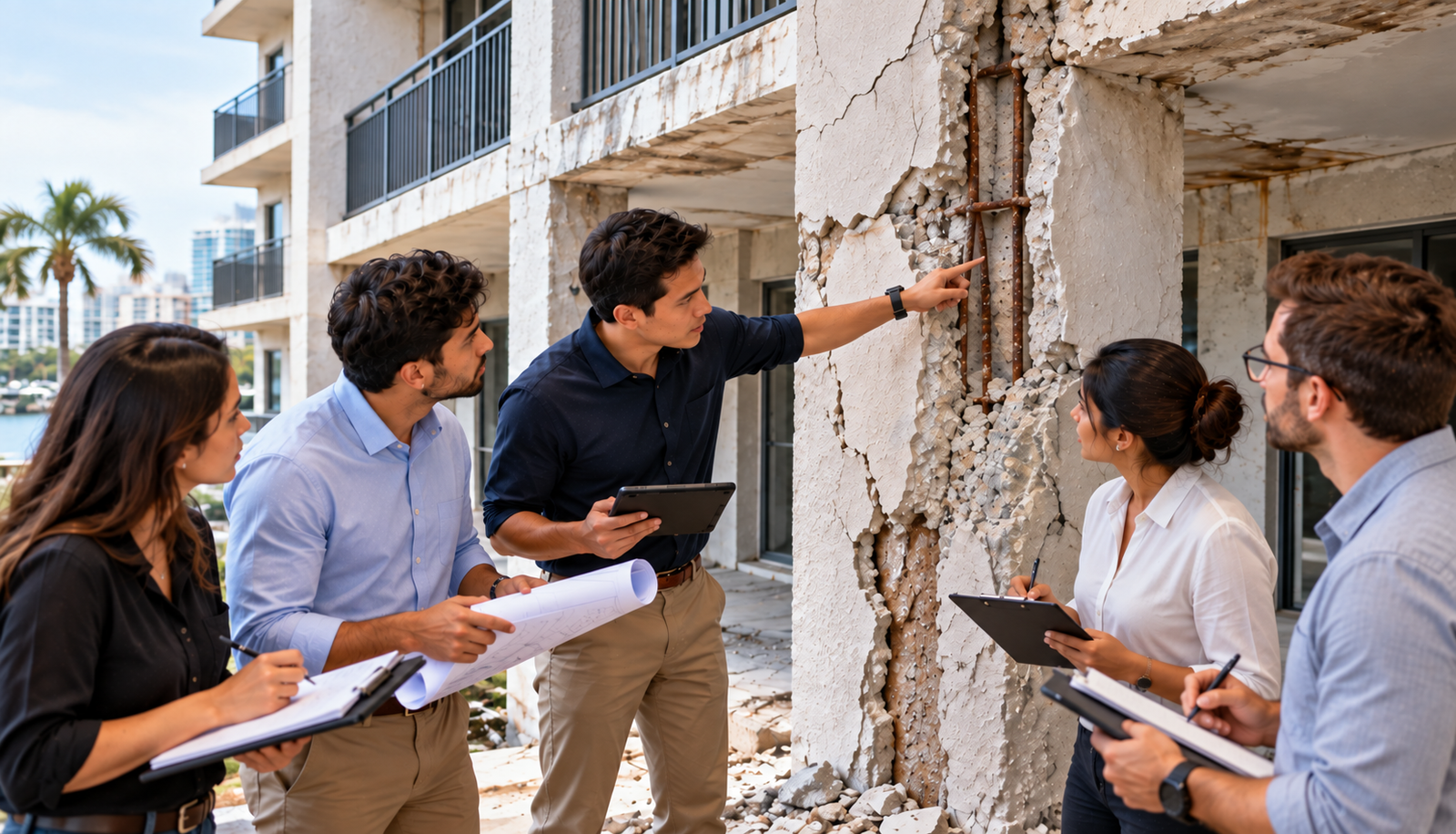
The investigation may address cracking, displacement, deformation, corrosion, deterioration, staining, material loss, connection performance, or other indicators relevant to the assignment. These conditions are considered in relation to structural behavior, material performance, construction characteristics, and building-system interactions.
Photographs With Context and Location
Useful photographs do more than show a close-up of damage. Documentation may progress from overall property and elevation views to building-system views and detailed images. Scale, orientation, or location identifiers may be included when they help explain the observation.
Photographs should also show relationships between components and between damaged and unaffected areas. Images without a known date, location, or source may still provide information, but those limitations should be considered before they are relied upon.
Measurements Field Notes and Location Mapping
Measurements help establish the size, position, elevation, alignment, or extent of a condition. Depending on the assignment, engineers may document dimensions, crack widths, deflection, moisture readings, floor elevations, component spacing, or other field data.
Field notes, sketches, annotated photographs, roof plans, or elevation diagrams may record where observations were made and how they relate. This context can reveal patterns not apparent from individual photographs.
Construction Repair and Maintenance Records
Historical records help the engineer understand how a building was designed, constructed, modified, repaired, and maintained. Relevant information may include architectural or structural drawings, specifications, permits, shop drawings, inspection reports, maintenance records, repair documentation, and prior engineering evaluations.
Pre-loss and post-loss photographs can help show whether a condition existed earlier or changed following a reported event. Records may be incomplete or may not match actual construction, so they are evaluated alongside the physical conditions observed at the property.
Reported Loss and Event Information
The engineer may consider the reported loss, initial observations, mitigation activities, repair estimates, adjuster documentation, weather information, and accounts from people familiar with the property. This background is not automatically treated as proof of causation.
When descriptions, dates, photographs, or records conflict, the engineer should identify the discrepancy and evaluate whether it affects the technical analysis. An engineering opinion should explain how the physical evidence supports the conclusion rather than silently selecting one account of events.
Testing Sampling and Physical Evidence
Some assignments require information beyond visual observation. Depending on the technical question, the engineer may use moisture measurements, level surveys, nondestructive evaluation, structural calculations, destructive examination when authorized, material sampling, or laboratory testing.
Testing should be selected to address a defined issue. Results do not establish causation by themselves; they must be interpreted with the site observations, records, and performance of the affected building systems. When materials or components are removed for evaluation, authorization, identification, handling, storage, and chain-of-custody procedures may be appropriate depending on the assignment.
Why Evidence Preservation Matters
Emergency mitigation, drying, cleaning, repairs, demolition, material removal, continued exposure, and time may alter or eliminate relevant information. Early documentation may preserve conditions that will not remain available.
Claims teams should notify the engineer about planned repairs, demolition, testing, or disposal of potentially relevant materials. The engineer can advise what should be documented or retained within the authorized scope. Preservation decisions may also require coordination with other parties.
How Engineers Address Missing or Limited Evidence
Not every investigation begins with complete records or unchanged conditions. Access may be restricted, components may be concealed, photographs may lack dates, and repairs may have occurred before the inspection. These circumstances do not automatically prevent an engineering opinion, but they may affect what can reasonably be determined.
A technically supported report should disclose material limitations, distinguish confirmed information from assumptions, and identify questions that remain unresolved. When appropriate, it may recommend additional records, testing, monitoring, or evaluation that could provide useful information.
What Claims Professionals Can Provide
Claims professionals can help by providing a clearly defined assignment, the reported loss information, initial and historical photographs, inspection documentation, mitigation and repair records, available construction documents, and prior evaluations relevant to the condition. Notice of planned repairs or material disposal is also important. The engineer can then determine which information is material to the technical questions presented.
How Prema Documents and Evaluates Evidence
Prema’s civil and structural engineers document property conditions in relation to the specific questions presented by the assignment. Depending on the scope, the investigation may include photographs, measurements, field notes, building-system observations, records review, testing, or authorized material sampling.
Evidence is evaluated collectively to understand damage patterns, material behavior, building-system performance, and potential contributing conditions. Prema’s reports explain what information was considered, how it informed the analysis, and what limitations may affect the findings.
Discuss a Forensic Engineering Assignment
When a property loss requires independent technical evaluation, Prema Consulting Group can help define the investigation scope and identify the information needed to address the engineering questions.
Recent Blogs




Our Related Services
Need Expert Forensic Engineering & Building Assessment Insights?
Get our accurate, evidence-based analysis to identify root causes, assess structural integrity, and make confident decisions.
Get in Touch →