

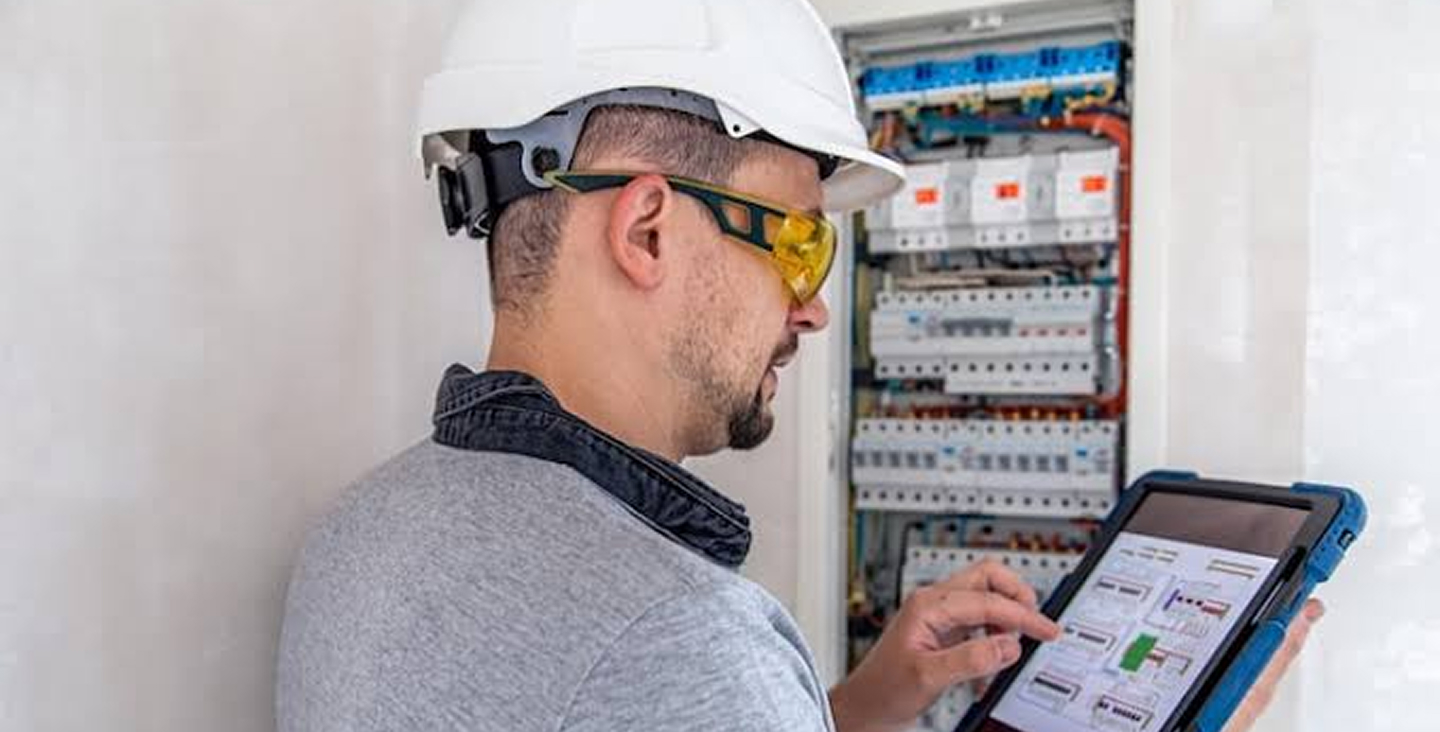
Electrical Failure Investigations by Forensic Engineers
Most people don’t think twice about the wiring behind their walls until something goes wrong. A breaker that keeps tripping for no obvious reason. An outlet that’s warm to the touch. Or, in the worst cases, an actual fire that starts somewhere inside a wall cavity and spreads before anyone even smells smoke. When that happens, and especially when there’s an insurance claim or a lawsuit attached to it, someone eventually has to answer a pretty specific question: what exactly failed, and why did it fail the way it did.
That question is a lot harder to answer than it sounds, and it’s the entire reason forensic engineering services exist as a distinct field rather than just being folded into general fire investigation or electrical contracting work.
Why Electrical Failures Are Their Own Animal
Electricity doesn’t leave the kind of evidence most people expect. There’s no smoking gun sitting out in the open. A failed component might look completely normal to the untrained eye, or it might be so badly damaged by heat and fire that figuring out what it even was originally takes real effort. And a lot of the time, whatever caused the failure gets destroyed by the very event it triggered — a fire, for instance, tends to consume the wiring that started it.
So investigators end up working backward from whatever survived. A scorched piece of copper wire, the remains of a breaker panel, melted insulation that’s fused into something unrecognizable. From that, someone has to reconstruct what actually happened, which is honestly closer to forensic pathology than it is to electrical repair work.
This is where electrical engineering failures get separated from general handyman-level troubleshooting. A licensed electrician can tell you a wire is bad. A forensic engineer can tell you why it failed, whether that failure was foreseeable, whether it violated code at the time of installation, and whether it’s consistent with the story everyone’s been told about how the incident unfolded.
What Actually Gets Investigated
There’s a fairly wide range of electrical failures that end up needing this kind of scrutiny, and they don’t all look the same.
Overloaded circuits are common — too many appliances drawing more current than a circuit was ever designed to handle, generating heat that builds up slowly until something finally gives. Arc faults are another big one, where electricity jumps a gap it shouldn’t, often due to damaged or aging insulation, and that arc can reach temperatures well over three thousand degrees in a fraction of a second. Loose connections cause plenty of failures too, sometimes from bad installation work, sometimes just from decades of vibration and thermal expansion slowly working a connection loose until resistance builds up and heat follows.
Then there’s equipment failure that has nothing to do with the wiring itself — a defective appliance, a faulty motor, something manufactured with a flaw that wasn’t caught before it left the factory. Untangling whether a fire started because of bad house wiring or because of a defective product someone plugged into perfectly good wiring changes who’s actually liable, and that distinction alone can be the difference between a homeowner’s insurance covering the loss or a product liability claim against a manufacturer taking over instead.
How the Investigation Actually Happens
It starts, again, with the scene itself. Investigators need to see the damage in place before anything gets moved, torn out, or cleaned up, because context matters just as much as the failed component itself. Where was it located relative to the point of origin? What else was nearby? Was there water damage, physical damage, or anything else that might have compromised the wiring before the failure even occurred?
From there, physical evidence gets collected — panels, breakers, wire segments, outlets, whatever remains. A lot of this ends up under a microscope in a lab. Arc beads, for instance, are small melted globules that form at the point where an arc occurred, and their shape and composition can actually reveal whether the arc was the cause of a fire or just a consequence of one. That distinction trips people up constantly. An arc mark doesn’t automatically mean the arc started the fire — sometimes a fire burns through insulation elsewhere and creates an arc as a byproduct, well after the real ignition already happened somewhere else.
Code compliance gets checked as well. Electrical codes change fairly often, and a wiring job that was perfectly legal in 1985 might not meet current standards at all. That doesn’t necessarily mean the old wiring caused the failure, but it’s relevant context an engineer has to weigh against everything else. Permits and inspection records get pulled too, when they exist, along with any history of prior electrical work or repairs done on the property.
Eventually, all of it gets compiled into a report laying out the failure mode, the likely cause, and the reasoning behind those conclusions. If the case ends up in litigation, that same engineer often testifies, walking through the physical evidence in a way that holds up under cross-examination from opposing experts who are, understandably, looking for any weak point in the analysis.
Why This Matters So Much for Insurance and Liability
The financial stakes in these cases tend to be significant, and rarely simple. A house fire caused by aging, deteriorated wiring might be covered under a standard homeowner’s policy. The same fire, if it’s traced back to negligent work done by a contractor five years earlier, could shift liability onto that contractor’s insurance instead. And if the failure traces back to a defective breaker or appliance, the manufacturer’s liability insurance potentially becomes involved, which opens up an entirely different set of claims and, often, entirely different lawyers.
Getting this wrong has real consequences. Insurers don’t want to pay a claim that should actually be someone else’s responsibility. Homeowners don’t want to get denied coverage based on a rushed conclusion that skipped over the real cause. And when multiple parties are potentially liable, an incomplete or poorly documented investigation can leave everyone arguing over an answer nobody can actually prove.
This is exactly why forensic engineering services are treated as essential rather than optional once an electrical failure causes real damage. The cost of a thorough investigation is small compared to the cost of a wrong conclusion driving a claim decision or a court case in the wrong direction.
A Few Things That Complicate the Picture
Electrical failures rarely happen in isolation, which makes investigations messier than people expect going in. A fire caused by an electrical fault often destroys a huge portion of the very evidence needed to prove that fault existed. Water from firefighting efforts can short out components that survived the fire itself, sometimes obscuring the original point of failure entirely. And in older homes, previous owners’ unpermitted electrical work — the kind done by someone’s uncle who “knew a bit about wiring” back in 1997 — adds a layer of unknown history that has to get pieced together from whatever physical clues remain.
Sometimes multiple issues stack on top of each other. An overloaded circuit that’s been fine for years finally fails the same week a connection happens to work loose nearby, and untangling which one actually caused the fire, versus which one was just present at the scene, takes real patience and genuine expertise.
Final Thoughts
Electrical failures sit at this odd intersection of engineering, fire science, and law, which is exactly why they need specialists who understand all three well enough to move between them credibly. A good investigation doesn’t rush to the easiest explanation. It follows the physical evidence carefully, checks it against code and installation history, and builds a conclusion that can survive being challenged by someone whose entire job is finding holes in it.
Whether it’s an insurance claim, a product liability case, or a dispute over a contractor’s work, electrical engineering failures need this level of scrutiny precisely because the stakes involved rarely stay small. Getting the answer right the first time saves everyone involved — insurers, homeowners, contractors, manufacturers — a lot of time, money, and frustration down the road.


Our Related Services
Need Expert Forensic Engineering & Building Assessment Insights?
Get our accurate, evidence-based analysis to identify root causes, assess structural integrity, and make confident decisions.
Get in Touch →