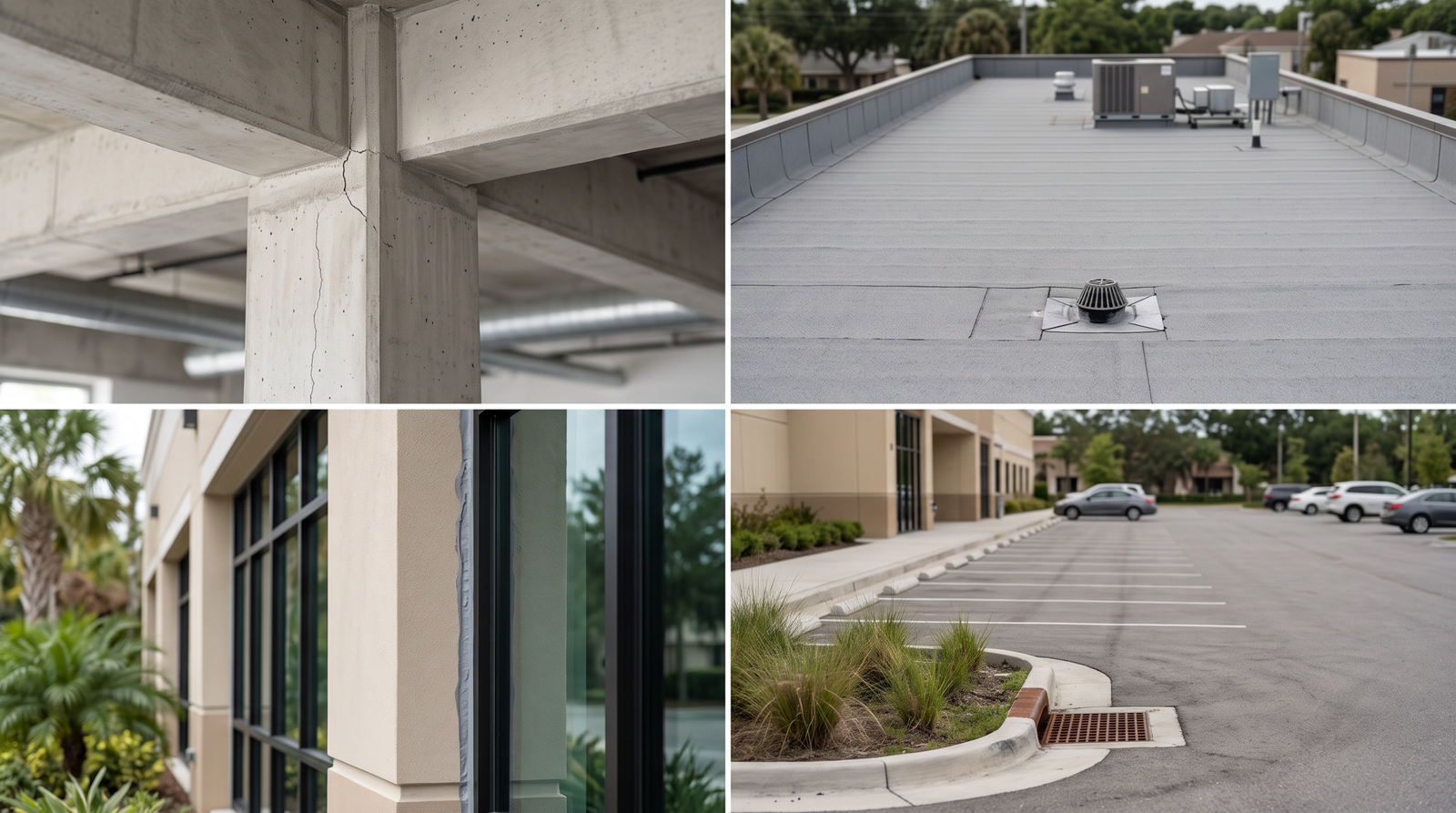
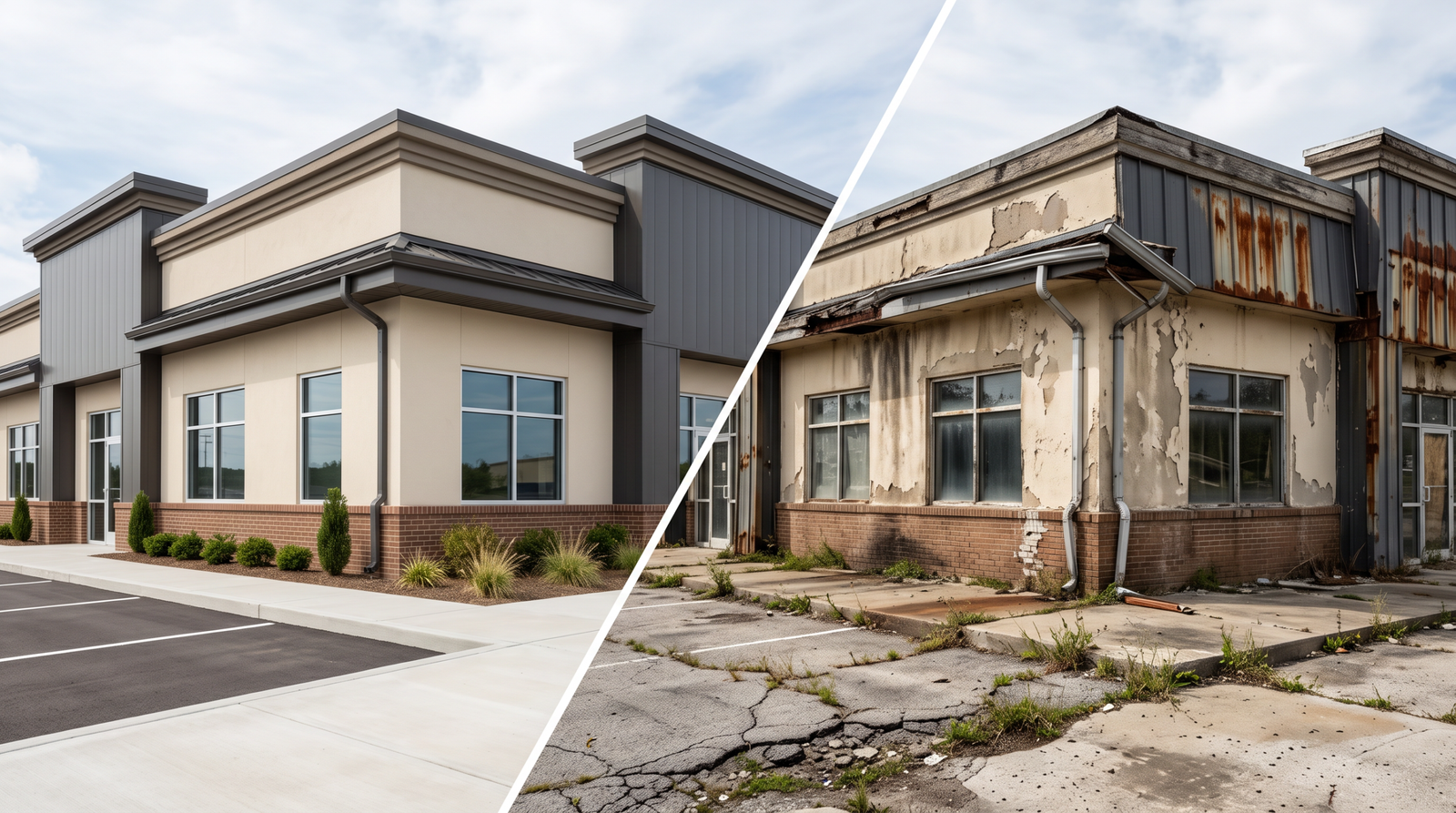
Deferred maintenance can leave commercial property teams facing more than a backlog of unfinished work. When unresolved conditions progress, they may affect building use, expand repair needs and make future capital spending harder to predict.
The planning challenge is to understand which items need attention now, which require further investigation and which can be addressed through scheduled work. That requires information about the actual building conditions and the consequences of continued delay.
For owners, facility managers and asset managers, evaluating deferred maintenance in commercial property helps connect maintenance history with practical repair and capital decisions. The aim is to develop priorities supported by evidence rather than treat every overdue item as equally urgent.
Prema Consulting Group helps property teams identify deferred-maintenance conditions, understand their technical implications and prioritize assessment, repair and longer-term capital needs.
What Is Deferred Maintenance?
Deferred maintenance generally refers to maintenance or corrective work that has been postponed beyond the time it was needed or planned.
Examples may include deteriorated sealants left unrepaired, drainage systems awaiting cleaning or correction, and damaged protective coatings that have not been addressed. The condition, location and effects of that delay determine its significance.
Deferred maintenance is distinct from an aging component that is functioning adequately and approaching planned replacement. A scheduled future roof replacement does not, by itself, establish a maintenance deficiency.
A building assessment can document current conditions and available maintenance history. Establishing when work became necessary or why it was delayed may require records and information beyond visible observations.
Why Deferred Maintenance Matters for Commercial Properties
Unresolved conditions can affect different aspects of property performance.
Potential consequences include:
- Recurring water intrusion and damage to adjacent materials
- Service interruptions or restricted use of affected areas
- Deterioration that expands the eventual repair scope
- Repeated spending on temporary measures
- Uncertainty about concealed conditions
- Competing demands on maintenance and capital budgets
These outcomes are possible rather than automatic. A missed maintenance interval and a deteriorated structural connection present different questions and should be evaluated accordingly.
The most useful assessment explains how an observed condition affects the relevant system and what information is needed to select an appropriate response.
Common Conditions That Can Influence Capital Planning
Roofing and Flashing
Unresolved roof defects, deteriorated flashing and recurring leaks can create repeated maintenance demands. Water entry may also affect insulation, interior finishes or other materials, depending on the roof assembly and extent of exposure.
Property teams should distinguish isolated repair needs from broader deterioration. Roof age, leak history, prior repairs and observed condition all provide context. Targeted testing may be needed to evaluate concealed moisture before repair or replacement options are compared.
Exterior Walls, Façades and Sealants
Exterior wall performance depends on the interaction of finishes, joints, flashings, openings and other interfaces.
Deteriorated sealants or unresolved transition details may warrant attention where they affect water management. Replacing sealant at a visible location may not resolve a leak if the actual pathway involves another component.
Assessment should establish the condition of accessible elements and identify when a focused envelope investigation is needed. Loose or deteriorated exterior materials may also warrant prompt evaluation of their potential consequences.
Drainage Systems
Blocked drains, deteriorated drainage features or unresolved site water accumulation can affect building and site performance.
A recurring drainage problem may require more than routine cleaning. The review may need to consider slope, system configuration, surrounding conditions and evidence of deterioration.
Understanding the mechanism helps owners distinguish a maintenance task from a repair or design issue that requires a different scope and budget.
Corrosion and Protective Coatings
Damaged coatings and continued exposure can contribute to metal deterioration. Where structural members, connections or embedded reinforcement are affected, the significance depends on the component’s function and the extent of deterioration.
Surface appearance alone does not establish remaining capacity. Measurements, specialist evaluation or structural analysis may be appropriate when material loss or related distress raises concern.
The planning response should address both affected materials and contributing exposure conditions where supported by the evaluation.
Mechanical Equipment and Other Systems
Reported service problems, incomplete maintenance records and recurring equipment repairs can influence planning for mechanical and other building systems.
A general assessment may identify concerns or missing information. Detailed performance diagnostics may require qualified specialists and an explicitly defined scope.
Replacement planning should consider condition, performance, repair feasibility and operational requirements. Equipment age alone does not establish the most appropriate action.
How Deferred Maintenance Can Expand Repair Needs
A postponed task can affect more than the original component when deterioration spreads or exposure continues.
For example, an unresolved leak may begin as a localized roof concern. Continued wetting may affect additional materials, requiring investigation before the extent of repair can be established. Repeated interior patching can also add cost while leaving the entry pathway unresolved.
Expansion is not inevitable in every case, and its extent should not be assumed. Assessment can help identify affected areas, evaluate relationships between conditions and determine where further information is needed.
A useful planning question is: what may change if this item remains unresolved, and what evidence supports that concern?
Operational Implications of Postponed Work
Commercial repairs must often be coordinated with occupancy and ongoing operations.
An affected area may require restricted access, equipment shutdowns or work outside normal operating hours. Temporary protection, contractor access and sequencing can influence how a repair is implemented.
These constraints matter when developing budgets and schedules. A technically straightforward repair may still require substantial coordination in an occupied facility.
Property teams should identify operating constraints early so assessment recommendations can be developed into practical scopes. The building evaluation provides technical input; management determines how work is coordinated with business needs.
How Engineers Evaluate Deferred-Maintenance Conditions
Review Available History
Maintenance logs, service records, repair invoices, photographs and prior assessments can help establish what has been reported and addressed over time.
Useful questions include whether the same condition has recurred, what previous work involved and whether that work resolved the concern. Missing records should be acknowledged when they limit conclusions.
Document Current Conditions
Field observations identify accessible deterioration, affected systems and related distress. Photographs and location references help property teams track findings and coordinate follow-up.
The assessment should distinguish observed deficiencies from reported information and inaccessible areas. A lack of visible distress does not establish that concealed components are unaffected.
Evaluate Technical Significance
The evaluation considers the affected component’s role, apparent severity, related conditions and potential progression.
Some items may be addressed through routine maintenance. Others may require engineering analysis, targeted testing or a specialist investigation before the repair approach can be established.
Recommend Priorities and Next Steps
Recommendations should explain what action is needed and why. The next step may be maintenance, repair, monitoring under a defined approach, or additional investigation.
Where a potentially unsafe condition is identified, the concern should be communicated clearly and addressed through appropriate action rather than deferred to a routine budget cycle.
Turning Findings Into Repair and Capital Priorities
A practical plan separates actions by their purpose and timing.
Prompt Attention
Address conditions that warrant timely action because of their observed significance, ongoing effects or need for further evaluation. The report should explain the basis for urgency.
Defined Near-Term Work
Develop scopes for repairs and maintenance that can be planned with adequate information. Confirm access, sequencing and interactions with other systems before obtaining firm pricing.
Longer-Term Capital Needs
Include anticipated major work within an agreed planning horizon. Explain service-life assumptions and update them as inspections, records and operating experience provide better information.
Priority should reflect the condition and consequences of delay. Sorting projects only by cost or age can overlook smaller items with important effects or larger projects that need further investigation first.
Understanding Planning-Level Costs
When cost opinions are included in an assessment, they should identify the assumed scope, timing, quantities and exclusions.
A preliminary allowance can help owners organize a budget, but it is not a contractor bid or a completed repair design. Concealed deterioration, access requirements and developed details can change the eventual cost.
An allowance for investigation should be distinguished from a repair estimate. Where the extent remains uncertain, the plan should identify how that uncertainty will be resolved before a final project budget is established.
Cost schedules should also avoid counting the same work twice when recommendations overlap across systems or planning periods.
Florida Exposure and Maintenance Planning
Florida examples can help illustrate why property-specific exposure matters. Heavy rainfall and wind-driven rain may reveal roof or envelope water-management concerns. Coastal exposure may be relevant when evaluating corrosion and coating deterioration.
These conditions provide context rather than establish that maintenance was inadequate. Building details, material condition, repair history, and observed evidence must be considered together.
For example, recurring façade leakage may involve deterioration, original detailing, prior alterations or several interacting factors. An assessment should evaluate those possibilities before selecting a corrective approach.
Moving From Repeated Repairs to a Documented Plan
Property teams can improve planning by maintaining a record of significant findings, completed work and unresolved questions.
Useful actions include:
- Mapping recurring problems to specific locations and systems
- Keeping records of repair scope and completion dates
- Assigning responsibility for recommended follow-up
- Confirming whether repairs resolved the reported concern
- Updating priorities when conditions or operations change
- Revising budgets as investigation and design clarify the work
This approach helps owners see whether repeated spending is addressing the condition or providing only temporary relief. It also gives future evaluations better information about the property’s history.
Supporting Building Assessment and Capital Decisions
Deferred maintenance affects capital planning through the condition of the building, the potential consequences of delay and the information still needed to define corrective work.
Prema evaluates observed conditions and technical implications to help commercial property teams prioritize assessment, repairs and longer-term capital needs. Clear documentation supports a plan that can be updated as work is completed and property conditions change.
Discuss Your Building Assessment Needs
Prema Consulting Group helps property teams identify deferred-maintenance conditions, understand their technical implications and prioritize assessment, repair and longer-term capital needs.
Our team works with commercial owners, property and facility managers, and asset managers to document building conditions and define appropriate next steps.
Frequently Asked Questions
What is deferred maintenance in a commercial property?
−It generally refers to needed maintenance or corrective work that has been postponed. Its significance depends on the affected system, observed condition and consequences of continued delay.
Does an old roof or piece of equipment automatically indicate deferred maintenance?
+No. An aging component may remain serviceable and be included in a planned replacement program. Condition, performance and maintenance history should be evaluated together.
Can deferred maintenance increase repair costs?
+It can when deterioration progresses, adjacent materials become affected or repeated temporary work is required. The extent of additional work should be established through appropriate evaluation.
How can a building assessment help prioritize deferred maintenance?
+It can document conditions, identify significant deficiencies, explain technical implications and recommend maintenance, repair or further investigation. Planning-level cost information may be included within the agreed scope.
Are all deferred-maintenance items capital projects?
+No. Some items are routine maintenance or localized repairs. Others may lead to major replacement or rehabilitation work. Technical recommendations should define the work, while financial treatment is determined separately.
When is specialist evaluation needed?
+It may be needed for unresolved leakage, significant structural distress, corrosion, concealed deterioration or equipment performance questions that a general condition review cannot resolve.
Our Related Services
Need Expert Forensic Engineering & Building Assessment Insights?
Get our accurate, evidence-based analysis to identify root causes, assess structural integrity, and make confident decisions.
Get in Touch →