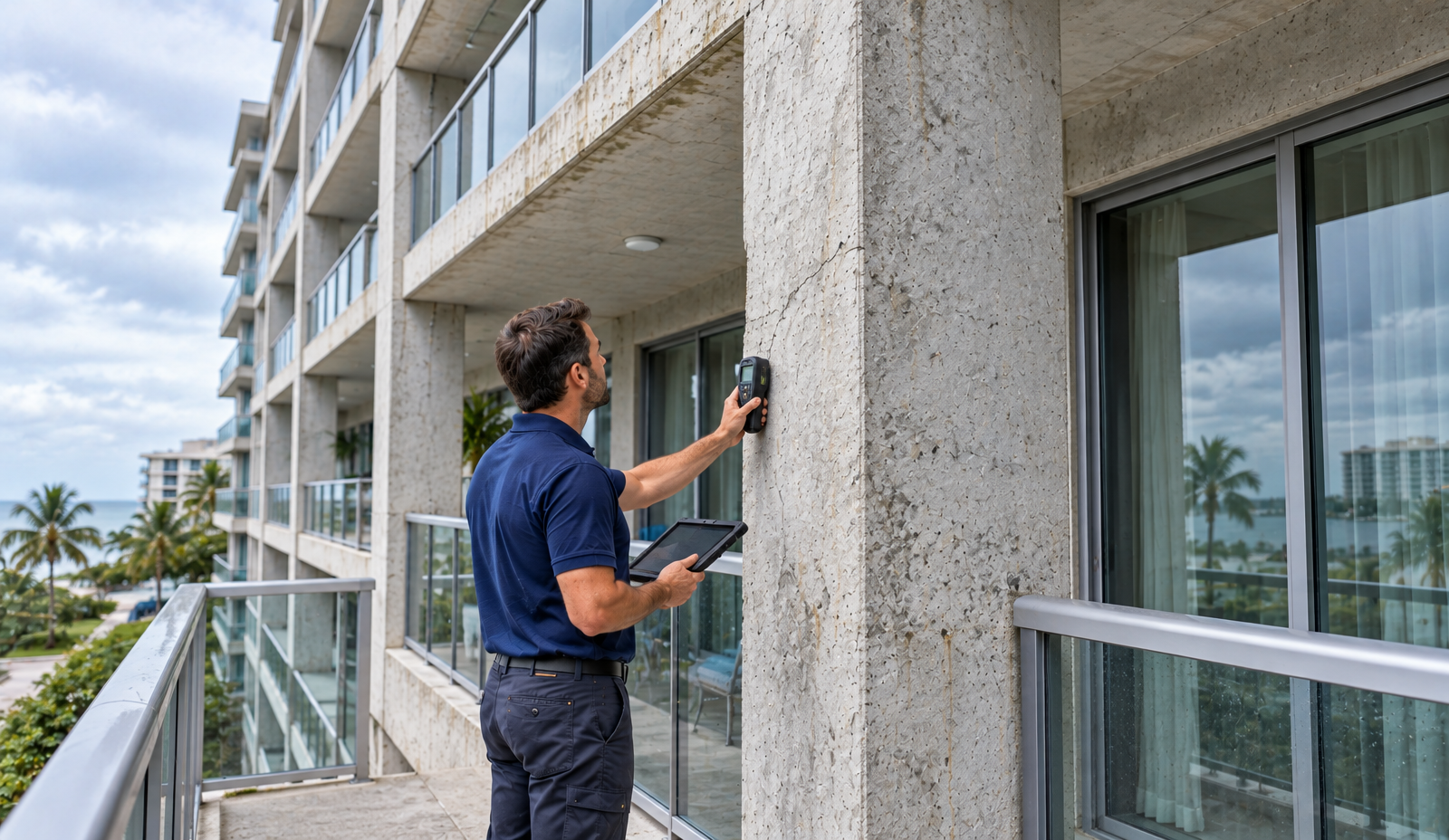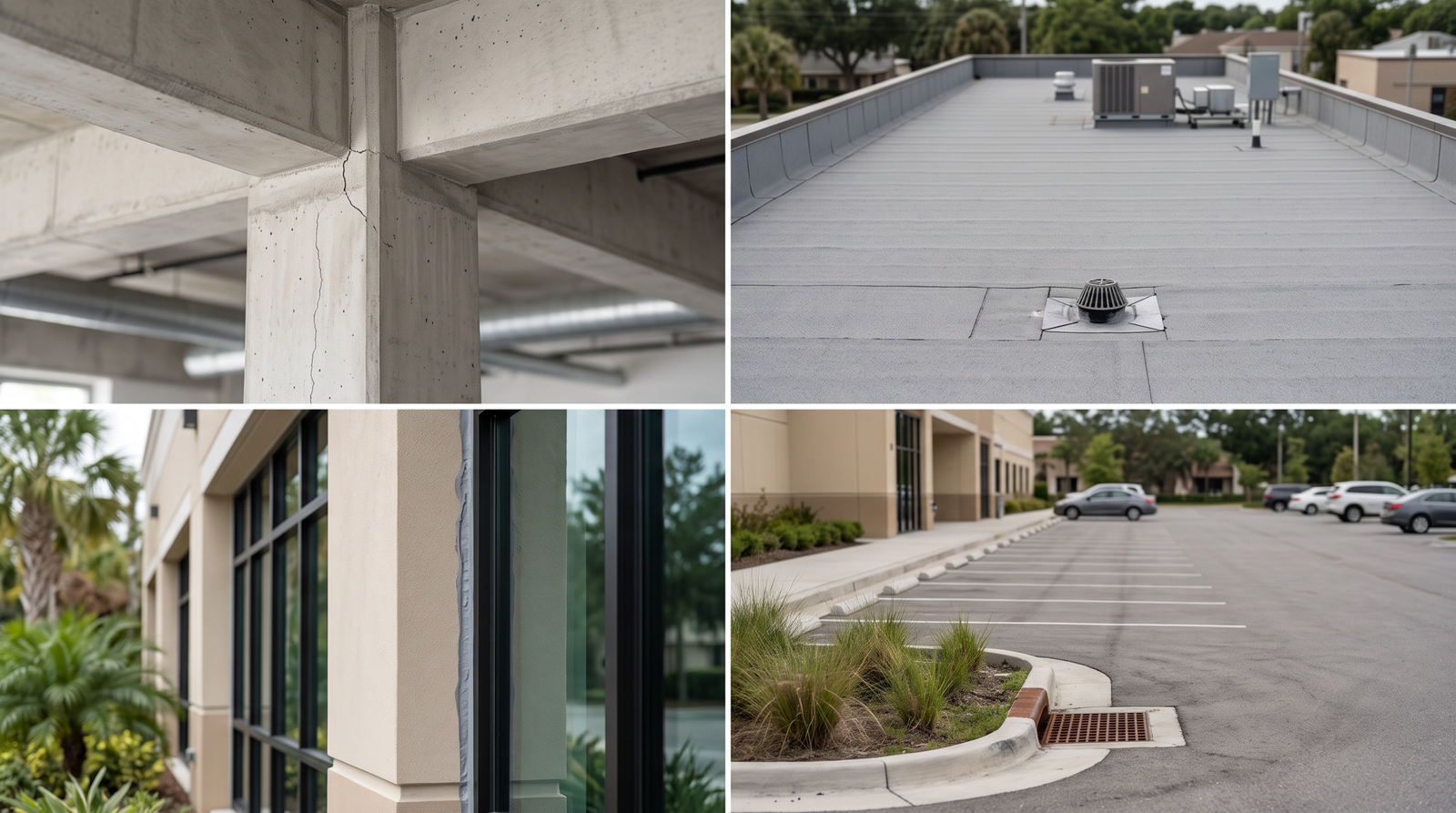

Building recertification requirements in Florida depend on the property’s location and the local program that applies. Commercial owners should confirm the responsible building department, whether each building is covered and what inspections, reports and follow-up are required before scheduling an evaluation.
An inspection schedule used for one property may not apply to another property in the same portfolio. Building age, size, use, classification, prior recertification history and jurisdiction can affect the process.
Prema supports property teams in jurisdictions requiring building recertification and can coordinate the engineering evaluation and follow-up scope appropriate to the local program.
The examples below summarize selected official programs; confirm current requirements and property-specific deadlines with the applicable building department before acting.
Local Recertification and State Milestone Inspections Are Different Programs
Local building recertification programs can cover commercial buildings and may require both structural and electrical evaluations. Their applicability and procedures are established through the relevant local requirements.
Florida’s statutory milestone inspection program addresses qualifying residential condominium and cooperative buildings under Section 553.899, Florida Statutes. It is not a general commercial-building recertification schedule. A mixed-use building subject in part to qualifying residential condominium or cooperative ownership may require separate review of statutory applicability. [1]
Owners should identify the obligations that apply to their particular building and confirm whether a report submitted for one program will satisfy any requirements of another. Similar terminology does not establish that the scopes or administrative processes are interchangeable.
Examples of How Local Programs Differ
Miami-Dade County
Miami-Dade’s published recertification guidance generally describes an initial 30-year cycle and subsequent 10-year intervals for covered buildings. Separate 25-year provisions apply to certain coastal condominium and cooperative buildings. Older buildings and previously recertified properties may follow established or transition schedules. [2]
The county identifies exemptions, including single-family homes, duplexes and buildings meeting both its small-building area and occupant-load criteria. Its guidance requires structural and electrical reporting and identifies additional qualifications for professionals evaluating threshold buildings. [2]
Administration matters: properties within municipalities should work with the responsible municipal building department, while the county handles its own jurisdiction. The county also specifies report templates and, where applicable, additional items such as parking-lot illumination, waterway guardrails and structural glazing evaluations. Owners should confirm which apply to their property. [3]
Broward County
Broward’s published Building Safety Inspection Program applies to covered buildings and structures at 25 years of age, with subsequent inspections at 10-year intervals measured from the applicable age-based cycle. Its code amendment states that the cycle does not shift based on when an earlier report was finalized or filed. [4]
The program includes exemptions. For example, the published amendment exempts minor structures with a building area of less than 3,500 square feet, alongside specified governmental, residential and other categories. Eligibility should be checked against the full current exemption list rather than inferred from height alone. [4]
The Board of Rules and Appeals publishes structural and electrical forms, policy and inspection guidelines. Confirm the responsible building official’s submission procedures and the notice applicable to the property. [5]
City of Boca Raton
Boca Raton’s guidance identifies commercial threshold buildings at 30 years or more as subject to its recertification program. Its threshold definition includes buildings greater than three stories or 50 feet in height, or qualifying assembly occupancies exceeding both 5,000 square feet and 500 occupants. [6]
The city’s guidelines describe structural and electrical reports, recurring deadlines, review procedures and repair follow-up. They also include procedural details such as advance inspection notification to the building official. Confirm the current property schedule with the city, especially for buildings assigned to a backlog schedule. [7]
These examples illustrate different coverage and procedures. They are not an exhaustive list of Florida jurisdictions with inspection requirements.
What Commercial Property Teams Should Verify
1. The Responsible Building Department
Identify the authority responsible for the property’s address. A county location or mailing address does not by itself identify who administers the building’s recertification.
Confirm where to submit reports, who reviews them and which office handles questions about the property’s status.
2. Building Eligibility and Exemptions
Gather information needed to determine coverage:
Building age and available certificate-of-occupancy records
Building area, height and number of stories
Occupancy and use
Ownership configuration where relevant
Previous inspection and recertification records
Building identifiers for properties with multiple structures
Ask how additions, separate structures and incomplete age records are handled. Do not assume that an exemption for one building applies to every building on the site.
3. Inspection Scope and Professional Qualifications
Determine which disciplines and qualifications the local program requires. A structural report alone may not fulfill a program that also requires electrical reporting.
Confirm any additional scope involving façades, glazing or site features. The engineering proposal should match the applicable inspection and reporting requirements, including any specialist coordination.
4. Deadlines and Submission Requirements
Distinguish the inspection appointment from the report-submission deadline. Allow time for access arrangements, field evaluation, analysis, report preparation and agency review.
Verify:
The property’s current due date and recurring cycle
Required forms and supporting documents
Signature and seal requirements
Submission method and current fees
Procedures for corrections or extension requests
An extension should not be assumed. Confirm approval and retain the written determination.
5. Repairs and Administrative Closeout
If deficiencies are identified, determine the required follow-up with the engineer and building department. Depending on the local program and findings, this may include further evaluation, repair design, permits, a repair schedule and documentation of completed work.
Submitting an inspection report does not necessarily complete recertification. Confirm how the jurisdiction documents acceptance and any required closeout. Maintain the final records and the next due date in the property’s management files.
Why Older Recertification Labels Can Be Misleading
Terms such as “40-year inspection” may remain in older reports, contracts or maintenance files. Those records provide useful history, but their titles should not be used to establish the building’s current obligations.
Check the current local program, the accepted inspection history and the property-specific schedule. Likewise, a general property condition assessment should not be assumed to meet a recertification program’s required scope or forms.
Preparing a Portfolio for Jurisdictional Differences
For portfolios spanning multiple cities or counties, maintain a separate compliance record for each building. Record the jurisdiction, applicable program, confirmed due date, required disciplines, report status and open repair items.
Begin with official program pages, current ordinances or amendments, published forms and the property’s written notices. If a summary page, older guideline or notice appears inconsistent, request clarification from the building department and document the response.
Before the engineering visit, organize drawings, prior reports, repair records and access to relevant structural and electrical areas. Assign a property contact to coordinate occupants, records and follow-up.
Supporting Local Recertification With Engineering Evaluation
Understanding the applicable program helps owners define the right inspection scope and plan for reporting and any necessary repairs.
Prema supports commercial property teams with engineering evaluations and coordination of follow-up appropriate to the local recertification program. The assignment can be developed around the building’s conditions, required disciplines and current jurisdictional requirements.
Discuss Your Building Recertification Needs
Prema supports property teams in jurisdictions requiring building recertification and can coordinate the engineering evaluation and follow-up scope appropriate to the local program.
Contact Prema to discuss your building recertification needs.
Primary Sources and Publication Review
Last reviewed: October 8, 2026
Recheck these official sources immediately before publication and during future updates. Verify property-specific applicability, deadlines and current forms directly with the responsible building department.
Florida Legislature: Section 553.899, Florida Statutes
Miami-Dade County: Building Recertification Overview
https://www.miamidade.gov/global/economy/building/recertification.page
Miami-Dade County: Recertification Guidance and Report Templates
Broward County: Chapter 1 Amendment, Section 110.15, Building Safety Inspection Program
Available through Source 5.
Broward County Board of Rules and Appeals: Forms and Contacts, Building Safety Inspection Program
City of Boca Raton: Building Recertification Inspection Program
https://myboca.us/2091/Building-Recertification-Inspection-Prog
City of Boca Raton: Recertification Guidelines
Frequently Asked Questions
Does every commercial building in Florida require recertification at the same age?
−No. Applicability depends on the local program and building characteristics. Confirm the requirements for the property with its responsible building department.
Is building recertification the same as a milestone inspection?
+No. Local recertification programs and the statutory milestone inspection program have different applicability and requirements. Buildings with qualifying residential condominium or cooperative ownership may require review of both obligations. [1]
Does a structural inspection satisfy the entire recertification requirement?
+Not necessarily. Local programs may require electrical reporting and additional inspections or documentation. Confirm the complete scope before commissioning the work.
Can owners use a previous report to establish the next deadline?
+Previous reports are useful, but confirm the accepted inspection history and current schedule with the jurisdiction. The date a report was completed or filed may not be the date used to calculate the recurring cycle.
What happens if the inspection identifies repairs?
+Follow the applicable local process for further evaluation, repair planning, permitting and completion documentation. The required steps and timing depend on the program and the findings.
Our Related Services
Need Expert Forensic Engineering & Building Assessment Insights?
Get our accurate, evidence-based analysis to identify root causes, assess structural integrity, and make confident decisions.
Get in Touch →