
Building recertification in Florida begins with the requirements of the local authority responsible for the property. Commercial owners and facility teams should confirm building eligibility, the current due date and the required inspection disciplines before commissioning an evaluation.
There is no single commercial recertification schedule that can be applied to every property across Florida. Local programs differ in the buildings they cover, inspection scope, reporting procedures and repair follow-up. [1–5]
For property teams managing a 2026 assignment, the priority is to establish a building-specific plan that carries the work from records review and site access through reporting and any required next steps.
Verify current local requirements immediately before publication and confirm property-specific obligations with the responsible building department.
What Is Building Recertification?
Building recertification is a process required by certain local jurisdictions to evaluate covered existing buildings and submit the prescribed professional reports for agency review.
The local programs discussed here include structural and electrical evaluations. The applicable authority determines the reporting and administrative requirements; the engineering assignment should be developed to match them. [1–5]
Recertification is not simply a general maintenance walkthrough. A routine inspection or property condition assessment should not be assumed to satisfy required professional qualifications, forms or submission procedures.
Which Commercial Buildings Need Recertification in 2026?
Eligibility depends on the applicable local program and the characteristics of each building. Start with the property address and identify the building department responsible for administering the process.
Gather:
- Available certificate-of-occupancy and building-age records
- Building area, height and occupancy information
- Records of additions or separate structures
- Previous recertification reports and agency acceptance records
- Current notices and outstanding review or repair items
Confirm whether exemptions apply. A property with several structures may require separate eligibility and schedule checks for each one.
Miami-Dade County
Miami-Dade’s published guidance generally establishes a 30-year initial cycle and 10-year recurrence for covered buildings, with separate provisions for certain coastal condominium and cooperative buildings. Older and previously recertified buildings require review of established or transition schedules. [1]
The county’s guidance calls for structural and electrical reporting. It also identifies exemptions and additional professional qualifications for threshold-building evaluations. Municipal properties should confirm procedures with their responsible municipal building department. [1]
Broward County
Broward’s published Building Safety Inspection Program applies to covered buildings and structures at 25 years, with 10-year recurring inspections measured from the age-based cycle. The code amendment contains exemptions, including minor structures with building area below 3,500 square feet. [2]
The Board of Rules and Appeals publishes the program’s structural and electrical forms, policy and guidelines. Confirm the current notice and submission procedure with the responsible building official. [3]
Boca Raton
Boca Raton’s program includes commercial threshold buildings at 30 years or more. The city’s threshold definition addresses buildings greater than three stories or 50 feet in height, and assembly occupancies exceeding both 5,000 square feet and 500 occupants. [4]
The city publishes structural and electrical checklists and recertification schedules. Verify the building’s classification and due date directly, including any assigned backlog schedule. [4–5]
These are selected examples, not an exhaustive list of Florida programs. Do not transfer one jurisdiction’s requirements to another property without verification.
Do Not Use Older Inspection Labels to Set the Current Deadline
An older report may refer to a “40-year inspection” or another historical cycle. That title is useful background but does not establish the building’s present obligations.
Likewise, the date a prior report was filed may not reset the recurring cycle. Broward’s published amendment expressly ties recurrence to the age-based schedule regardless of when a previous report was finalized or filed. [2]
For a 2026 project, ask the building department to confirm the accepted inspection history and next due date. Identify any unresolved prior notices rather than treating the new assignment as a fresh start.
What a Structural Recertification Evaluation May Address
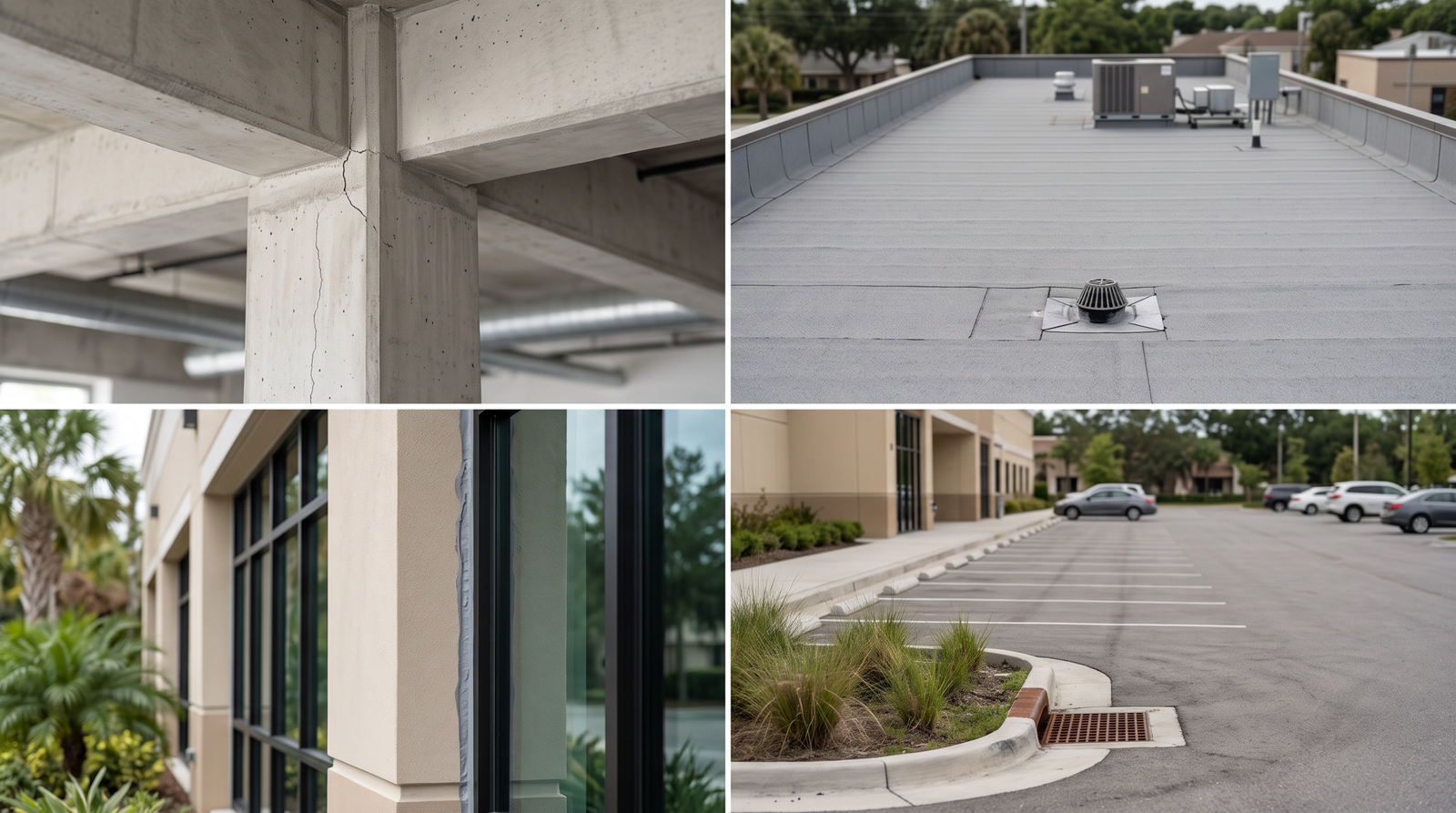
The structural scope follows the local requirements and the building’s configuration. Relevant areas may include framing, foundations, structural connections, concrete deterioration, exterior components and evidence of movement or overloading.
Miami-Dade’s published guidance, for example, identifies foundations, façades, parapets and other features within its structural reporting requirements. It also specifies additional scope where applicable, such as structural glazing and site-related certificates. [1]
The engineer may need further access, measurements, testing or analysis to evaluate a reported condition. Visible cracking or staining alone does not establish its cause or structural significance.
Confirm inspection limitations and any additional work needed before treating the report as the final technical answer.
Electrical Reporting Requires Its Own Scope
Where the program requires electrical reporting, a structural evaluation alone is insufficient. Confirm the appropriate professional involvement and required electrical deliverables as part of the project plan. [1, 3–5]
Prema’s structural recertification evaluation should be scoped clearly alongside any other required disciplines. Clarify who is responsible for coordinating the complete submission so an otherwise finished structural report does not leave the property’s process incomplete.
How Property Teams Can Prepare
1. Confirm Requirements Before Requesting Proposals
Provide the current notice and known building information. Ask proposals to identify the applicable scope, professional disciplines, reports, access needs and exclusions.
Clarify whether further testing, repair design, resubmittals or construction-phase services are included or would require a separate assignment.
2. Organize Building Records
Collect available drawings, prior inspection reports, repair records, permit information and dated photographs. Identify missing information and records that may not reflect later renovations.
Summarize recurring leaks, cracking, corrosion, earlier repairs and changes in building use or equipment loading that may be relevant to the evaluation.
3. Coordinate Access and Occupants
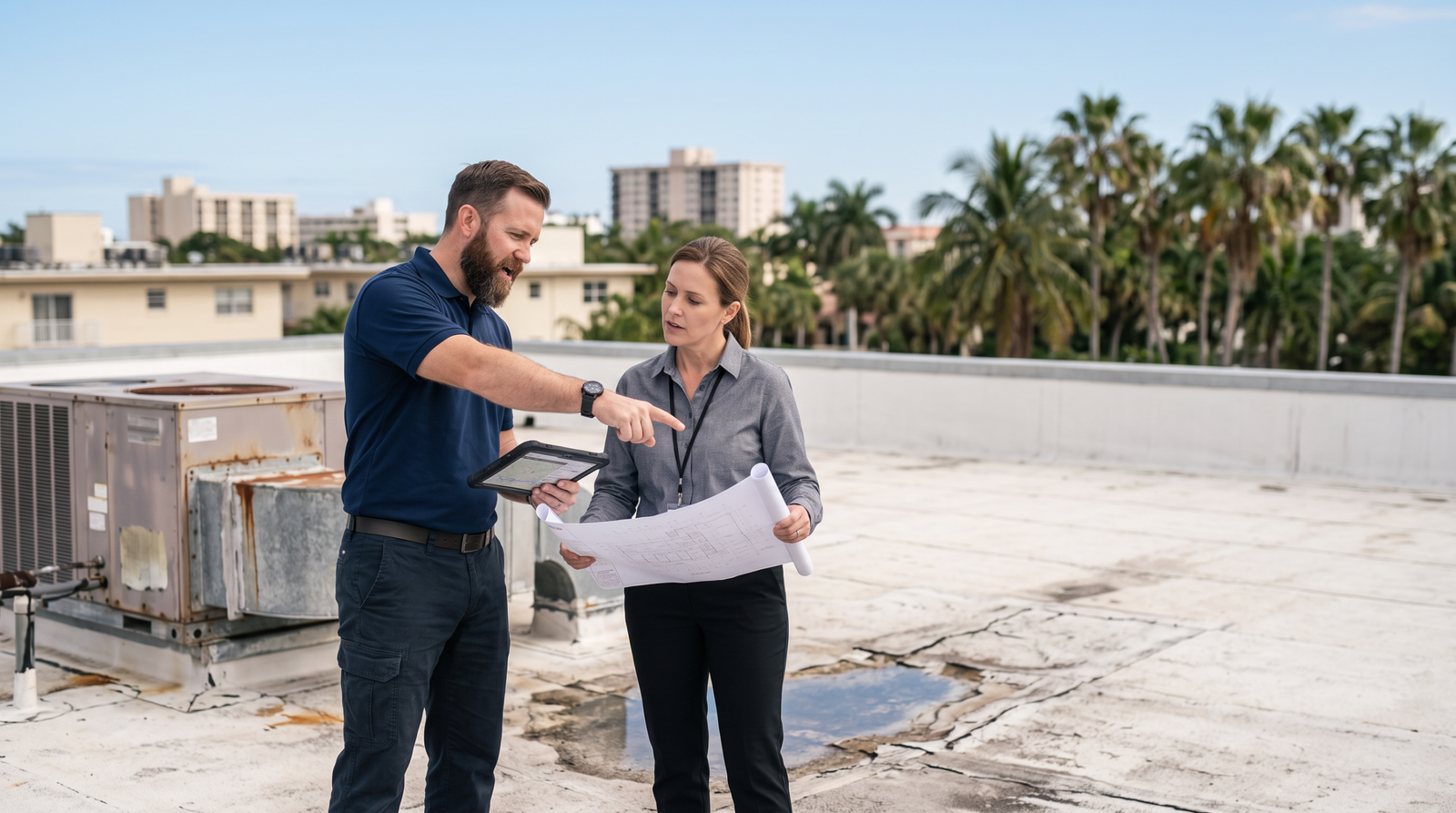
Arrange access to relevant tenant spaces, service areas, roofs and exposed structural components. Identify a primary property contact and disclose restricted or concealed areas before the visit.
Coordinate any required equipment or planned openings with the professionals involved. Access limitations can affect the evaluation and create a need for follow-up visits.
4. Allow Time for Reporting and Review
Distinguish the site appointment from the report-submission deadline. Build time into the schedule for records review, inspection, analysis, document preparation and agency comments.
Confirm current forms, submission methods, fees and extension procedures. A requested extension should not be treated as approved until the authority confirms it.
What Happens if Repairs Are Needed?
Findings may lead to additional investigation, repair design, permits and construction. The local program and the nature of the deficiencies determine the required follow-up.
Boca Raton’s published guidelines illustrate this distinction: after a report sufficiency determination, necessary repairs lead to a repair plan with a proposed schedule, agency review and completion documentation. The guidelines also address reinspection of repaired areas. [5]
Property teams should establish:
- Which conditions need further evaluation
- Who will prepare any required repair documents
- Which permits and agency submissions are needed
- How repairs will be sequenced around occupants and operations
- What verification is required after the work
- Who will track agency acceptance and closeout
Report submission does not necessarily mean recertification is complete. Retain review responses, accepted reports and any final determination in the property records.
Recertification Is Part of Ongoing Building Management
Following the required process does not eliminate the need for routine maintenance or evaluation of newly reported concerns. Keep inspection findings, repairs and unresolved items connected to the property’s maintenance and capital-planning records.
For portfolios, maintain a building-by-building register of jurisdictions, due dates, required disciplines and report status. Assign responsibility for updating it when properties change ownership or management.
If new deterioration appears between scheduled inspections, seek appropriate evaluation based on the condition rather than waiting for the next recertification cycle.
Supporting Building Recertification With Structural Engineering
An effective recertification project starts with verified local requirements and a defined engineering scope. Organized records, coordinated access and clear follow-up responsibilities help property teams move from inspection findings to appropriate action.
Prema supports building owners and property teams with structural recertification evaluations and related engineering follow-up where required by the applicable jurisdiction and project scope.
Discuss Your Building Recertification Needs
Prema supports building owners and property teams with structural recertification evaluations and related engineering follow-up where required by the applicable jurisdiction and project scope.
Contact Prema to discuss your building recertification needs.
Primary Sources and Publication Review
Last reviewed: October 8, 2026
Verify current requirements before publication and during future updates. Check local ordinances, program guidance, forms and building-specific notices; obtain clarification from the responsible building department where needed.
- Miami-Dade County: Building Recertification Guidance
https://www.miamidade.gov/global/economy/building/recertification.page
https://www.miamidade.gov/recertification/ - Broward County: Section 110.15, Building Safety Inspection Program
Available through Source 3. - Broward County Board of Rules and Appeals: Program Forms, Policy and Guidelines
https://www.broward.org/codeappeals/FormsandContacts - City of Boca Raton: Building Recertification Inspection Program
https://myboca.us/2091/Building-Recertification-Inspection-Prog - City of Boca Raton: Recertification Guidelines
https://www.myboca.us/DocumentCenter/View/417
Frequently Asked Questions
Does every Florida commercial building need recertification in 2026?
−No. Requirements depend on the jurisdiction, building characteristics and applicable schedule. Confirm coverage and the property’s due date with the responsible building department.
Is a structural report enough for recertification?
+Not necessarily. The local programs discussed here also require electrical reporting, and additional documentation may apply. Confirm the complete submission scope. [1, 3–5]
Can we use a report from an earlier inspection?
+Provide it to the engineer and building department for review. Its title or age alone does not establish whether it satisfies current requirements or determines the next due date.
Does recertification include repair design?
+Not automatically. The inspection may identify repairs or further evaluation needs, while detailed repair design and construction support may require separate services.
What should owners do after submitting the reports?
+Track agency review, respond to comments and address required follow-up. Confirm how the jurisdiction documents acceptance and completion, then retain the records and next due date.
Our Related Services
Need Expert Forensic Engineering & Building Assessment Insights?
Get our accurate, evidence-based analysis to identify root causes, assess structural integrity, and make confident decisions.
Get in Touch →