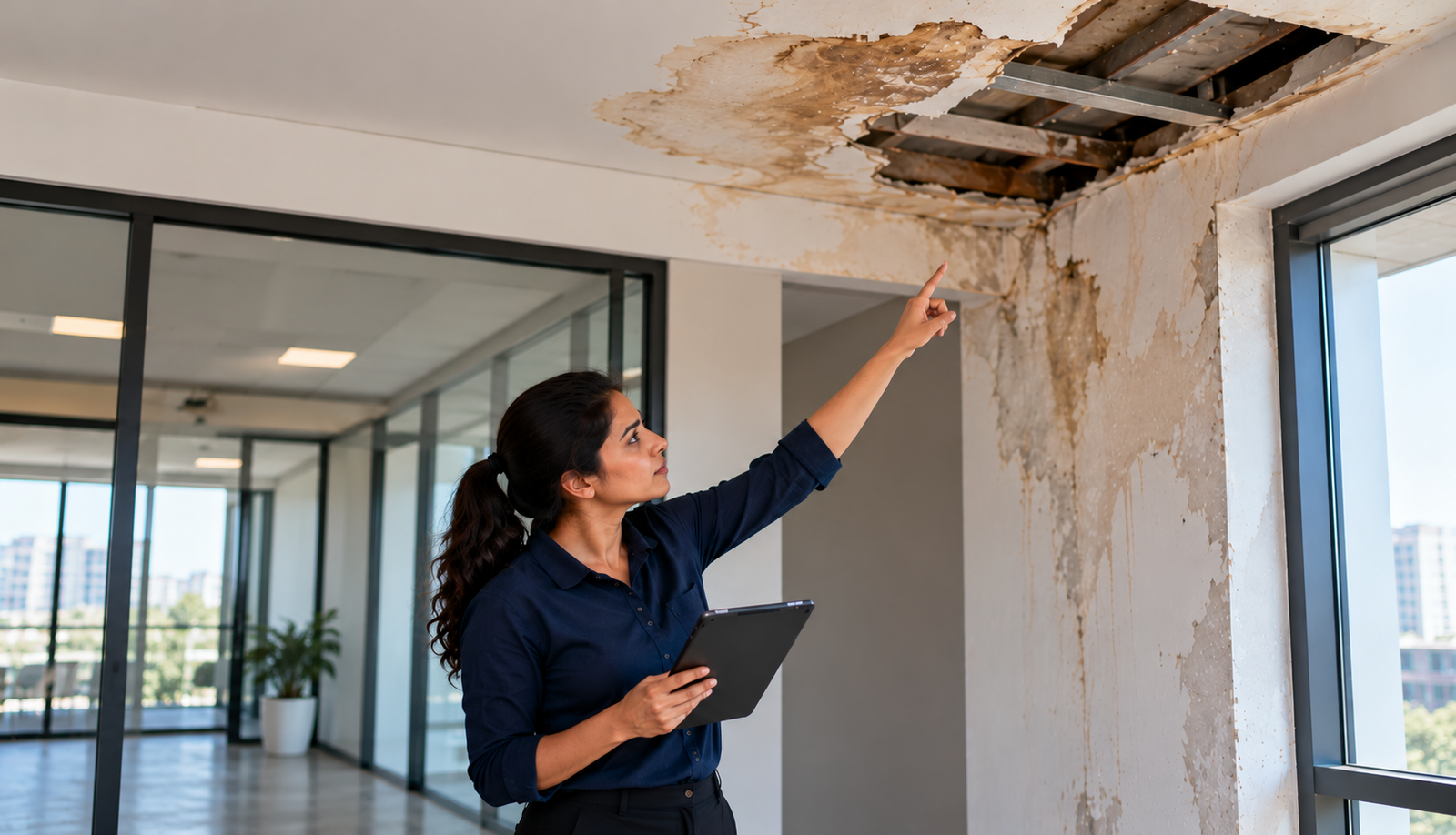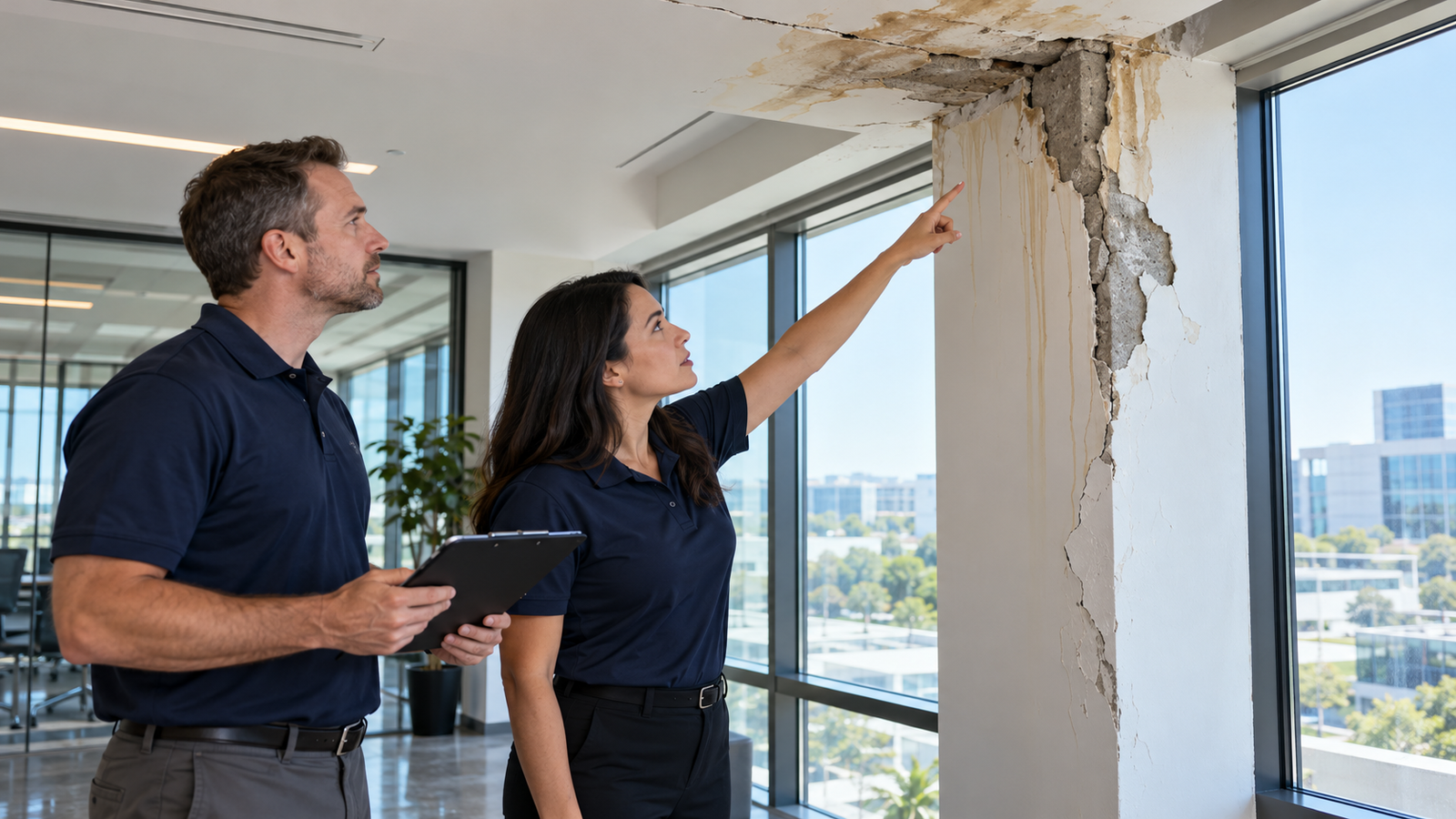
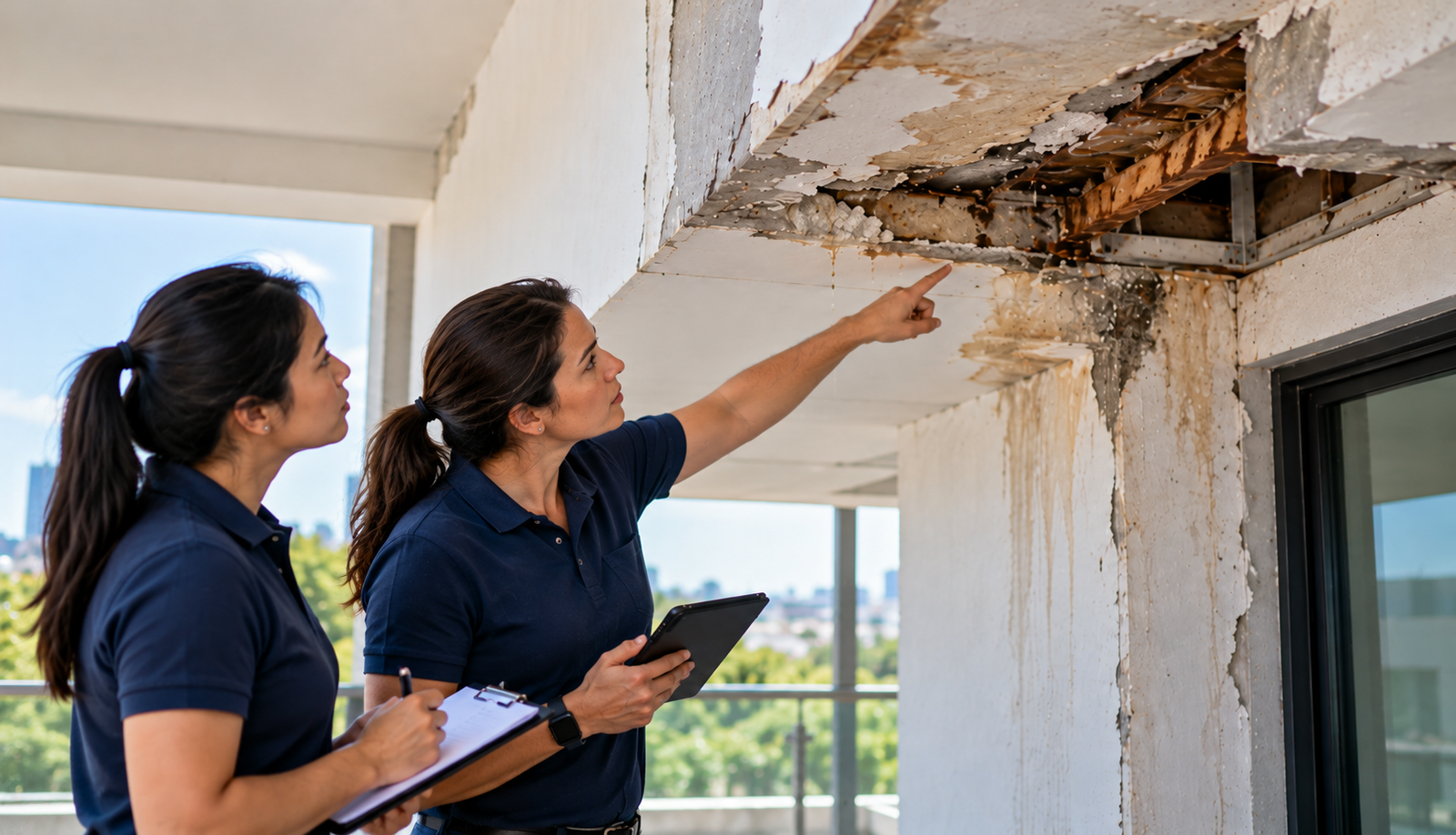
Water intrusion may affect finishes, building assemblies, or structural components. Its structural significance depends on the affected materials, exposure conditions, and evidence of damage or deterioration.
For claims professionals, the key questions are where the water came from, how it traveled, what materials were affected, and whether their condition has implications for structural performance.
A forensic engineering evaluation examines potential moisture sources and pathways, affected materials, and evidence of deterioration. Findings address structural significance and explain any limitations on determining extent, duration, or relationship to the reported event.
Understanding Water Intrusion and Structural Performance
Water intrusion generally involves liquid water entering areas where it is not intended to be present.
Potential sources and pathways include:
- Roof coverings, flashing, and roof-to-wall interfaces
- Exterior walls, windows, doors, and penetrations
- Failed seals or waterproofing transitions
- Plumbing leaks or releases
- Newly damaged building components
- Existing deficiencies exposed to wind-driven rain
Condensation, construction moisture, or moisture transported by air can also produce damp conditions. These mechanisms should be distinguished from liquid-water leakage rather than assumed to share the same source.
Moisture exposure alone does not establish structural damage. The evaluation connects the source and exposure conditions to a specific material response or deterioration mechanism.
How Moisture Can Affect Structural Materials
Different materials respond differently to wetting. Engineers evaluate the actual condition of the member or connection rather than infer structural impairment from staining alone.
Wood Framing and Wood-Based Components
Wetting may cause swelling or other dimensional changes. Under suitable moisture, temperature, and oxygen conditions, fungal decay can deteriorate wood and affect its strength or connection performance.
The investigation may consider:
- Evidence of decay, softening, or material loss
- Changes in member shape or alignment
- Condition of sheathing or other wood-based structural panels
- Deterioration at fasteners, bearings, and connections
- Available leak history and drying or repair records
Wet wood, staining, or visible mold alone does not establish decay or reduced structural capacity. Dry conditions at inspection do not, by themselves, rule out damage from earlier exposure.
Steel Members, Fasteners, and Connections
Moisture and other exposure conditions may contribute to corrosion. Structural significance depends on the location and amount of material loss and the function of the affected component.
Engineers may examine:
- Pitting or measurable section loss
- Deterioration at anchors, plates, and fasteners
- Water trapped at concealed interfaces
- Protective coating condition
- Associated deformation or changes in load transfer
Visible rust alone does not quantify remaining capacity.
Reinforced Concrete
Concrete normally provides an alkaline environment that helps protect embedded steel. Chlorides or carbonation can compromise that protection, with moisture and oxygen supporting corrosion under suitable conditions.
Potential consequences include:
- Concrete cracking, delamination, or spalling
- Reinforcement section loss
- Deterioration of bond or anchorage
- Effects on structural capacity and durability
Moisture alone does not establish reinforcement corrosion, and spalling can involve other mechanisms. Engineers evaluate the concrete, reinforcement, exposure, and evidence supporting the proposed explanation.
Water Intrusion and Concealed Structural Conditions
Moisture-related deterioration may occur within walls, roofs, floors, or enclosed connection areas.
Staining or elevated moisture readings can identify locations requiring further investigation, but they do not establish the condition of concealed framing or connections.
Depending on the assignment, selective openings, targeted testing, or specialist input may be needed to characterize deterioration. Access and intrusive work are coordinated within the agreed scope.
The report should identify concealed areas that were not examined and explain how those limitations affect the findings.
When Engineering Evaluation May Be Appropriate
Evaluation may be appropriate when observations or records identify:
- Apparent decay or section loss in load-bearing members
- Deteriorated fasteners, anchors, or connections
- Moisture-related conditions accompanied by sagging, deformation, or displacement
- Reinforcement exposure or spalling requiring structural interpretation
- Suspected concealed deterioration affecting structural components
- Conflicting explanations about source, extent, or repair needs
- Questions about the relationship to a reported event
The need and scope depend on the affected system and technical questions. Not every leak or damaged finish requires a structural investigation.
Florida Storm Exposure and Water Intrusion Evaluations
Florida storm investigations may involve wind-driven rain, roof and wall interfaces, damaged components, and moisture exposure before or after mitigation.
Water reported during a storm may enter through existing deficiencies, interfaces, or newly damaged components. Rainfall timing alone does not establish a storm-created opening or the cause of resulting deterioration.
Engineers compare:
- Reported leak locations and chronology
- Documented damage to envelope components
- Potential water-entry and travel pathways
- Prior leaks, repairs, or related deterioration
- Available event information and mitigation records
Regional weather exposure provides context. Findings remain based on the specific property and available evidence.
How Engineers Evaluate Water Intrusion Effects
Field Investigation
Engineers document accessible conditions, affected components, and the distribution of damage.
Documentation may include:
- Overview and close-up photographs with location references
- Staining, deterioration, and associated displacement
- Relevant member and connection conditions
- Moisture measurements where appropriate
- Available access and concealed-area limitations
Moisture readings reflect conditions at the time of measurement. They do not independently establish leak duration, source, or historical exposure.
Source and Pathway Evaluation
Engineers consider where water may have entered, how it traveled through the assembly, and whether the observed pattern is consistent with the proposed source.
The investigation may compare competing explanations, including exterior leakage, plumbing releases, and condensation. The visible location of damage is not necessarily the point of entry.
Controlled testing may be appropriate to address a defined question. Its conditions and limitations should be documented rather than treated as proof of every historical leak scenario.
Material and Structural Assessment
Engineers examine whether the affected materials show deterioration or damage relevant to their structural role.
The analysis may address:
- Member condition and remaining section
- Connections, anchorage, and bearing areas
- Associated deflection or deformation
- Implications for serviceability, durability, or capacity
- Questions requiring further access or testing
A demonstrated moisture pathway does not, by itself, establish structural impairment. The findings connect the exposure evidence to the actual condition of the affected components.
Water Intrusion Does Not Always Result in Structural Damage
Water intrusion can produce staining or finish damage without materially impairing structural components. It can also contribute to deterioration with structural implications.
These effects are not mutually exclusive. A property may have finish damage, durability concerns, and impaired members or connections at the same time.
Engineering evaluation identifies the affected components and explains the supported level of impact. Drying addresses moisture conditions but does not, by itself, demonstrate restoration of capacity where deterioration has occurred.
What Claims Professionals Should Document
Useful assignment information includes:
- Dated photographs and affected locations
- The reported event and leak chronology
- Prior leaks, repairs, and inspection records
- Mitigation, drying, and demolition records
- Available moisture measurements, including dates and locations
- Photographs of materials exposed during repairs or selective removal
- The specific technical questions requiring evaluation
Keep reported history separate from observed conditions. Identify changes made before inspection and missing information relevant to source, extent, or timeframe.
Why Structural Evaluation Matters in Water Intrusion Claims
Moisture exposure, deterioration, and event-related damage can coexist.
The presence of decay or corrosion does not, by itself, establish when it developed or whether it caused the reported loss. Engineers evaluate available history, damage patterns, and competing explanations and state the limits of the evidence.
A useful report distinguishes:
- Observed moisture-related conditions
- Supported sources and pathways
- Material deterioration and structural significance
- Any supported relationship to the reported event
- Limitations concerning concealed extent or duration
Engineering findings provide technical information for the claims review. They do not independently determine coverage or policy-related repair obligations.
Discuss an Assignment With Our Forensic Engineering Team
Prema Consulting Group evaluates water intrusion pathways, moisture-related deterioration, and potential structural effects through field investigation and engineering analysis.
Our forensic engineering team supports claims professionals with documented findings addressing the assignment’s technical questions, supporting evidence, and limitations within the agreed scope.
Contact Prema to discuss a water intrusion evaluation involving structural concerns.
Frequently Asked Questions
Can water intrusion affect structural integrity?
−Yes. Depending on the materials and exposure conditions, it can contribute to decay, corrosion, or other damage affecting members and connections. The actual structural implications require evaluation of the affected components.
Is all water intrusion considered structural damage?
+No. Water exposure may affect finishes without impairing structural components. Staining or moisture readings alone do not establish structural damage or reduced capacity.
How do engineers evaluate moisture-related structural concerns?
+Engineers examine potential sources and pathways, material condition, member and connection function, and available history. Measurements, controlled testing, or selective openings may be appropriate for specific questions.
Why can concealed conditions be important in water intrusion investigations?
+Deterioration may occur inside assemblies or at hidden connections. Accessible observations can guide investigation but may not establish the concealed extent. Reports should explain what was examined and what remains unresolved.
Our Related Services
Need Expert Forensic Engineering & Building Assessment Insights?
Get our accurate, evidence-based analysis to identify root causes, assess structural integrity, and make confident decisions.
Get in Touch →