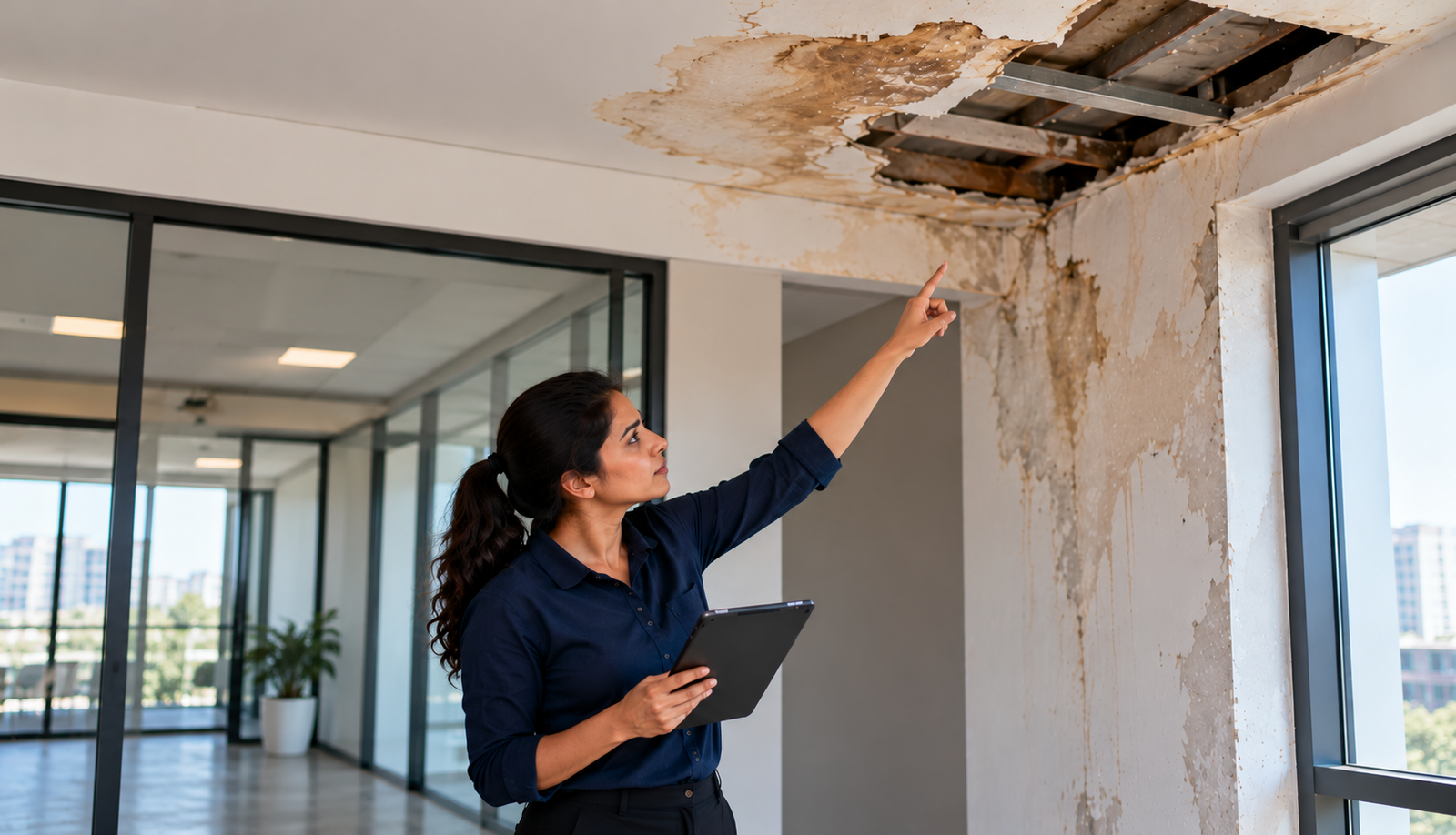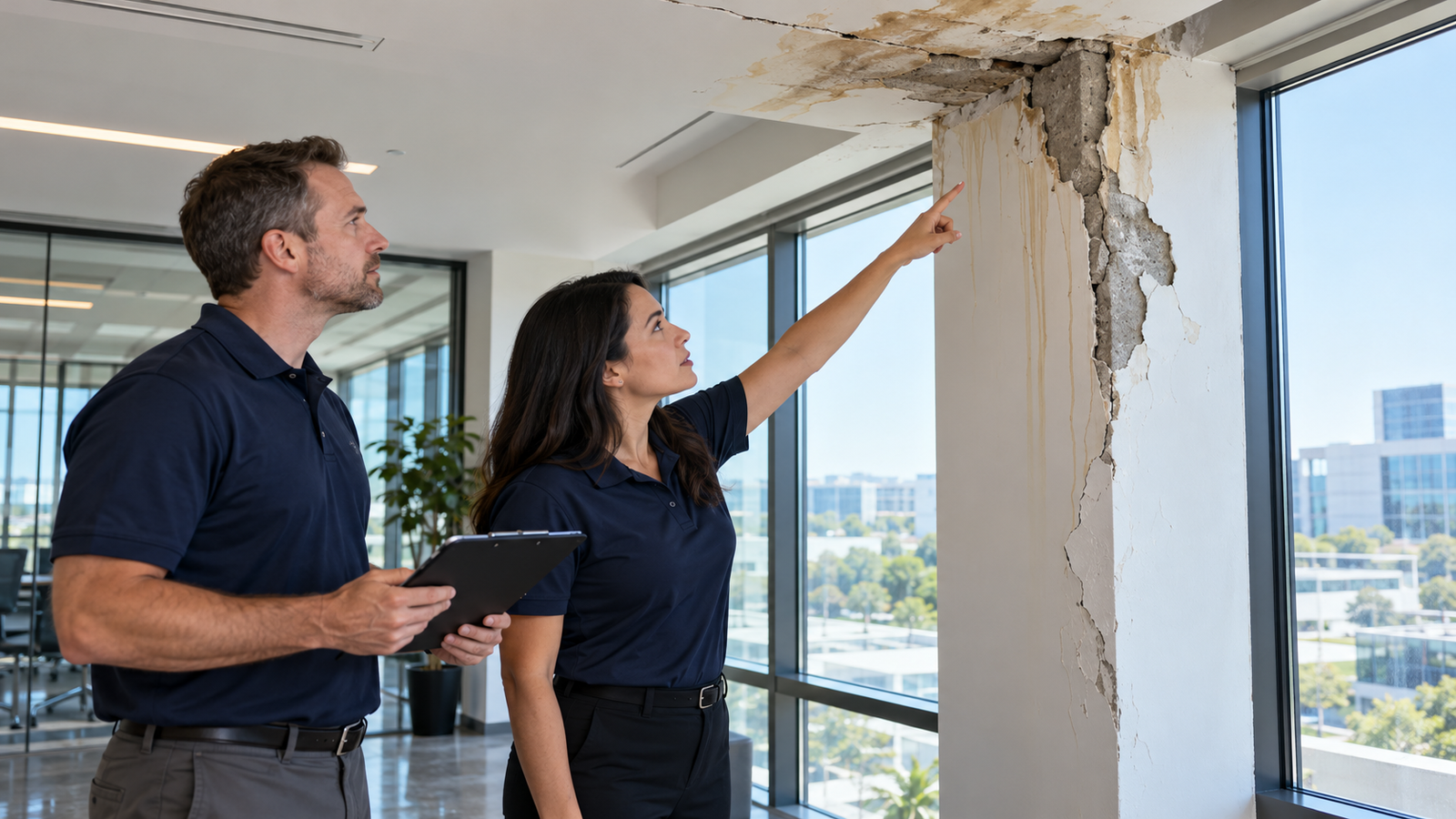

Cracking, water intrusion, and material deterioration may prompt a construction defect investigation, but these symptoms alone do not establish a defect.
For insurance professionals, the investigation should explain what conditions are present, which causes the evidence supports, and what remains unresolved. Engineers examine building systems, review relevant documents, and evaluate the relationship between observed construction and reported damage.
A forensic engineering evaluation provides technical findings within the assignment scope. Those findings inform claim review without independently determining coverage or legal responsibility.
What Is a Construction Defect Investigation?
A construction defect investigation evaluates suspected deficiencies in design, materials, or installation and their relationship to building performance or physical damage.
Depending on the assignment, engineers may assess:
- Design details and building system interfaces
- Material selection, compatibility, and condition
- Installation and workmanship
- The relationship between suspected deficiencies and observed damage
- The documented extent of affected conditions
The investigation also considers aging, maintenance, environmental exposure, repairs, and subsequent alterations. These factors may contribute to the condition or provide alternative explanations; their presence does not automatically establish a construction defect.
Common Building Systems Evaluated
Building Envelope and Water Intrusion
Engineers may investigate roofs, exterior walls, windows, flashing, waterproofing, sealants, and transitions between systems.
For example, staining below a window may prompt evaluation of the window installation, flashing, adjacent wall transitions, sealants, and maintenance history. The stain location alone does not establish the water entry point or demonstrate an installation deficiency.
Structural Systems
Structural investigations may involve framing, concrete, steel, connections, foundations, and other load-bearing components.
Engineers evaluate the observed condition, the component’s role in the structure, and potential effects on serviceability, strength, or stability. Visible distress must be interpreted in the context of the complete system.
The Construction Defect Investigation Process
The approach depends on the reported concern, building system, available evidence, and assignment questions. Not every investigation requires the same testing or access.
Step 1: Review Available Information
Useful records may include:
- Plans, specifications, and approved revisions
- Construction photographs and inspection records
- Product information and installation instructions
- Maintenance, repair, and alteration records
- Previous evaluations and testing results
- A chronology of reported symptoms and relevant events
Engineers distinguish reported information from documented observations and identify missing records that may affect the analysis.
Step 2: Document Field Conditions
The field investigation establishes a record of accessible conditions through photographs, measurements, field notes, and location mapping.
Engineers may document:
- Damage patterns and affected components
- Visible installation details and system interfaces
- Material deterioration and surrounding distress
- Conditions in comparable affected and unaffected locations
- Areas that cannot be accessed or evaluated
Observations establish what is present at the time of inspection. They may not, by themselves, establish when the condition developed or its full extent.
Step 3: Determine Whether Additional Investigation Is Needed
Concealed details or competing explanations may require additional access or targeted testing.
Depending on the technical question, further work may include:
- Selective openings to examine concealed interfaces
- Targeted water testing
- Material sampling or laboratory evaluation
- Measurements or monitoring over time
- Evaluation by materials, geotechnical, or other specialists
The investigation plan should define the purpose and limits of additional work. Selective openings and testing require coordination with the appropriate project parties, including documentation of conditions before they are altered.
Step 4: Compare Conditions With Relevant Technical Criteria
Engineers may compare observed construction with available project documents, applicable manufacturer instructions, and requirements relevant to the original work or subsequent modifications.
The comparison should identify the specific detail or requirement being evaluated and explain its relevance to the observed performance.
A departure from a documented detail and the cause of reported damage are separate questions. The analysis must evaluate whether and how the identified condition contributed to the damage rather than assuming that relationship.
Step 5: Evaluate Causes and Other Contributing Factors
Engineers assess explanations supported by the collected evidence. These may involve:
- Design details or compatibility between systems
- Material properties or product condition
- Installation or workmanship
- Environmental exposure and reported events
- Maintenance, aging, repairs, or alterations
More than one factor may contribute to a condition. Findings should explain the supported mechanism, address reasonable alternative explanations, and identify uncertainty where the evidence is incomplete.
Step 6: Establish Documented Extent and Investigation Limits
Engineers distinguish conditions documented in inspected areas from conditions that may exist elsewhere.
When representative locations are evaluated, the report should explain how those locations were selected and the limits of extending the findings to uninspected areas. Similar visible symptoms do not automatically establish identical concealed conditions throughout a building.
If the available access or evidence does not establish the broader extent, additional investigation may be recommended.
Florida Exposure as an Investigation Consideration
Florida properties provide examples of conditions where wind-driven rain, repeated moisture exposure, and coastal environments may be relevant to building performance.
Engineers evaluate whether those exposures help explain the observed condition, interact with a suspected deficiency, or indicate deterioration unrelated to the reported concern. Location or climate alone does not establish a defect or its cause.
The same evidence-based approach applies to forensic assignments in other regions, with attention to the property’s specific exposure and construction history.
What Insurance Professionals Should Expect From the Report
A useful construction defect investigation report connects the evidence to the assignment questions. Depending on scope, it should communicate:
- The reported concerns and questions evaluated
- Inspection methods, locations, and documents reviewed
- Observed conditions, supported by photographs or measurements
- Technical criteria used to assess suspected deficiencies
- Supported causes and contributing factors
- The documented extent of conditions
- Access limitations, assumptions, and unresolved questions
- Additional investigation or specialist input needed
The report should distinguish observed facts, reported history, and engineering interpretation. It should also explain when the available evidence does not support a definitive conclusion.
Repair recommendations or design services, when requested, should have a clearly defined scope. Investigation findings do not automatically constitute construction-ready repair documents.
Information Claims Professionals Can Provide
A focused assignment begins with clear questions and relevant background. Helpful information includes:
- Locations and descriptions of reported damage
- Dates when symptoms were first noticed and any documented changes
- Available plans, construction records, and prior reports
- Photographs taken before repairs or mitigation
- Maintenance and alteration history
- Known access restrictions and completed testing
- Specific questions about cause, extent, or structural significance
Providing these records early can help the engineer identify evidence gaps and plan the investigation around the issues requiring resolution.
Discuss an Assignment With Our Forensic Engineering Team
Prema Consulting Group evaluates suspected design, material, and installation deficiencies alongside maintenance, exposure, and other potential contributing factors.
Our forensic engineering team supports insurance professionals with documented observations, technical analysis, and clear findings addressing physical cause, documented extent, and investigation limitations within the agreed scope.
Contact Prema to discuss a construction defect investigation assignment.
Frequently Asked Questions
Does visible damage establish a construction defect?
−No. Cracking, leakage, or deterioration may have several explanations. Engineers evaluate the evidence and relevant technical criteria before drawing conclusions about a suspected deficiency and its relationship to damage.
Are construction defects always related to workmanship?
+No. Suspected deficiencies may involve design, materials, installation, or interactions between systems. Aging, maintenance, exposure, and alterations must also be considered as contributing factors or alternative explanations.
Does every investigation require testing or selective openings?
+No. The need depends on the technical questions and available evidence. Additional investigation may be appropriate when relevant details are concealed or visual observations do not distinguish between possible causes.
Can an engineer establish conditions throughout a building from a limited inspection?
+The findings must reflect the locations and evidence evaluated. Representative inspections may inform a broader assessment, but the report should explain the selection approach and the limitations of applying findings to uninspected areas.
Our Related Services
Need Expert Forensic Engineering & Building Assessment Insights?
Get our accurate, evidence-based analysis to identify root causes, assess structural integrity, and make confident decisions.
Get in Touch →