

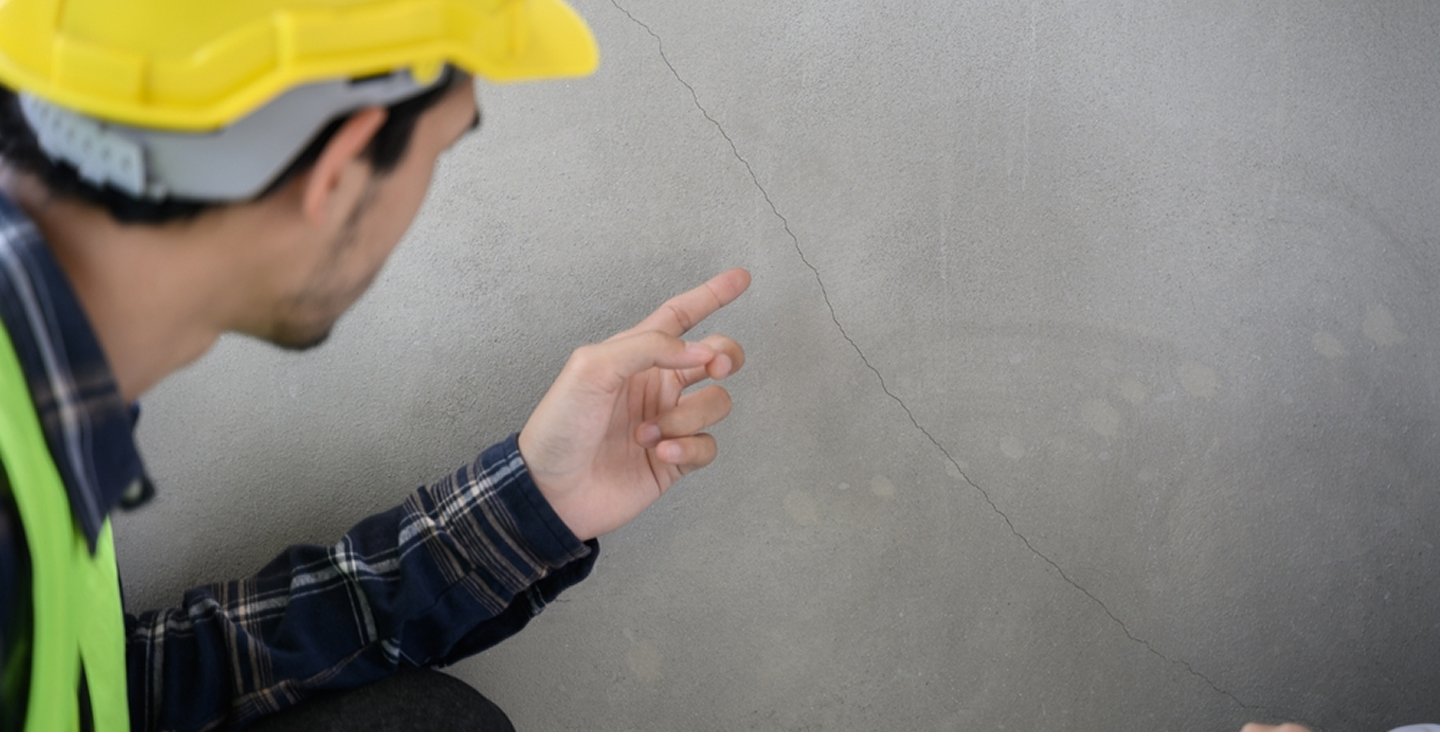
How Experts Evaluate Building Cracks
A crack in a wall makes people nervous, and honestly, that reaction is fair. Nobody wants to find out their building has a structural problem. But the truth is that most cracks aren’t dangerous — they’re a normal part of how buildings settle and age. The hard part is telling the difference between a crack that’s cosmetic and dangerous—they’re both something important, and that’s exactly what a building crack assessment is designed to do.
Owners often try to make this call themselves, usually by comparing what they’re seeing to something they read online. That approach only goes so far, because crack severity depends on a combination of factors — width, direction, location, pattern, and how it’s changed over time — that’s genuinely hard to judge without factors—width,it of measuring equipment.
Not All Cracks Are Created Equal
The first thing an assessment looks at is where the crack actually is. If you see a crack in the drywall inside your house, do not worry much. This is usually not a deal, especially if the crack is going diagonally from the corner of a door or window. The drywall is not really holding up the house it is there to make the walls look nice. So when the house moves a little, the drywall can get cracks. If you see a crack in the concrete wall that is part of the foundation of the house or, in a wall that is holding up the house or in a big beam that is supporting the house, that is a different story. These things are really important because they are what keep the house standing up.
Direction matters almost as much as location. Vertical cracks tend to be less concerning than diagonal ones, and diagonal cracks tend to be less concerning than horizontal ones. A horizontal crack in a foundation wall, in particular, can indicate pressure pushing in from the outside — often from soil that’s expanded due to moisture — and tends to get flagged for closer review more quickly than a vertical crack of similar width.
People usually look at the width of something when they are trying to figure out how bad it is.. That makes sense.. Width is not the only thing that matters. If a crack in the wall is less than an eighth of an inch, it is probably not a deal, especially if it is in drywall or stucco.
Cracks that are wider than a quarter inch are a story. If a crack is wider at one end than the other you should take a look at the cracks.
The width of cracks does not tell you everything you need to know about cracks. A small crack that is getting bigger is worse than a crack that has not changed in years. The thing about cracks is that width is one thing to consider when you are looking at cracks.
The Difference Between Old and Active
This is probably the single most important distinction in any crack evaluation, and it’s one that’s easy to miss without actually monitoring the crack over time. An old, stable crack — one that formed years ago during normal settling and hasn’t changed since — is generally low risk. An active crack, one that’s currently widening, lengthening, or shifting, is a different matter, because it means whatever’s causing it hasn’t stopped.
Telling these apart usually involves some form of monitoring. This is something that can be really simple. You can just put a marker on the crack and check on it every now and then to see if the crack has gotten bigger.. Sometimes people want to be more careful. So an engineer might put a tool on the crack to measure how much it is moving. This tool can track the crack over weeks or months. The engineer does this because it is important to know what is going on with the crack. Two cracks can look the same when you first see them. They can be very different. One crack might not be getting any worse. The other crack might be getting bigger all the time. The crack that is getting bigger is the one that you really need to worry about.
What Causes Cracks in the First Place
Understanding the likely cause helps put a crack in context, and this is where an experienced eye makes a real difference. Normal settling accounts for a huge share of minor cracking, especially in buildings under a few years old, since materials and soil beneath the foundation continue adjusting after construction. This kind of cracking is expected and rarely a concern.
Moisture is a problem. When the soil gets wet and dry over and over it. That puts a lot of pressure on the foundation of a building. This can cause cracks to form over time. This is especially true, in areas where the soil has a lot of clay in it. If water does not drain properly around a building and instead stays near the foundation, it can make this problem even worse. Moisture can really damage a foundation.
Temperature changes cause their own type of cracking, particularly in concrete and masonry, as materials expand and contract with the seasons. This tends to produce fairly predictable, minor cracking that doesn’t usually indicate a deeper problem.
Then there’s the less common but more serious category: cracks caused by actual structural issues, like an undersized foundation, a failing support beam, or significant soil movement beneath part of the building. These cracks often come with other warning signs — sticking doors, sloping floors, gaps around window frames — that show up alongside the crack rather than in isolation.
How the Assessment Process Works
When we do an evaluation, the way we start by writing down every single crack. We need to find out where the crack is, how wide the crack is, how long the crack is, and which direction the crack goes. We also need to know if the crack has any pattern that connects the crack to other cracks around the crack. To do this, we take pictures of the crack with a ruler in it so we can see how wide the crack really is. This way, we do not just guess the width of the crack; we can actually measure the width of the crack from the photo of the crack later.
From there, the assessment looks at context. Is the crack near a door or window, where normal frame movement is a likely cause? Is it in a load-bearing wall or foundation, where the stakes are higher? Are there other signs nearby — moisture staining, efflorescence, spalling concrete — that point toward a specific cause rather than just general settling?
If the crack seems significant enough to warrant it, monitoring begins, sometimes for several weeks or months, to determine whether it’s active. In more serious cases, this might be paired with a broader structural review, checking whether the crack is an isolated issue or a visible symptom of something happening elsewhere in the building.
A Realistic Example
Consider an office building where a tenant reports a crack running along the top of an interior wall, close to where it meets the ceiling. On its own, this kind of crack is common and often just reflects minor movement where two different building materials meet — nothing to be alarmed about.
But during the same walkthrough, the inspector notices a second crack outside, on the exterior foundation wall, roughly below where the interior crack appears. That connection changes things. A structural crack assessment in a case like this typically includes monitoring both cracks together, checking the foundation’s drainage on that side of the building, and possibly reviewing original construction documents to understand what’s beneath that section of wall. It’s the combination and the pattern, not either crack alone, that determines how seriously it needs to be taken.
When to Call Someone
As a general rule, it’s worth getting a professional building crack assessment if a crack is wider than a quarter inch, if it’s actively growing, if it’s paired with other signs like sticking doors or sloping floors, or if it’s located in a foundation or load-bearing wall rather than interior drywall. None of these automatically means something serious is wrong, but they’re exactly the situations where a trained eye is worth having.
This kind of evaluation also fits naturally alongside a Foundation Inspection Services review, since cracks and foundation movement are often connected—one is frequently a visible symptom of the other. Getting both looked at together tends to give a much clearer, more complete picture than treating a crack as an isolated cosmetic issue.
Most cracks turn out to be nothing serious. But the only real way to know that with confidence is to have someone qualified actually look, measure, and, if needed, watch it over time—rather than guessing based on how big it looks today.
What to Avoid Doing
Some things we do can actually make a problem worse. For example, if we paint over a crack in the wall without taking a picture of it or measuring it first, we will not be able to tell if the crack is getting bigger. If we fill a crack with caulk or patching compound before a professional, like an engineer, has a chance to look at it, we might be hiding information that they need to figure out what is going on with the crack. This is especially true if the crack is still growing and needs to be watched rather than just being sealed up. And relying on a general contractor’s quick opinion, rather than an actual structural crack assessment, can leave a genuinely important issue misclassified as cosmetic simply because nobody looked closely enough or tracked it over time.
None of this means every crack needs a full engineering workup. Most don’t. But when in doubt, documenting first and asking a qualified person before doing any cosmetic fix is the safer order of operations, and it costs very little compared to what it protects against.
Recent Blogs

Our Related Services
Need Expert Forensic Engineering & Building Assessment Insights?
Get our accurate, evidence-based analysis to identify root causes, assess structural integrity, and make confident decisions.
Get in Touch →