

Forensic Engineering Investigations: Causes of Structural Failure in Commercial Buildings
Structural failures in commercial buildings do not always come with obvious warning signs. Sometimes it is a crack that slowly widens, a floor that feels slightly off, or sometimes a connection that quietly lost capacity long before anyone noticed. When something goes wrong with a commercial structure, the visible damage is rarely the full picture.
Forensic engineering investigations are carried out to draw that full picture. It is conducted to find out exactly why these failures happen and where they started.
A commercial building works as one connected system. Columns, beams, slabs, foundations, walls, roof framing, connections, and exterior assemblies all share the load together. When one part weakens or fails, the stress it was carrying shifts to whatever is around it. That is why visible damage on the surface often points somewhere else entirely when you dig deeper.
This blog highlights the role of forensic engineers in identifying the root causes of structural failures in commercial buildings.
What Counts as Structural Failure in a Commercial Building?
Structural failure is not necessarily a full collapse. Partial collapse, excessive deflection, foundation settlement, connection failure, concrete spalling, corrosion reducing load capacity, or movement that makes a building unsafe for its intended use — all of these are counted.
Put simply, structural failure occurs when a building component can no longer do the job for which it was placed. In commercial properties, that can show up across a wide range of systems.
Affected systems may include:
- Roof systems
- Steel framing
- Concrete slabs
- Masonry walls
- Foundations
- Parking decks
- Load-bearing columns
- Lateral force resisting systems
Some failures are sudden. For example, a connection gives way, or something collapses without much warning. Others take years to develop, such as moisture working its way in, corrosion building up, or repeated loading cycles slowly fatiguing a member. By the time the damage becomes visible, the process behind it may have been running for a long time.
What a technical investigation does is look past the damaged spot itself. Engineering experts dig deeper to understand — how the structure was designed, how it was actually built, how it has been used over its life, and what changed in the time before anyone noticed the problem.
Why Forensic Engineering Investigations Matter after Structural Failures
The whole point of a forensic engineering investigation is to nail down cause, sequence, extent, and contributing conditions. It is not to make just a guess based on what the damage looks like. A real review takes what was found in the field and connects it to documents, measurements, testing, and engineering analysis until a defensible picture comes together.
This process may include:
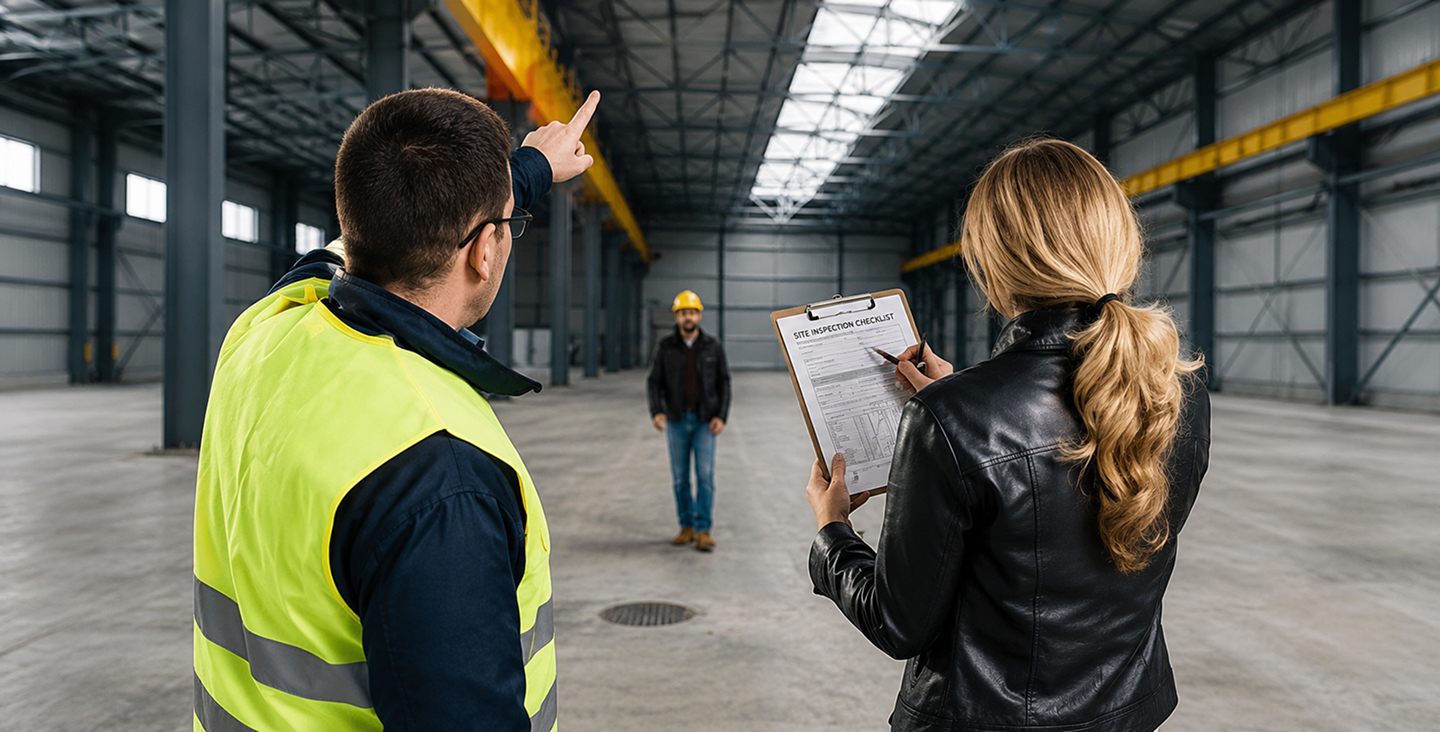
- Site inspection and damage mapping
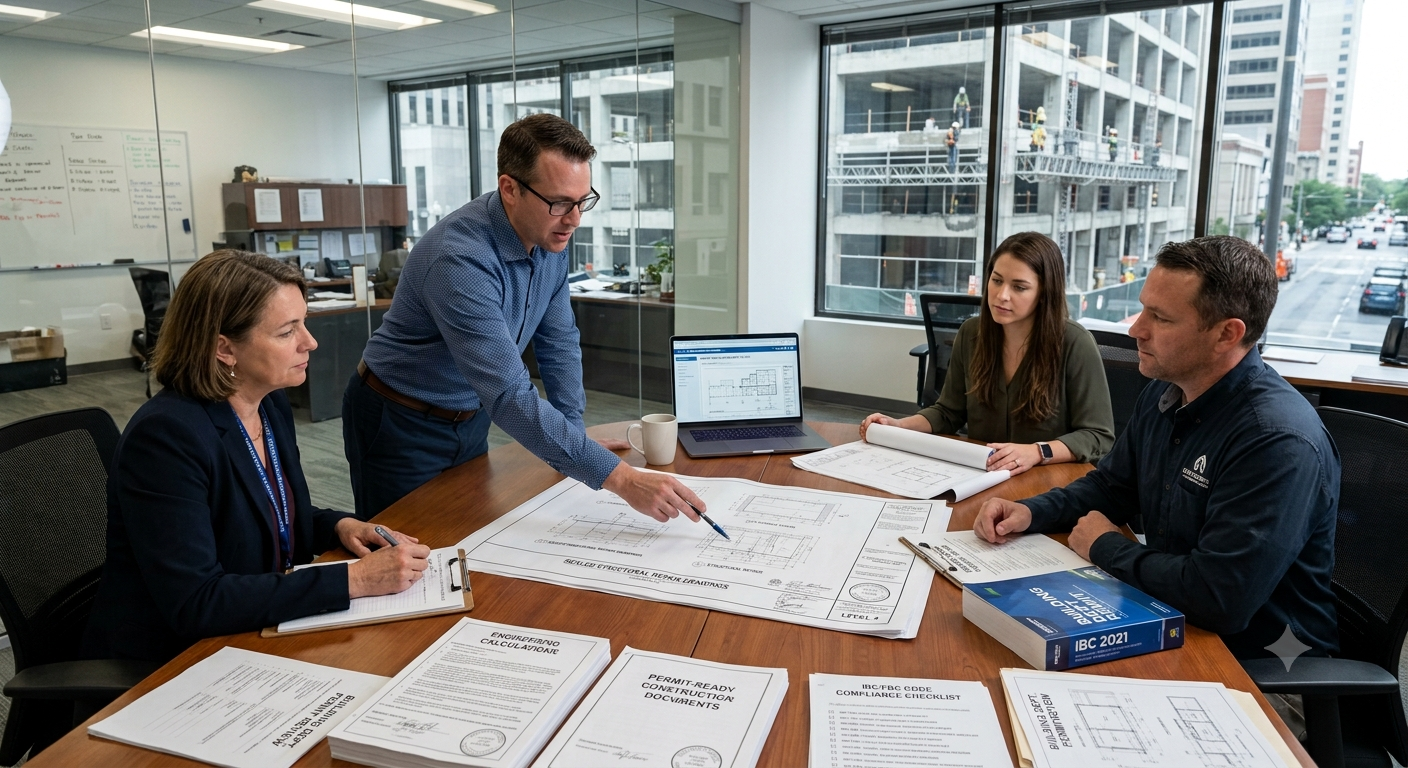
- Review of drawings and repair records
- Material testing
- Moisture and corrosion assessment
- Load path evaluation
- Code and standard review
- Photographic documentation
- Technical reporting
For commercial buildings, that picture informs repair planning, risk management, insurance review, litigation preparation, and future maintenance decisions.
The Primary Causes of Structural Failure in Commercial Buildings
A good investigation does not just answer what happened. It gives the property owners, managers, and stakeholders something solid to stand on when they figure out what comes next.
Cause 1: Design Errors and Load Path Problems
Every building needs a working load path. That means loads coming off the roof, floors, walls, equipment, wind pressure, and seismic movement all need a clear route down through the structure and into the ground. When that route has gaps or was not properly thought through, certain members end up holding more than they were sized for.
Common design-related issues include:
- Undersized beams or columns
- Poor connection detailing
- Inadequate lateral bracing
- Weak transfer points
- Improper assumptions about live loads
- Limited allowance for expansion or movement
Design problems have a particular way of hiding. A building can sit for years without showing any sign of trouble. Then something changes — a heavy storm, a renovation, new rooftop equipment, or just enough accumulated movement — and conditions that were always marginal finally cross a line.
Cause 2: Construction Defects and Field Deviations
Good design is only half of the commercial construction. If the crew in the field does not build what the drawings call for, the design does not matter much. Commercial construction runs multiple trades at the same time, and small errors in structural work tend to have bigger consequences than small errors elsewhere.
Misplaced reinforcing steel. Welds that were not completed. Bolted connections that were under-torqued. Concrete that was not consolidated properly. Missing anchors. Wrong fasteners. Substitutions that got made in the field and were never reviewed by the engineer of record.
Why Changes in Field Conditions Matter
Changes happen on job sites. That is not unusual. What matters is whether those changes affected how the structure carries load, and whether anyone with engineering knowledge actually reviewed them before the work moved forward.
A forensic review often places the original plans, the as-built conditions, inspection records, and actual construction details side by side.
Cause 3: Foundation Movement and Soil-Related Distress
A foundation is only as dependable as the soil it is sitting on. When that soil shifts, compresses unevenly, swells, erodes, or loses its bearing capacity, the structure above it moves in response. Sometimes that response is slow and gradual. Sometimes it is not.
Signs worth taking seriously include:
- Wall cracks
- Sloped floors
- Sticking doors
- Cracked slabs
- Separated joints
- Uneven column lines
Foundation-related failures may tie back to:
- Poor soil compaction
- Expansive clay
- Erosion or sinkhole activity
- Poor drainage and water intrusion
- Nearby excavation
- The foundation design that did not suit the actual site conditions
Commercial buildings cover a large portion of the ground. So, soil conditions change across a single property more than most people expect. One corner of a building might sit on stable material and perform well for decades. Another corner might be sitting on something that has been slowly moving the whole time.
Cause 4: Water Intrusion, Corrosion, and Material Deterioration
Water finds the path of least resistance and follows it — through roofs, walls, joints, balconies, parking decks, below-grade walls, and poorly sealed penetrations. Once it gets inside, it starts doing damage in places where nobody is watching.
Steel corrodes, reinforced concrete cracks and eventually spalls, and wood rots. Masonry also loses its bond. Fasteners and embedded anchors that were installed to spec gradually lose the capacity they were counted on for. This is not a quick process, but by the time it becomes visible on the surface, the material behind that surface has usually been compromised for a while.
A standard visual inspection does not find it. Forensic engineering investigations, including testing, probing, measurements, and document review, are how the full picture gets established.
Cause 5: Overloading and Change in Building Use
Buildings get repurposed. That is just the reality of commercial real estate. A warehouse takes on storage loads heavier than anything it was designed for. A retail shell gets converted to a restaurant with kitchen equipment bolted to the roof. An office building becomes a medical facility with significantly different floor load requirements. A flat roof ends up carrying solar arrays, multiple HVAC units, signage, and communication equipment — none of which was on the original structural drawings.
However, overloading can result in:
- Beam deflection
- Slab cracking
- Roof sagging
- Connection distress
- Column overstress
- Localized collapse
Cause 6: Poor Maintenance and Deferred Repairs
Structural systems are not self-maintaining. They need attention, and when they do not get it, small problems develop into larger ones over time. A roof leak that never got properly fixed leads to corrosion in the steel below. Cracked sealant around a window opens a path for water into the wall assembly. A deteriorated expansion joint allows moisture to reach the reinforcing steel embedded in the concrete.
Deferred maintenance is one of those factors that shows up consistently in forensic investigations — not always as the primary cause, but almost always as something that made the outcome worse.
Common warning signs include:
- Recurring leaks
- Rust staining
- Concrete cracking
- Exposed reinforcing steel
- Loose façade elements
- Repeated patch repairs in the same location
- Ponding water on roof surfaces
- Cracks that are visibly wider than they were last year
Prema Consulting Group looks at these conditions carefully — not just what the damage looks like right now, but how it developed, how long it has been progressing, and what the technical documentation actually shows.
Cause 7: Storm, Wind, Fire, and Impact Damage
Outside events can put stress on a structure far beyond what normal operating conditions ever would.
High winds pull at roof systems, push against wall panels, and load connections in directions they were not primarily designed to resist. Fire changes the material properties of steel and concrete. A vehicle striking a column in a parking structure or loading dock may appear to leave only a surface-level dent, but it can significantly compromise the structural capacity.
Storm-related failures sometimes develop over days. Water intrusion that starts during a weather event keeps moving through the assembly after the storm passes.
A careful investigation separates damage caused by the event under investigation from damage that was already present. That distinction matters more than most people expect — because pre-existing deterioration and a sudden outside event often combine to produce a failure that neither one would have caused alone.
How Engineers Determine the Cause of Failure
Structural failure analysis does not start with a conclusion and work backward. It starts with documentation and builds forward.
- Damaged areas get recorded in detail first.
- Then the structure surrounding those areas is studied to determine whether the failure is isolated or part of a larger pattern running through the building.
- From there, engineers go through whatever records exist — drawings, photographs, maintenance logs, weather data, repair history, construction documents, and earlier inspection reports.
- Site work may include measurements, material samples, moisture readings, corrosion assessment, and structural calculations.
The opinion at the end of that process needs to answer four questions clearly.
What failed?
How did it fail?
Why did it fail?
And what evidence supports that conclusion?
When an investigation cannot answer all four of those with confidence, it is not finished.
What Building Owners and Claims Teams Should Preserve
Useful records to hold onto include:
- Original drawings
- Repair invoices and maintenance logs
- Inspection reports
- Photos taken before and after the event
- Tenant complaints
- Weather records
- Construction change orders
- Equipment installation records
The earlier these get collected and preserved, the more an engineering investigation can actually work with. Trying to reconstruct a timeline from memory six months after the fact is a much harder problem than it needs to be.
Conclusion
Commercial building failures rarely come down to one thing. A roof that collapsed probably had drainage issues, unaddressed corrosion, and a maintenance history with gaps. A wall that cracked probably has a story involving foundation movement, water intrusion, and a prior repair that looked fine but never really was. These situations layer, and sorting through them takes methodical technical work rather than a quick visual assessment.
Forensic engineering investigations provide everyone involved with a disciplined way to work through what happened based on the evidence.
Prema Consulting Group conducts structural failure review through objective engineering evaluations, documentation, and evidence-based reporting that eliminates assumptions.


Our Related Services
Need Expert Forensic Engineering & Building Assessment Insights?
Get our accurate, evidence-based analysis to identify root causes, assess structural integrity, and make confident decisions.
Get in Touch →