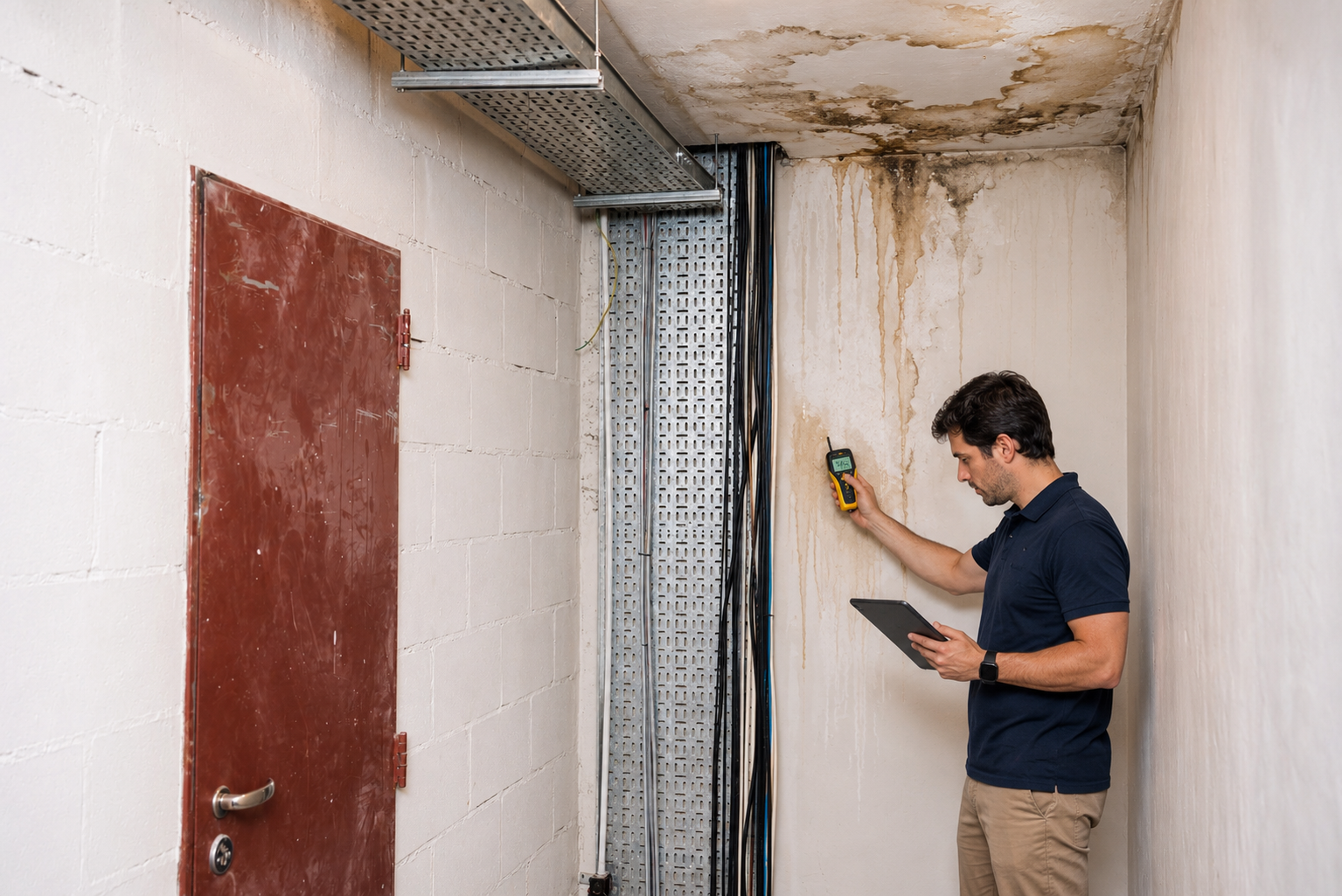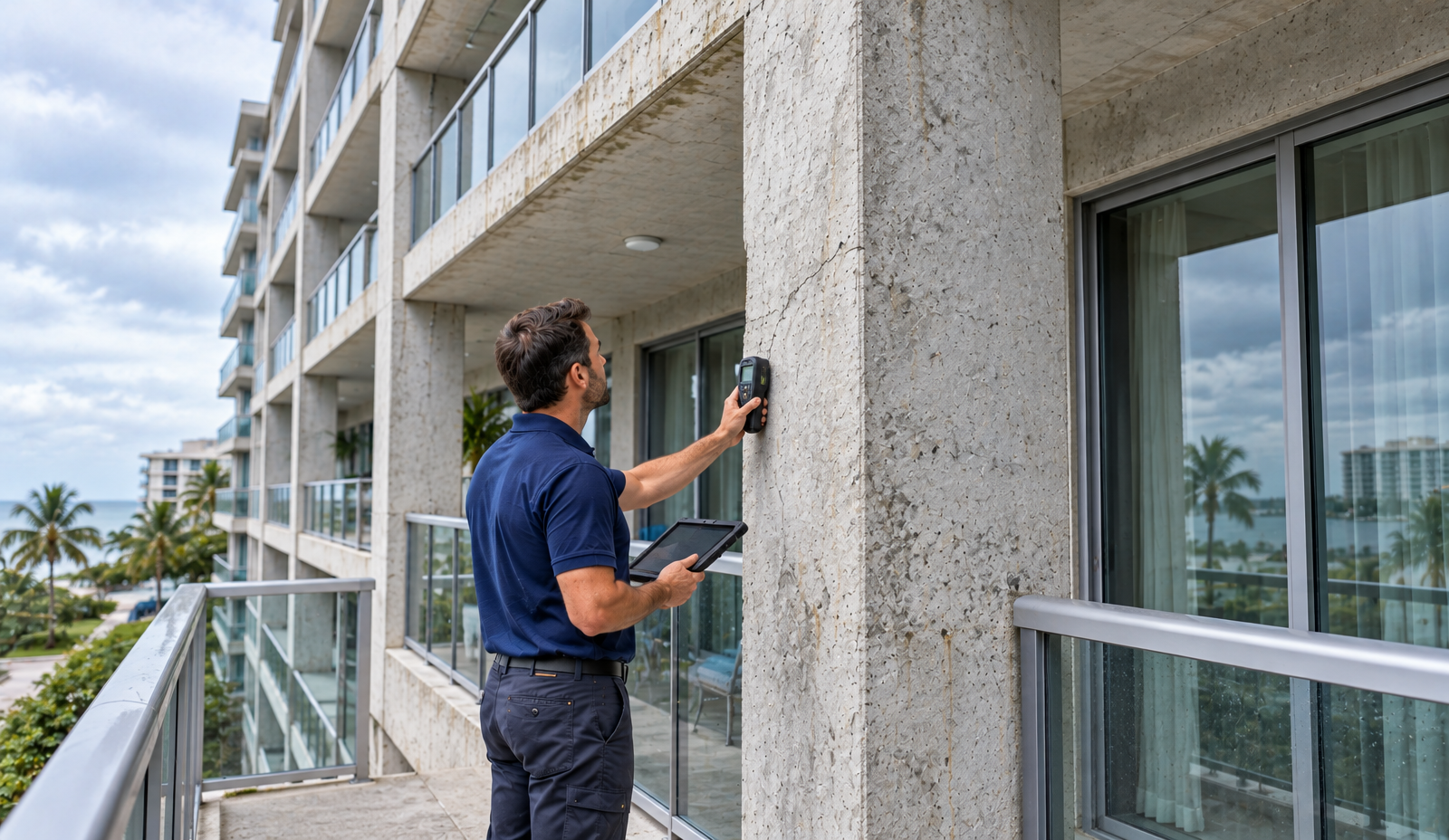

A recurring roof leak does not automatically require complete replacement. At the same time, repeated patches may offer limited value when deterioration extends beyond the visible repair area or the underlying problem remains unresolved.
A commercial roof condition assessment helps owners and property teams understand the existing system before committing to corrective work. Engineers evaluate roof condition, leak history, drainage, accessible substrate and deck indicators, prior repairs, and related structural or envelope concerns.
The findings provide a technical basis for planning. Where concealed moisture, assembly condition, or performance remains uncertain, additional investigation may be needed before comparing repair and replacement options.
Start With the Decision the Assessment Must Support
The scope should reflect what the property team needs to decide.
Common questions include:
- Is the reported problem associated with a localized detail or broader system conditions?
- Can a repair address the supported cause and affected materials?
- What concealed conditions could change the proposed work?
- Are structural or adjoining envelope concerns involved?
- What additional information is needed before design or budgeting?
A visual survey may identify priorities and further investigation needs. It does not automatically establish remaining service life, concealed assembly condition, or a complete replacement scope.
Engineering Factors to Evaluate Before Repairs
Roof System and Assembly Information
Engineers identify accessible roof characteristics and review available records. Membrane, metal, modified bitumen, and other systems require different repair approaches.
Relevant information may include covering type, attachment, insulation, deck, roof slopes, transitions, and previous overlays. Records should be distinguished from conditions verified in the field.
Uncertain assembly information can affect material compatibility, repair feasibility, and the need for openings or testing.
Covering Condition and Distribution of Distress
The evaluation considers where deterioration occurs and whether it is isolated, repeated, or widespread.
Observations may include:
- Open seams, joints, or terminations
- Tears, punctures, or displacement
- Blisters or localized deformation
- Surface or coating deterioration
- Repeated repair locations
The distribution matters as much as the presence of damage. A localized opening may be repairable, while repeated distress may prompt broader evaluation. Appearance alone does not establish the condition of the entire assembly.
Leak History and Source Confidence
Leak logs and dated photographs help connect interior symptoms with roof conditions. Engineers review when leakage occurs, where it appears, and whether previous repairs changed the pattern.
Water can travel within an assembly, and a ceiling stain may involve a wall transition, plumbing, or condensation rather than the roof covering. Repair planning should address the source supported by the evidence.
When the pathway is uncertain, targeted testing or an envelope investigation may be more useful than another patch at the visible damage location.
Drainage and Water Accumulation
Engineers review accessible drains, scuppers, gutters, slopes, and evidence of ponding or recurring accumulation.
Drainage concerns may affect the exposure at vulnerable details. The assessment considers whether the proposed work addresses the drainage condition or leaves it active.
A visual review does not automatically establish drainage capacity or compliance. Calculations and design review may be required where those questions materially affect the project.
Flashings, Penetrations, and Transitions
Roof performance depends on integration at parapets, roof-to-wall interfaces, equipment curbs, edges, and penetrations.
A sound covering may still leak through a deficient transition. Conversely, replacing the covering may leave an adjoining wall or concealed flashing concern unresolved.
Engineers evaluate the accessible details and identify where further access is needed to understand the interface.
Concealed Moisture and Underlying Materials
Insulation, substrates, and other concealed materials may have been affected beyond visible surface distress.
Additional investigation may consider:
- Moisture measurements or a defined moisture survey
- Infrared imaging under suitable conditions
- Limited openings or roof cores
- Material condition and assembly composition
- The relationship between wet areas and proposed repairs
Infrared imaging identifies temperature patterns rather than directly confirming moisture. Measurements and sampling require interpretation, and results apply to the locations evaluated.
The extent of affected concealed materials can change a repair scope. It should be addressed before assuming that a surface patch or overlay is appropriate.
Substrate, Deck, and Supporting Components
Accessible indicators such as deformation, corrosion, staining, or visible deterioration may warrant structural input.
Engineers consider the component’s function and whether additional access, measurement, or analysis is needed. A covering replacement does not by itself resolve deterioration of the deck or supporting members.
Structural questions should be evaluated within an appropriate scope rather than inferred from surface condition alone.
Prior Repairs and Alterations
Repair records help explain recurring conditions and changes in system behavior.
The evaluation may review patches, coatings, overlays, replacement details, new penetrations, and equipment modifications. Engineers consider compatibility, integration, and whether earlier work addressed the supported source.
Repeated repairs do not automatically establish that replacement is necessary. They may indicate an unresolved pathway, a recurring detail, or broader deterioration requiring investigation.
Comparing Repair and Replacement Options
When Targeted Repair May Be Feasible
A localized repair may be appropriate when the source and affected area are sufficiently understood, surrounding materials can support the work, and the repair can be integrated with the existing system.
Evaluation may consider material compatibility, access, attachment, drainage, and expected performance. Repair design may be needed to define how the work should be constructed.
When Broader Work May Be Appropriate
Widespread deterioration, extensive concealed wetting, repeated system concerns, or poor integration may justify evaluation of larger repair areas or replacement.
The recommendation should explain why the proposed scope addresses the documented condition. Roof age, one leak, or a single damaged detail should not be used alone to determine replacement of the entire roof.
When More Evidence Is Needed
The assessment may identify a need for testing or additional access before an option can be selected. This is especially useful when concealed conditions could materially change costs, quantities, or design.
A report should make those information gaps clear so preliminary findings are not treated as a complete construction scope.
Florida Factors That May Affect the Decision
Florida examples may involve wind exposure, heavy rainfall, prior storms, moisture, and coastal conditions. Their significance depends on the roof system and available evidence.
A reported storm may prompt review of damage patterns, attachment, and earlier conditions. Rainfall may highlight drainage concerns, while wind-driven rain may involve adjoining envelope details. Exposure alone does not establish cause or the extent of required replacement.
Applicable code and permitting requirements should be evaluated for the jurisdiction and proposed work. The assessment should identify when project-specific design or code review is needed rather than assume every repair has the same requirements.
What the Findings Should Provide
A useful report connects observations and analysis with the decisions still to be made.
Depending on the scope, it may include:
- Roof-system information and areas inspected
- Mapped conditions and supporting photographs
- Leak history and evaluated pathways
- Drainage, flashing, and penetration findings
- Concealed condition or structural questions
- Technical considerations for repair or replacement
- Limitations and recommended additional work
Budgets, remaining service life, design details, and specifications should be included only when appropriately scoped and supported.
From Assessment to Corrective Planning
The assessment can inform maintenance, targeted repairs, broader investigation, or a separate design assignment. Detailed design translates the selected approach into project-specific requirements.
Planning should also consider tenant impacts, equipment access, sensitive operations, construction sequencing, and temporary weather protection. Verification after corrective work may be appropriate when it can address defined performance questions.
Comparing options requires both technical findings and project information. Pricing, warranties, and scheduling should be reviewed alongside the supported scope rather than used to substitute for an understanding of existing conditions.
Preparing for a Commercial Roof Condition Assessment
Provide roof plans, installation information, leak logs, maintenance records, dated photographs, and prior repair scopes. Identify relevant interior symptoms and arrange access to roof areas and accessible spaces below.
Document conditions before repairs where practical. Necessary measures to limit ongoing damage should proceed, with records retained to explain changes before the evaluation.
Discuss a Commercial Roofing Evaluation
Prema Consulting Group evaluates roof condition, leak history, drainage, substrate and deck indicators, prior repairs, and related structural or envelope concerns to support repair-versus-replacement planning.
Our team helps commercial owners, property and facility managers, and asset managers understand documented conditions and identify the information needed for appropriate corrective decisions.
Contact Prema to discuss a commercial roofing evaluation for your property.
Frequently Asked Questions
What is a commercial roof condition assessment?
−It documents and evaluates existing roof conditions to support maintenance, repair, replacement planning, or further investigation. The methods and deliverables depend on the agreed scope.
Does a recurring leak mean the roof needs replacement?
+No. The source, extent, assembly condition, and feasibility of repair should be evaluated. Recurrence may reflect an unresolved detail rather than widespread roof failure.
Why do concealed materials matter before repairs?
+Wet or deteriorated underlying materials can change the work needed and the suitability of a proposed repair. Additional access or testing may be required to evaluate them.
Can a roof assessment identify structural concerns?
+Accessible indicators may identify a need for structural evaluation. Confirming the condition or capacity of concealed deck and supporting components may require additional investigation and analysis.
Is the assessment report a replacement design?
+Not automatically. Detailed repair or replacement design should be defined separately when construction requirements, specifications, or permitting documents are needed.
Our Related Services
Need Expert Forensic Engineering & Building Assessment Insights?
Get our accurate, evidence-based analysis to identify root causes, assess structural integrity, and make confident decisions.
Get in Touch →