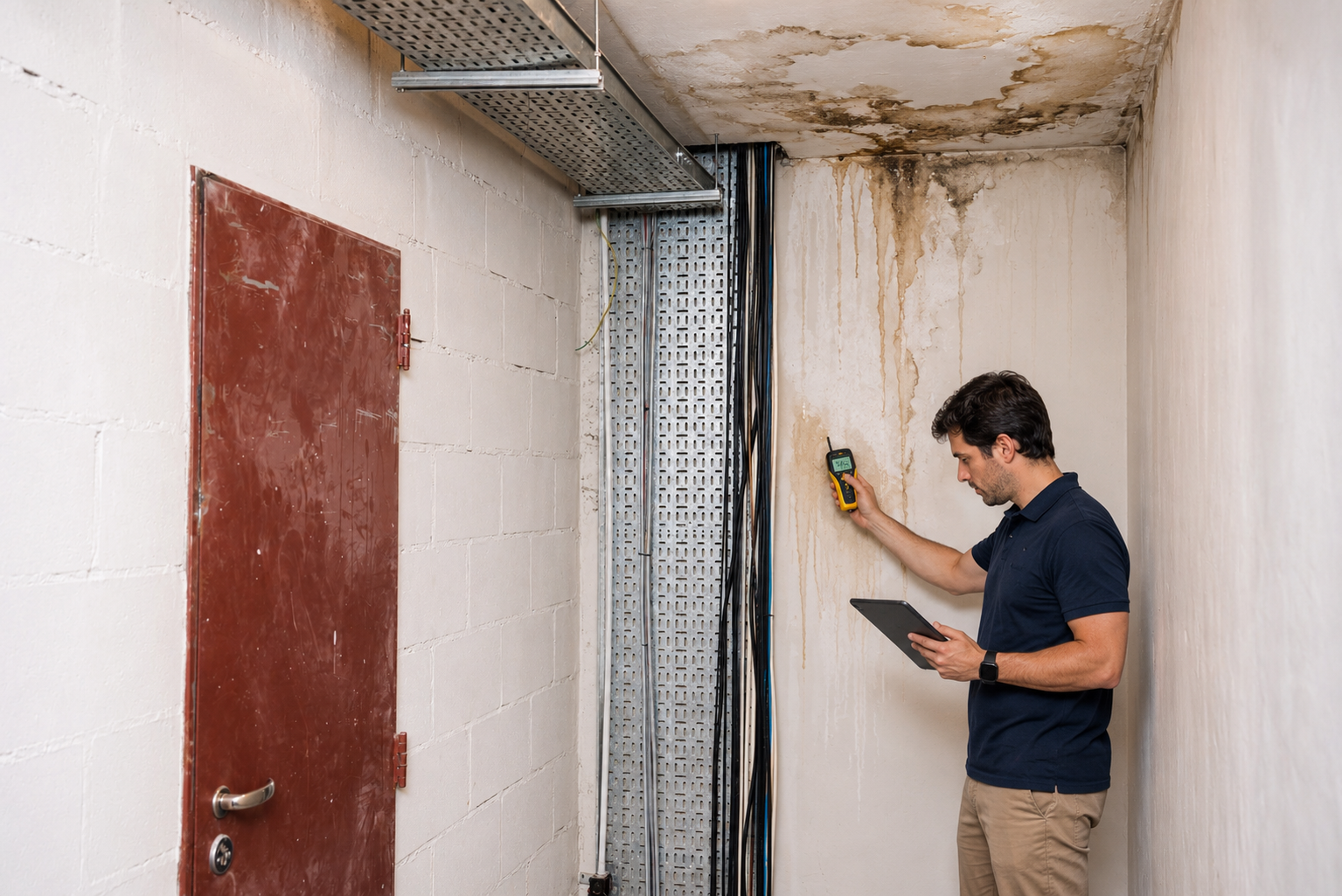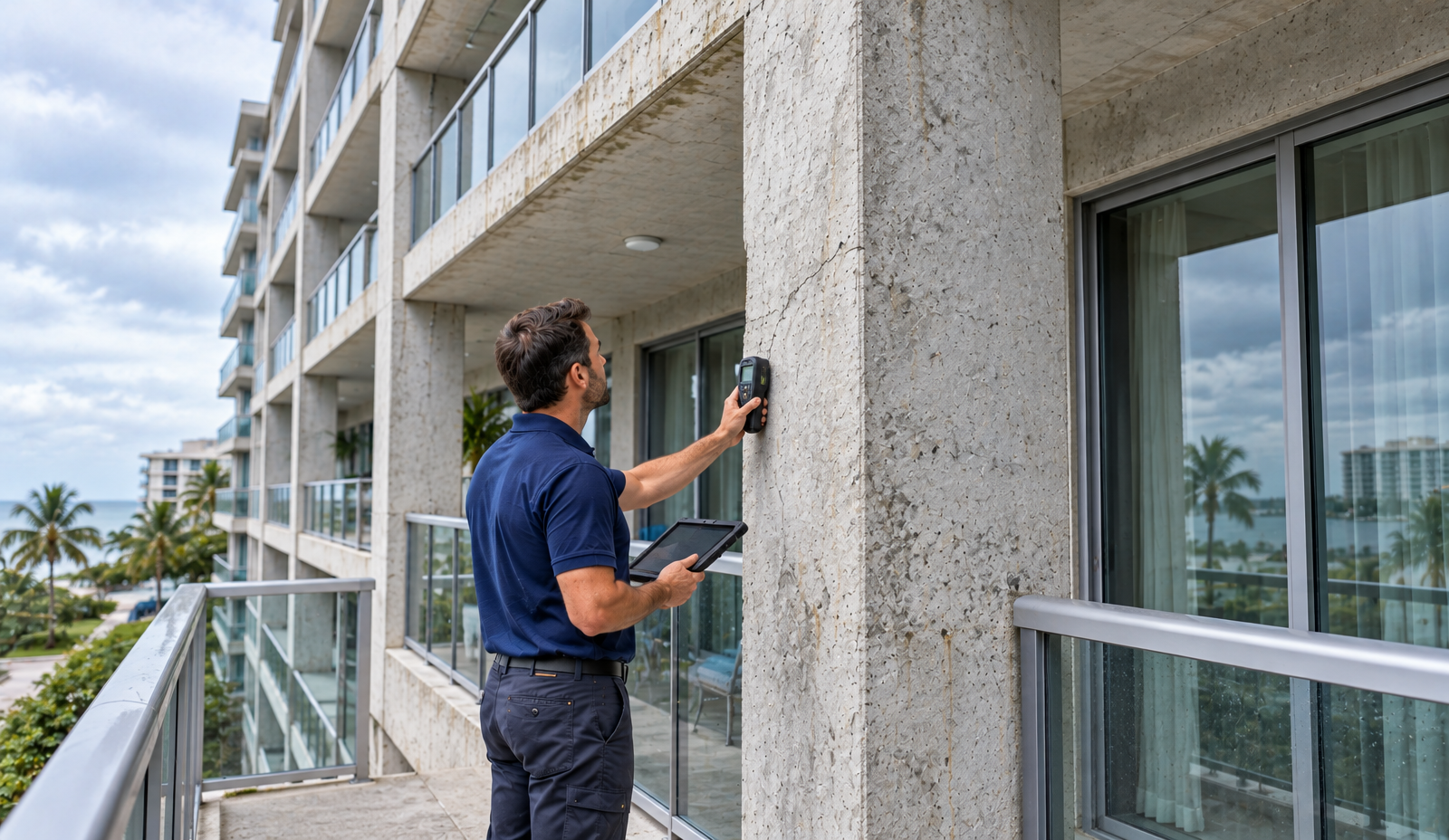

Commercial property teams may request a roof inspection to investigate a leak, document maintenance needs, or support a larger repair decision. Others request a roof survey for similar objectives. The labels can overlap, and they do not reliably define the work included.
The useful distinction in roof survey vs roof inspection is the agreed scope: what areas will be reviewed, what questions will be answered, which methods will be used, and what documentation will be delivered.
Prema helps clients define the appropriate level of roof evaluation based on the decision to be made, required documentation, testing needs, and engineering involvement. A clear scope makes the findings more useful and allows proposals to be compared on the work they actually include.
Is There a Fixed Difference Between a Roof Survey and a Roof Inspection?
There is no single distinction that can be assumed across every provider or assignment. Terminology may also have a defined meaning in a particular contract, program, or standard.
A provider may use “inspection” for an accessible visual review focused on maintenance or a specific concern. Another may use it for a detailed engineering investigation. “Survey” may describe a systematic condition inventory, mapped observations, or a specialized moisture survey.
Neither term guarantees testing, engineering analysis, or a comprehensive report. Property teams should ask for the methods, limits, and deliverables rather than infer them from the service name.
How the Terms May Be Used
Roof Inspection
An inspection commonly involves observing accessible roof components and documenting relevant conditions. Its purpose might be routine maintenance, review of a reported leak, or assessment of a particular detail.
Depending on the scope, it may include:
- Covering, flashing, and penetration observations
- Drainage and visible obstruction review
- Photographs of relevant conditions
- Identification of maintenance needs
- Recommendations for further evaluation
The work may be performed by a roofing professional, engineer, or another qualified specialist according to the questions involved. The term itself does not establish the investigator’s qualifications or the level of analysis.
Roof Survey
A survey may emphasize a systematic record of conditions across defined roof areas. It can help organize observations for maintenance, repair planning, or portfolio review.
Depending on the scope, it may include:
- Identification of roof areas and system types
- Mapped condition locations
- Measurements and photographic documentation
- Review of prior repairs and records
- A structured report of findings and priorities
A moisture survey is a more specific assignment using selected methods to evaluate possible wet areas. It should not be assumed to be part of every general roof survey.
Comparing Scope, Purpose and Deliverables
The comparison below describes possible scope characteristics. It should be used to frame questions, rather than assign fixed features to either label.
Purpose
A focused review may address a particular leak, visible condition, or maintenance concern. A broader condition assessment may document several roof areas and support planning across the property.
Either may be called an inspection or a survey. The proposal should identify the intended decision and the technical questions.
Coverage
Some assignments review selected components or accessible areas. Others evaluate all defined roof areas and may include related interior observations.
Confirm which areas are included, how inaccessible locations will be handled, and whether adjacent walls or other potential moisture sources are within scope.
Methods
A visual review can document accessible conditions. Additional methods may include moisture measurements, controlled water testing, limited openings, or structural assessment when warranted.
Testing requires a defined purpose and suitable conditions. A detailed service name does not establish that testing is included.
Documentation
Deliverables may range from a short checklist and photographs to a report with mapped observations, technical analysis, limitations, and recommendations.
Confirm what the report will explain and whether it will answer the questions needed for maintenance, repair planning, or further investigation.
Engineering Involvement
Engineering input may be appropriate when the assignment involves causation, structural concerns, complex system interactions, repair feasibility, or design requirements.
The provider’s expertise and scope should match those questions. Routine maintenance observations and engineering analysis serve different needs, even when both are described as inspections.
Start With the Decision You Need to Make
Routine Maintenance Planning
If the objective is to identify accessible maintenance conditions, a documented visual review may be sufficient. Useful findings may include obstructed drainage, deteriorated details, and locations requiring closer attention.
The scope should explain whether recommendations are limited to maintenance or extend to technical repair planning.
Recurring Leakage
A recurring leak may require source investigation rather than a general condition inventory. The work may involve interior mapping, review of roof and adjoining envelope details, and targeted testing.
Water appearing beneath a roof does not establish that the roof is the source. Adjacent walls, plumbing, or condensation may require consideration.
Repair or Replacement Planning
A significant investment may require more information about assembly condition, concealed moisture, repeated details, or repair feasibility.
A visual assessment can identify further investigation needs. It does not automatically establish remaining service life or support a replacement scope without sufficient evidence.
Structural or Attachment Concerns
Visible deformation, deck deterioration, or questions about supporting components may require engineering assessment and additional access or testing.
The scope should identify whether structural analysis or attachment testing is included and what information is needed to complete it.
Questions to Ask Before Authorizing the Work
Property teams can clarify proposals by asking:
- What decision or concern will this evaluation address?
- Which roof areas and components are included?
- Will accessible interiors and adjoining envelope details be reviewed?
- What records should we provide?
- Is the work visual only, or are testing and openings included?
- Who will perform the work and interpret the findings?
- What will the written deliverable contain?
- Which questions may require a separate scope?
- How will access restrictions and concealed conditions be reported?
- What arrangements are needed to restore any investigative openings?
These questions help compare proposals that use similar labels but include different levels of work.
What Testing Can and Cannot Add
Testing can help resolve questions that accessible observations leave unanswered. Depending on the assignment, methods may evaluate suspected moisture, assembly composition, attachment, or a particular leakage pathway.
Each method has limitations. Moisture readings depend on the instrument and material. Infrared imaging identifies temperature patterns that require interpretation and corroboration. Findings from limited openings apply to the locations inspected.
A test that does not reproduce a leak does not establish that intermittent leakage never occurs. Reports should describe the test conditions and distinguish supported findings from unresolved possibilities.
Testing should be coordinated around roof access, occupants, sensitive equipment, and restoration of disturbed materials.
What a Useful Deliverable Should Explain
The written output should match the agreed objective. Depending on the scope, it may include:
- Roof areas and components evaluated
- Records reviewed and methods used
- Photographs and condition locations
- Observed maintenance or performance concerns
- Technical significance supported by the evidence
- Limitations and inaccessible areas
- Recommended next steps
Priorities, budgets, remaining service life, repair details, or replacement specifications should be included only when appropriately scoped and supported.
A condition report can inform planning. Detailed repair design, permitting support, construction services, and verification after corrective work should be defined when needed.
Preparing for the Evaluation
Provide available roof plans, installation information, dated photographs, leak logs, maintenance records, and prior repair scopes. Identify roof access arrangements, restricted areas, and relevant interior symptoms.
Explain the operational constraints that affect the work, including tenant coordination, sensitive equipment, and permitted testing times. Photographs taken during active leakage or ponding can be useful when the inspection occurs in dry weather.
Document conditions before repairs where practical. Necessary measures to limit damage should proceed, with records retained to explain changes before the evaluation.
Discuss a Commercial Roofing Evaluation
Prema Consulting Group helps clients define the appropriate level of roof evaluation based on the decision to be made, required documentation, testing needs, and engineering involvement.
Our team supports commercial owners, property and facility managers, and asset managers with evaluations scoped to the property’s conditions and the questions requiring an answer.
Contact Prema to discuss a commercial roofing evauation for your property
Frequently Asked Questions
What is the difference between a roof survey and a roof inspection?
−The terms can overlap. The practical difference is the agreed purpose, coverage, methods, documentation, and engineering involvement. The label alone does not establish the scope.
Is a roof survey always more detailed than an inspection?
+No. A focused inspection may include extensive testing and analysis, while a survey may be visual only. Compare the proposed work and deliverables.
Does a roof survey include a moisture survey?
+Not automatically. Moisture testing should be specifically defined, including methods, coverage, interpretation, and limitations.
When should an engineer be involved?
+Engineering input may be appropriate for structural concerns, causation questions, complex system interactions, or repair and design considerations requiring technical analysis.
Can an inspection report be used as a repair design?
+A condition report does not automatically provide construction details or design requirements. Repair design should be defined as a separate service when needed.
Need Expert Forensic Engineering & Building Assessment Insights?
Get our accurate, evidence-based analysis to identify root causes, assess structural integrity, and make confident decisions.
Get in Touch →