
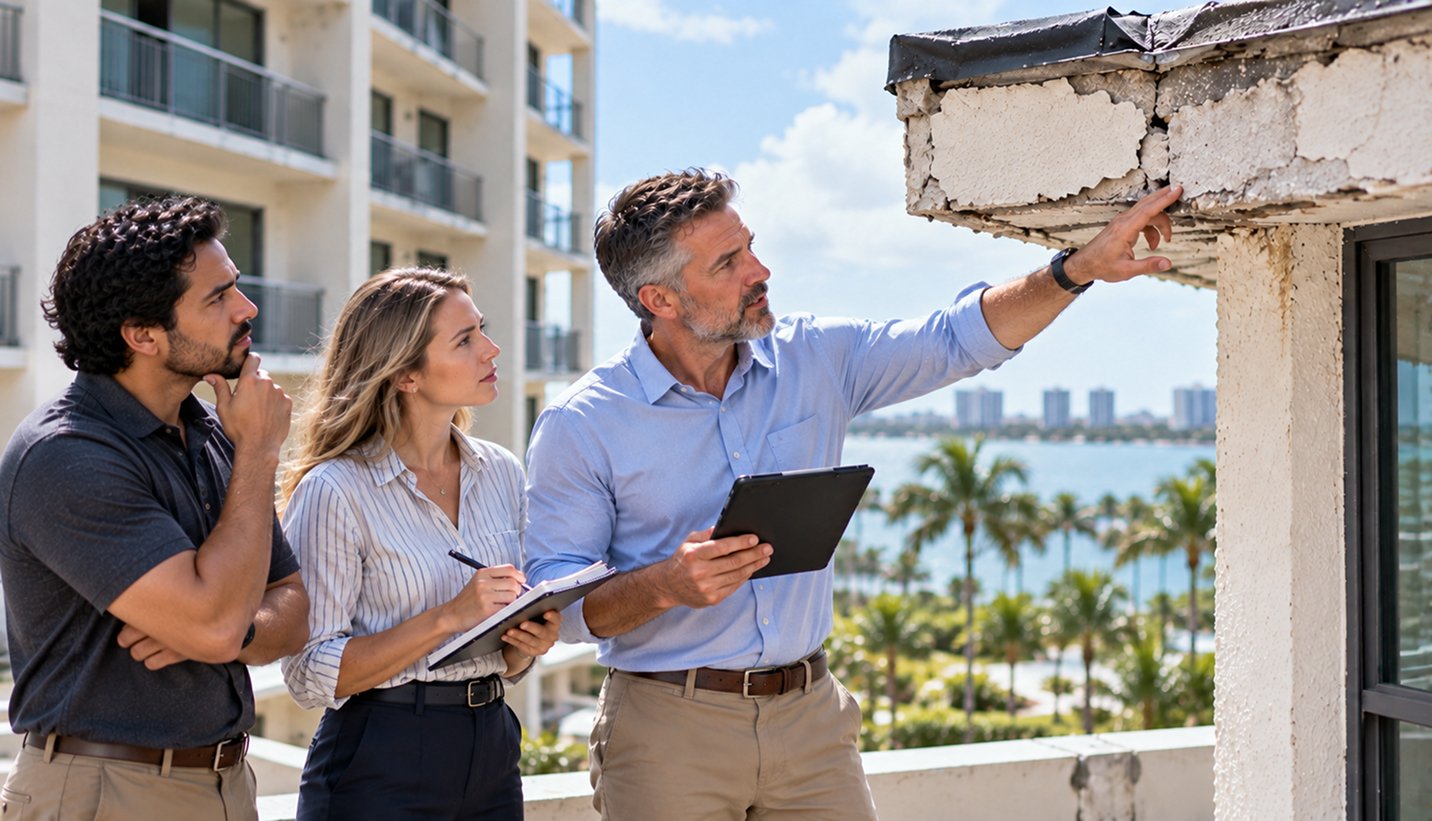
How Forensic Engineers Evaluate the Cause of Building Damage
Determining why building damage occurred requires more than identifying a visible defect. A forensic engineer evaluates the physical evidence, reported event, building configuration, material behavior, and relevant records to determine which damage mechanisms are supported by the available information.
For claims professionals, this work provides an independent technical assessment of a reported loss. The goal is to distinguish what the evidence supports from what remains uncertain.
Cause Damage Mechanism and Contributing Conditions
These terms describe related but different parts of an engineering evaluation. The cause is the event or condition responsible for the damage. The damage mechanism is the physical process through which the damage developed. Contributing conditions are factors that may have influenced the severity, location, or progression of the damage without necessarily being the primary cause.
For example, water inside a building is an observed condition. The pathway may involve displaced roofing, an opening in the exterior envelope, failed flashing, or another component. Prior deterioration, installation details, drainage, and repairs may also affect how water entered or traveled. The engineer must evaluate these possibilities against the evidence rather than assume that the visible condition identifies its cause.
The Investigation Begins With a Defined Technical Question
A useful causation evaluation starts with a clear assignment. The engineer should understand the reported event, areas of concern, and questions the claims team needs addressed. The scope may involve causation, extent of damage, structural performance, moisture pathways, or the relationship between an event and observed conditions.
Defining the question also establishes appropriate limits. A site inspection may support some conclusions while additional records, testing, or specialist input may be needed for others.
How Engineers Move From Evidence to an Opinion
1. Review the Reported Event and Available Records
The engineer may review loss descriptions, photographs, construction documents, repair and maintenance records, prior inspection reports, and weather information. Historical photographs can help show whether a condition existed before the reported loss or changed afterward.
2. Document Existing Conditions
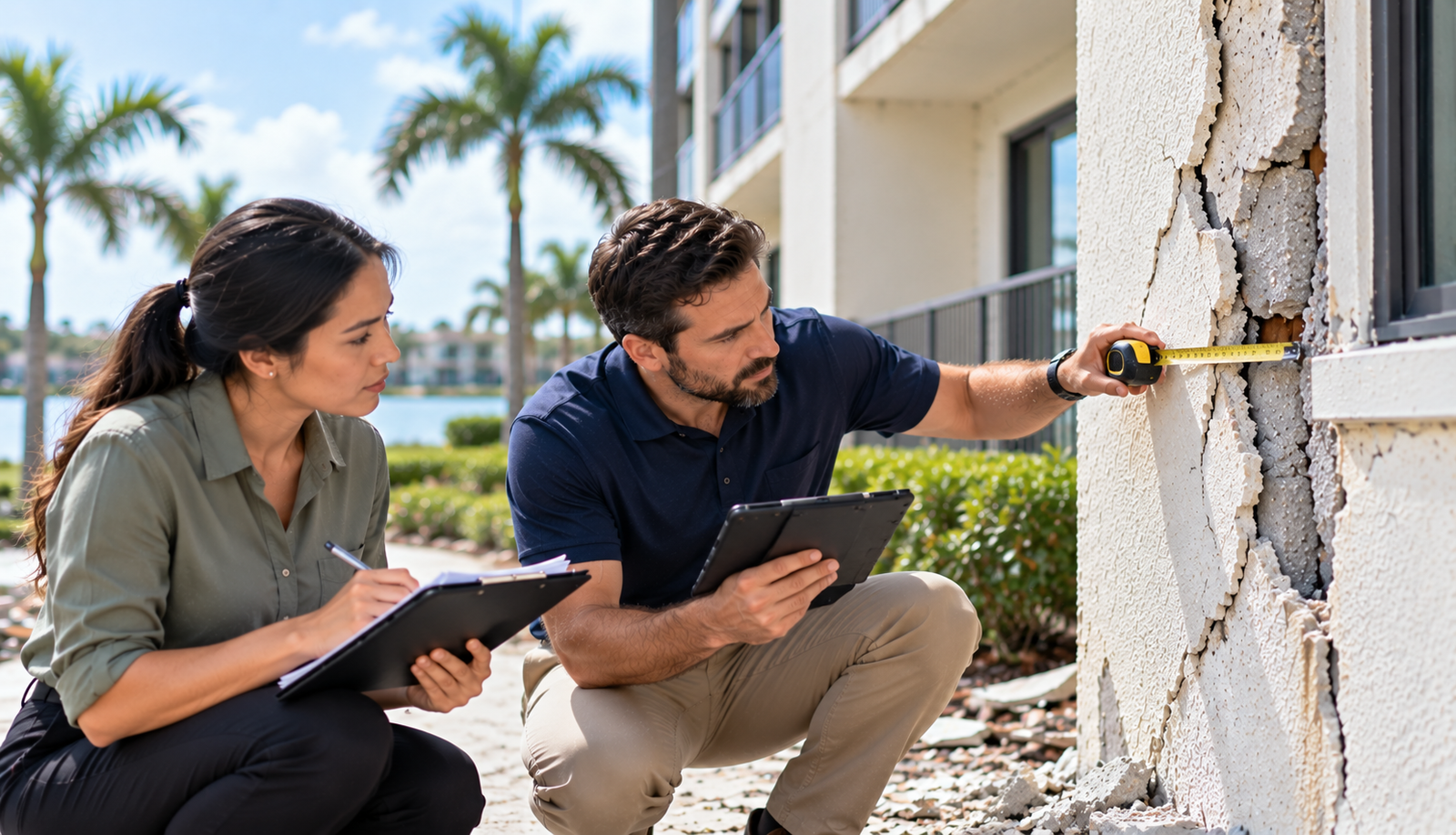
During the site investigation, the engineer documents damage locations, material conditions, construction details, and the relationships among affected components. Photographs, measurements, moisture readings, level surveys, or other field documentation may be collected as appropriate. Altered, repaired, concealed, or inaccessible areas should also be identified because they can affect the evaluation.
3. Analyze Damage Patterns and Material Behavior
Damage patterns often provide information about the forces or processes involved. Engineers may consider the location, direction, distribution, and severity of damage; fracture or cracking characteristics; deformation; corrosion; deterioration; and the response of adjoining materials. These observations are evaluated using principles of structural behavior, material performance, and building science.
4. Evaluate Building System Interactions
Buildings function as connected systems. A condition observed in one location may be influenced by roofing, exterior walls, structural framing, openings, flashing, drainage, foundations, or prior modifications. Evaluating those interactions helps the engineer trace potential load paths, movement, water pathways, or transfers between components.
5. Compare Plausible Damage Mechanisms
An engineer should consider reasonable alternative explanations rather than evaluate only the reported cause. The analysis may compare event-related forces with construction characteristics, installation conditions, long-term deterioration, maintenance history, environmental exposure, or prior repairs. Each potential mechanism is assessed against the observed evidence. A strong opinion explains why one explanation is more consistent with the evidence and why others are less consistent.
6. Use Testing or Calculations When Appropriate
Additional work may include nondestructive evaluation, destructive examination when authorized, material sampling, moisture measurements, structural calculations, laboratory testing, or further site observations. The method should be selected to answer a specific technical question. Test results do not establish causation by themselves; they must be interpreted with the physical observations and other available information.
Why Timing and Evidence Quality Matter
Conditions can change after a loss. Emergency mitigation, repairs, demolition, weather exposure, continued occupancy, and the passage of time may alter or remove evidence. Missing records, restricted access, concealed components, and delayed inspections may also limit what can be determined.
A limitation does not automatically prevent an engineering opinion, but the report should explain whether it materially affects the conclusion. When the available evidence does not support a definitive determination, the engineer should identify what remains unresolved and whether additional information or evaluation could help answer the question.
Examples From Florida Building Damage Investigations
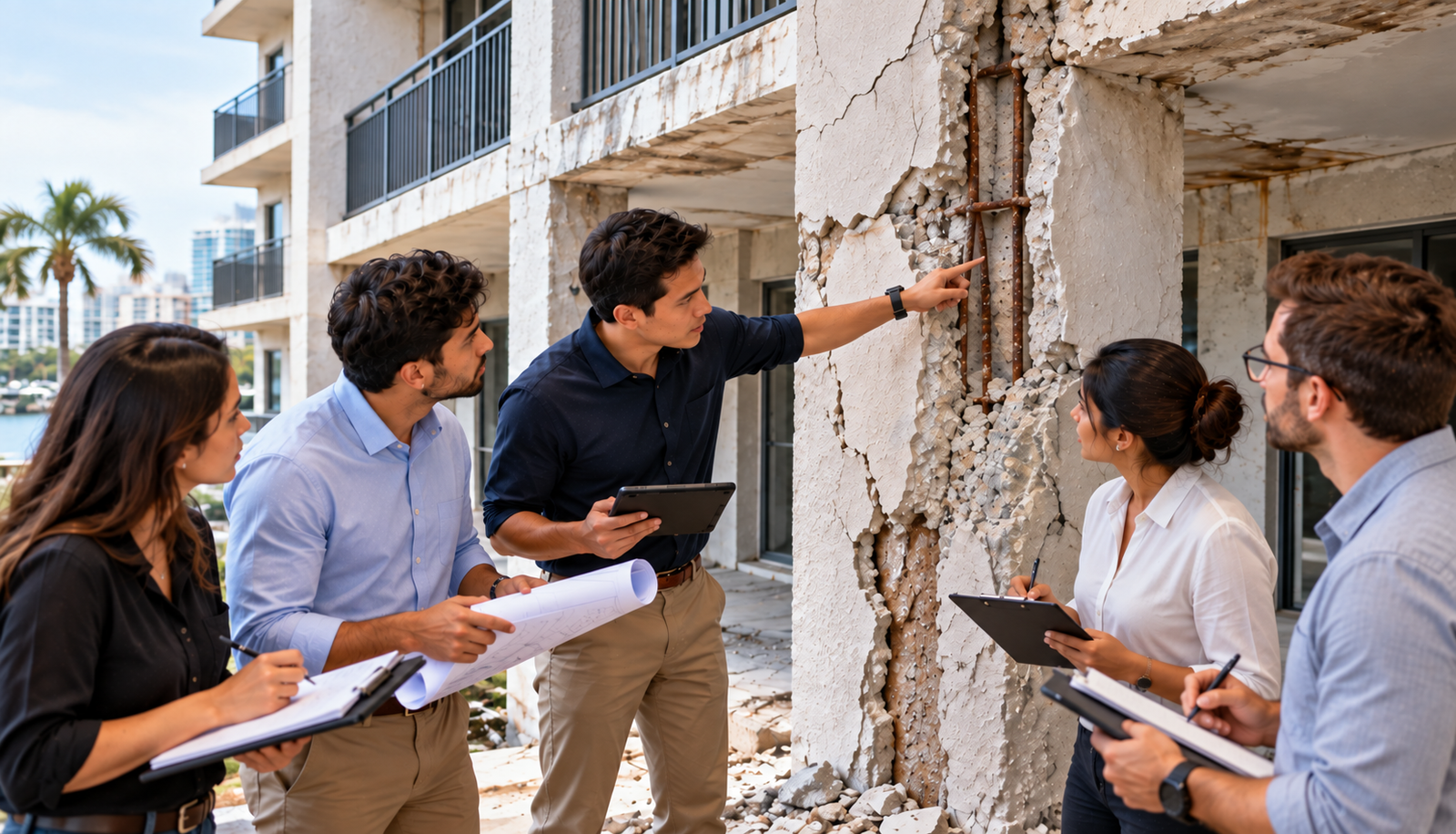
Florida assignments frequently involve wind, wind-driven rain, moisture intrusion, coastal exposure, and aging building components. A roof evaluation may require distinguishing event-related displacement from deterioration, installation conditions, or earlier repairs. An interior moisture condition may require tracing a pathway through roofing, wall assemblies, openings, sealants, or drainage components. Concrete distress near coastal environments may involve moisture and chloride exposure, reinforcement corrosion, and resulting expansion and cracking.
These examples illustrate why the reported event, visible damage, and engineering cause cannot be treated as interchangeable. The conclusion must reflect the complete evidence and the way the affected building systems performed.
What Claims Professionals Should Expect
A causation report should define the assignment, identify the information reviewed, document the site observations, describe the methodology, and explain the technical reasoning supporting the findings. It should distinguish observations from opinions, address material alternative explanations, and disclose meaningful limitations. The report should answer the assigned engineering questions without making insurance coverage determinations.
How Prema Evaluates Building Damage
Prema’s civil and structural engineers evaluate building damage by connecting documented physical evidence with building-system performance, material behavior, construction characteristics, and relevant event information. Our investigations consider the reported damage mechanism as well as reasonable alternative explanations and contributing conditions.
Prema communicates findings clearly, identifies the engineering basis for each opinion, and explains material limitations or unresolved questions. This approach provides claims professionals with an objective, technically supported understanding of the conditions associated with a reported loss.
Discuss a Forensic Engineering Assignment
When a property loss requires an independent evaluation of building damage, Prema can help define the appropriate investigation scope and technical questions.
Discuss an Assignment with Our Forensic Engineering Team
Recent Blogs



Our Related Services
Need Expert Forensic Engineering & Building Assessment Insights?
Get our accurate, evidence-based analysis to identify root causes, assess structural integrity, and make confident decisions.
Get in Touch →