


Understanding Building Remediation Experts
Building remediation experts take damaged, deteriorated, or distressed building conditions and help turn them into something the project team can actually act on. Their job does not stop at spotting the problem. Ask most people on a repair project what they actually needed at the start, and the honest answer is usually the same: someone who could tell them what the damage meant, not just that it existed. A crack gets noted. A leak gets photographed. And then everybody stands around waiting for someone to say what happens next.
That is the space building remediation experts actually fill. For owners, contractors, claims teams, and asset managers carrying a building with cracking, water intrusion, settlement, corrosion, framing problems, or envelope issues, pointing at the damage is the easy part. What comes after pointing is where projects either get organized or get expensive.
Why Building Remediation Experts Are Needed Before Repairs Begin
Here is how remediation projects tend to go wrong: the repair process starts before anyone has genuinely worked out what caused the condition in the first place. The surface evidence looks clear enough, so the assumption is that the fix must be equally clear. That assumption does not survive contact with the actual building very often.
What looks like a contained crack or an isolated leak at the surface frequently connects back to something less obvious underneath. Structural movement that has been accumulating for years. Moisture traveling a path nobody traced. Materials that degraded quietly over time. A load transfer detail that was never right to begin with. A previous repair that introduced its own set of problems.
Leave the cause unresolved, and the scope follows it into vagueness. Bids come back incomplete or wildly inconsistent. Permitting runs into questions that the submittal cannot answer. Field crews hit conditions nobody planned for, and the change orders start. Building remediation experts are brought in specifically to prevent that chain of events, working through the condition before design and construction decisions get made rather than cleaning up after them.
What Building Remediation Experts Actually Do
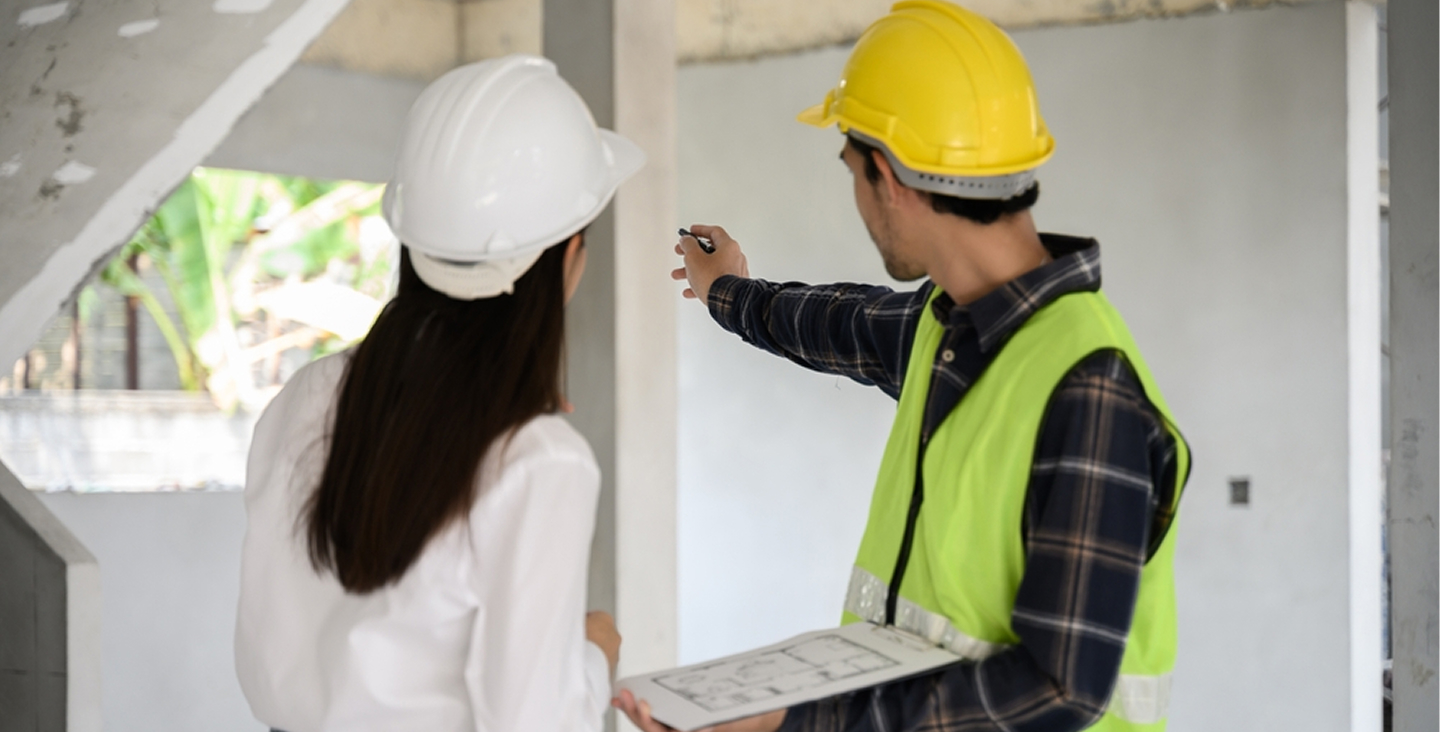
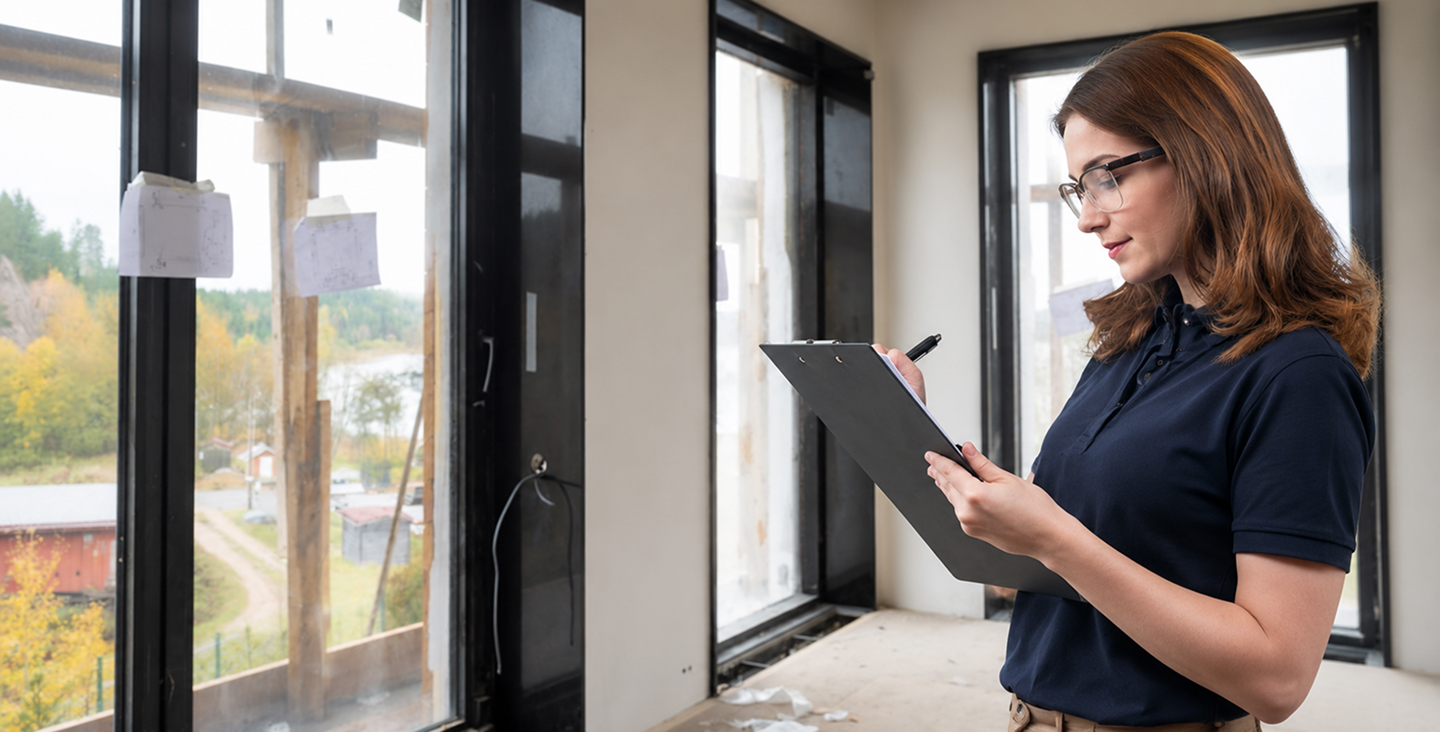
The first thing that happens is a genuine attempt to understand what the building is actually showing. Site observations, documentation review, measurements, moisture evaluation, structural assessment, and a close read of whatever systems appear to be involved. The question driving all of it is straightforward, even if the answers are not: what is happening here, and why is it happening?
Once that picture comes into focus, the work shifts toward repair planning. Defining the repair area, identifying the materials involved, working out performance expectations, putting together engineering drawings, and getting permit documentation in shape.
Structural repair consultants also weigh in at this stage on whether the proposed approach will actually survive contact with the real building. A repair that checks out technically on paper still has to be buildable on a structure that has been standing for decades, has been modified, and comes with constraints that no drawing set fully captures.
Common Conditions That Require Remediation Review
Some building conditions are obvious to observe and genuinely difficult to interpret without engineering behind the evaluation. The visible part is just the entry point.
Common examples include:
- Concrete cracking, spalling, or exposed reinforcing steel
- Water intrusion through walls, roofs, balconies, or openings
- Foundation movement or settlement-related distress
- Deteriorated framing, beams, columns, or connections
- Stucco, cladding, or building envelope failure
- Corrosion in structural or exterior components
- Storm, flood, fire, or impact-related damage
- Previous repairs that did not perform as expected
None of these exist independently of everything else going on with the building. How old the structure is, how it was built, what it has been exposed to, how it has been occupied, and what has been repaired before all factor into what the remediation approach actually needs to cover. Two buildings showing the same surface condition can require completely different responses once the full picture is understood.
The Link Between Investigation and Repair Design
Assessments identify damage. They do not always hand you a repair design ready to use. That gap between what the investigation found and what the project actually needs to move forward is where building remediation design services do their work.
Findings from the investigation phase get converted into something actionable: drawings, construction details, calculations, specifications, permit documents, and engineering support during construction when the field throws questions that the original documents did not anticipate.
Prema Consulting Group follows a forensic-first approach throughout this process. Design decisions connect back to what site conditions are actually documented rather than to generalizations about what buildings of this type typically show. That connection gives project teams something they can defend when the repair scope gets scrutinized — during permitting, during bidding, or later if questions arise about what was decided and why.
How Scope Clarity Affects Cost and Schedule
People sometimes treat a repair scope like a formality, a list of damaged items that gets handed to a contractor so work can begin. It is doing considerably more than that. A scope is an explanation of what is being repaired, where the boundaries of that repair sit, how it should be performed, and what the finished work needs to achieve. Every one of those things affects what contractors price and what they actually build.
When that explanation has gaps, contractors fill them with their own assumptions. One reads the scope conservatively and prices limited work. Another reads it broadly and prices something much larger. A third interprets it differently from both of them. What the owner ends up with is a set of proposals that cannot be compared because they were never responding to the same question.
Clear scope development helps project teams:
- Compare bids more accurately
- Reduce missing line items
- Limit field confusion
- Support permitting review
- Improve coordination between parties
- Reduce avoidable change orders
Getting that definition in place before construction decisions get made is exactly what qualified building remediation experts are there to do.
The Role of Structural Repair Consultants
Structural repair consultants work through the technical side of repair planning. Load paths, material behavior, how deterioration actually progresses through a structural system, connection details, how the repair sequence needs to be ordered, and code requirements that apply to the work.
Take a damaged structural member. The visible material might look like the whole problem. But getting to a repair that actually works means understanding how loads move through the assembly, whether anything needs temporary support while the repair happens, and how the finished connection integrates with the existing construction around it. Those questions do not answer themselves.
On buildings that are occupied, partially damaged, considerably aged, or that have been modified from their original design at some point, the stakes around those questions go up. Decisions that look simple in isolation can turn complicated fast when the real site conditions are factored in.
Documentation Needed for Remediation Projects
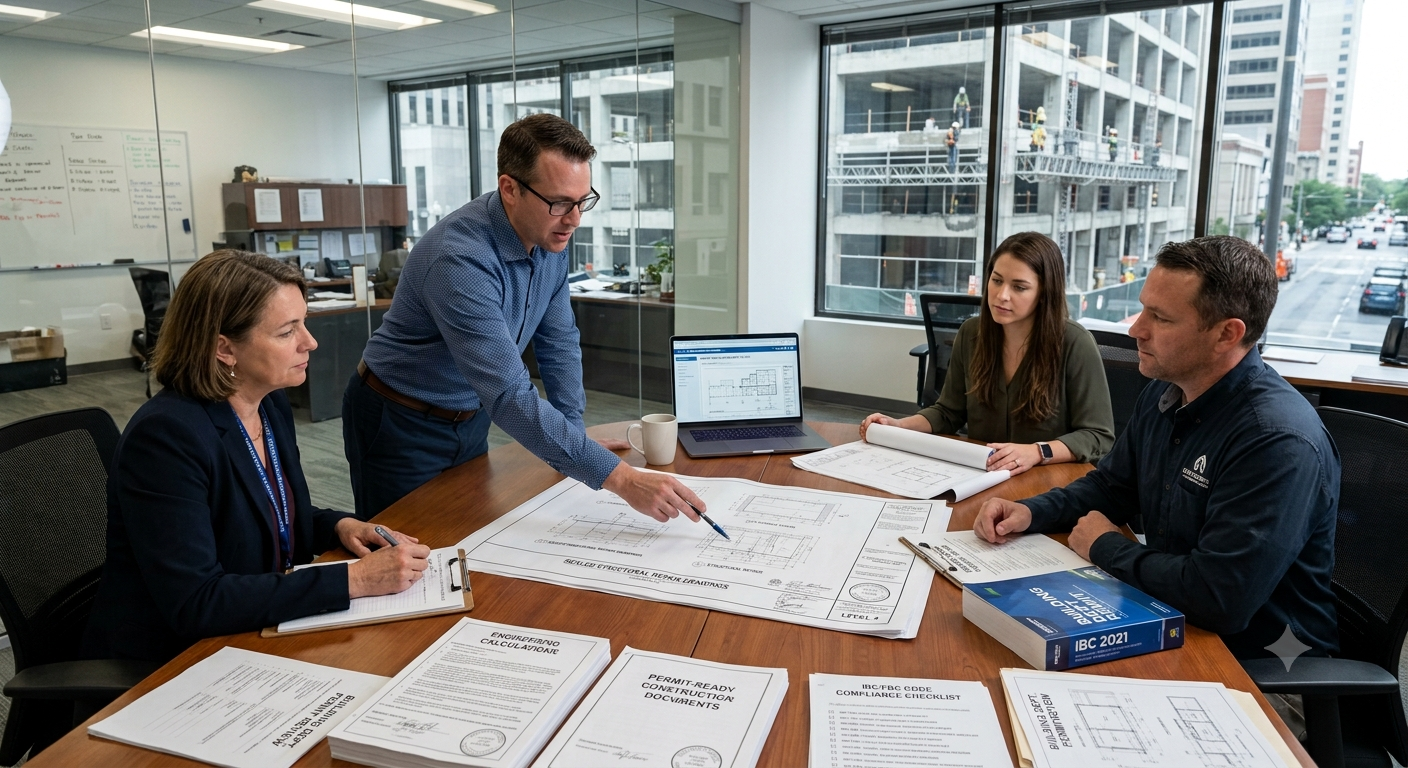
Documentation either makes a remediation project run or becomes a recurring reason it does not. Teams without solid documentation fill the gaps with verbal direction, working assumptions, and whatever informal notes someone happened to keep. That works until it does not, and when it stops working, the consequences tend to be expensive.
A well-developed remediation package typically covers:
Field Findings
What was observed, where the affected areas are, and the site details that carry weight for the repair.
Repair Scope
What work is required and exactly where it applies, written clearly enough that two different contractors reading it arrive at the same understanding.
Engineering Drawings
Visual repair direction with dimensions, details, and the notes field crews actually need to execute the work correctly.
Calculations and Technical Support
Required when structural capacity, load transfer, or code compliance has to be demonstrated to a permit reviewer or other authority.
Permit-Ready Documents
Organized submissions that move through review without getting sent back for gaps that could have been addressed in the original package.
Solid documentation does not make a project immune to challenges. What it does is give everyone working on it a common reference point, which turns out to matter quite a bit when disagreements come up about what was agreed to and when.
When Owners and Contractors Should Seek Input
Bringing engineering input into a remediation project works best before the major repair decisions land, not after construction has started, and changing course costs real money. By that point, options narrow, and every adjustment gets more expensive.
Owners reach a point where they need support when they want a technical review that is genuinely independent, a repair scope they can actually use to compare contractor proposals on equal terms, or engineering eyes on the work during construction to confirm it is being executed the way it was designed.
Contractors need that same support when a bid requires engineering clarity that the existing documents do not provide, when permit submittals or structural details are part of the deliverable, or when technical review needs to happen before anyone mobilizes on site.
Building remediation experts bring structure to decisions that would otherwise stay reactive. That shift from reactive to planned is usually where the real value shows up on the bottom line.
A Practical Remediation Workflow
A clear sequence keeps the project organized from the first review through to finished construction.
1. Assess the Condition
Visible damage, affected materials, site history, and contributing conditions all get reviewed with the goal of understanding what happened and why.
2. Define the Repair Need
Findings get translated into a repair scope that is specific and measurable rather than open to whatever interpretation a reader brings to it.
3. Develop the Design
Engineering documents get prepared so the project has what pricing, permitting, and execution each requires.
4. Coordinate Before Construction
Outstanding questions get resolved before field work begins, cutting down on the kind of mid-construction confusion that turns into delays and disputes.
5. Support Implementation
Engineering involvement may continue during construction to confirm that what gets built reflects the repair intent rather than drifting from it as field conditions introduce pressure to improvise.
That sequence keeps investigation, design, and field execution connected through the whole project rather than treating them as separate handoffs where information gets lost.
Final Thoughts
Building remediation experts matter most on projects where damage, deterioration, or system failure has to become a repair path that is clear enough to execute, defend, and build from. Technical review, scope definition, repair planning, documentation, and construction-phase support — that is the contribution running through the whole process.
For teams managing remediation-driven projects, getting that engineering perspective involved early is what keeps uncertainty from compounding into cost. Prema Consulting Group supports this through forensic-informed design and consulting services that carry projects from documented findings through to constructible repair direction that holds up in the field.


Our Related Services
Need Expert Forensic Engineering & Building Assessment Insights?
Get our accurate, evidence-based analysis to identify root causes, assess structural integrity, and make confident decisions.
Get in Touch →