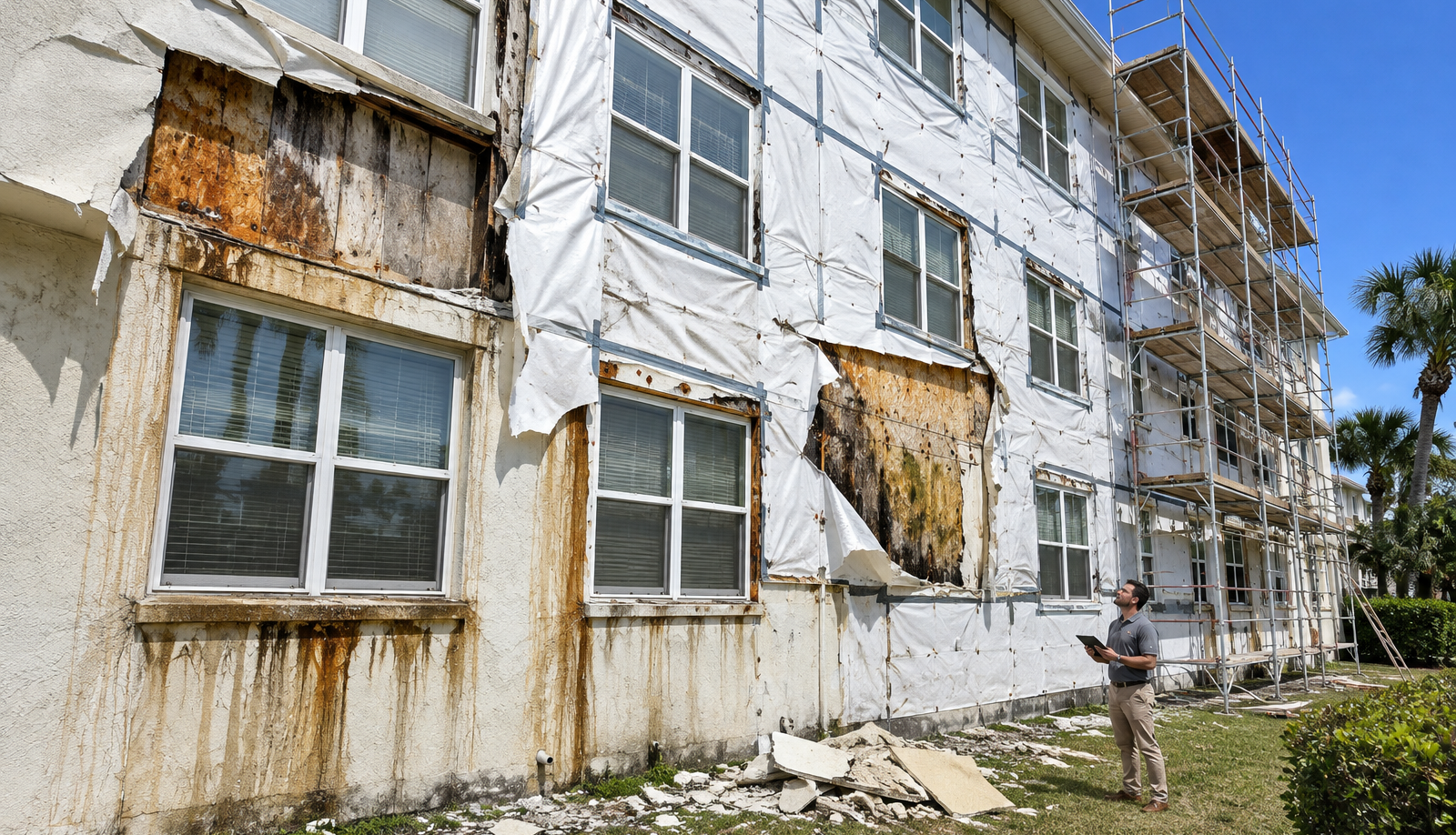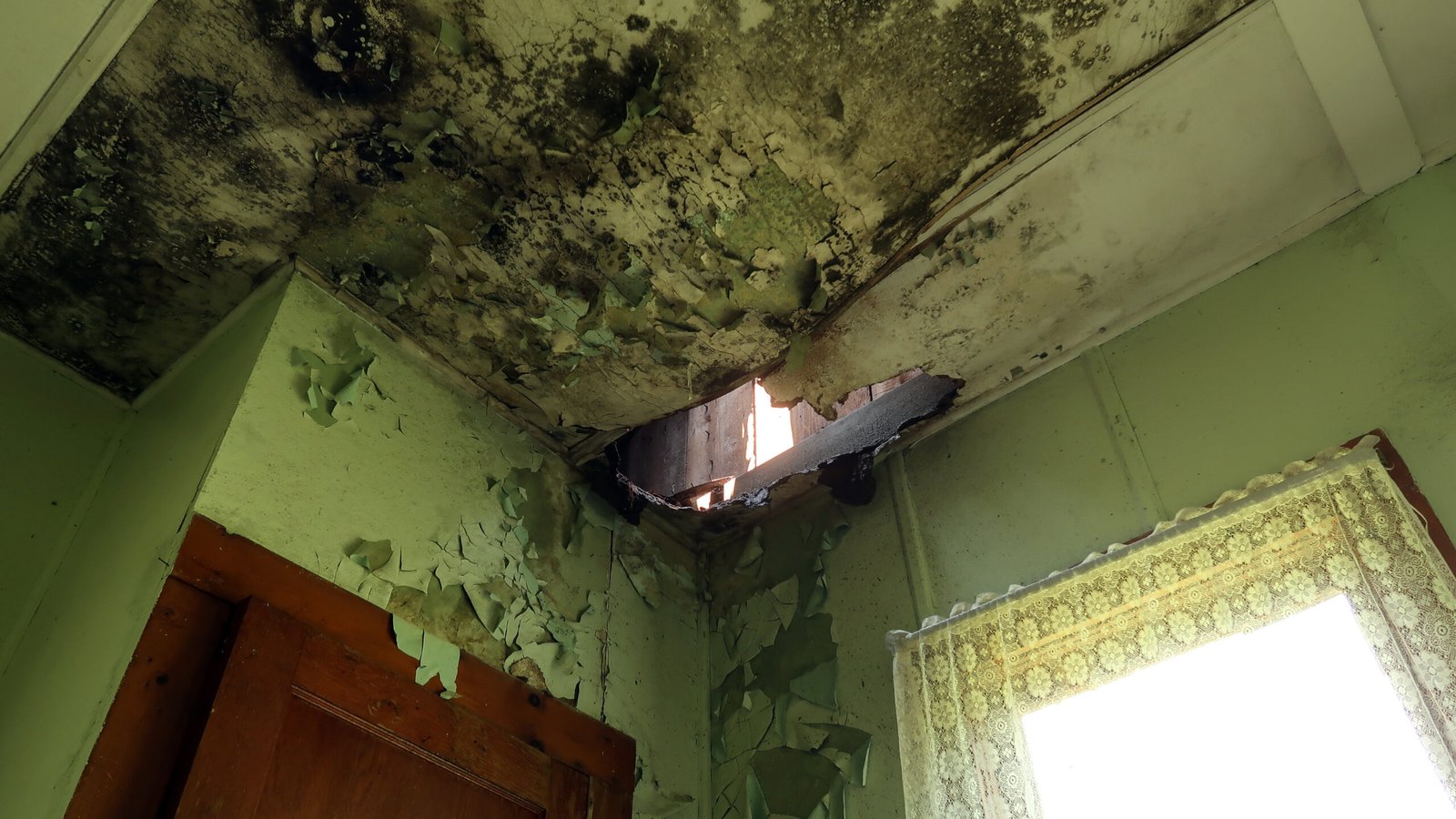
Recurring leaks, deteriorated exterior materials, and moisture within wall or roof assemblies can signal that a building envelope is not performing as intended. The source may involve one detail or several interacting conditions.
For commercial owners and property teams, understanding building envelope failure causes helps frame the investigation and plan corrective work. The same visible symptom can arise from design interfaces, installation conditions, aging, movement, drainage, or earlier repairs.
An engineering evaluation connects observed distress with the mechanisms supported by the evidence. The ten factors below provide a framework for that review; they do not establish the cause at a particular property without investigation.
What Does Building Envelope Failure Mean?
The building envelope separates interior spaces from exterior conditions. It includes roofs, exterior walls, windows and doors, waterproofing, and the transitions between these systems.
In this article, failure means that an envelope component or assembly no longer provides its intended performance, such as managing water, controlling air movement, or accommodating movement. It may be localized and does not necessarily mean structural failure.
Engineers evaluate the specific function affected, the extent of the condition, and its consequences for adjoining materials and building operations.
10 Common Building Envelope Failure Causes
1. Incomplete or Incompatible Design Interfaces
Individual systems may perform adequately while the transition between them leaves a vulnerable detail. Roof-to-wall connections, window perimeters, parapets, and changes in cladding require coordinated water management.
Engineers may review drawings and field conditions to understand whether flashing, barriers, drainage, and termination details form a continuous system. The investigation considers how the interface was intended to perform and whether the installed condition supports that function.
A visible gap alone does not establish a design issue. Records and concealed details may be needed to distinguish design, installation, and later changes.
2. Installation Conditions That Interrupt Water Management
Installation can affect the continuity of barriers, flashing, waterproofing, and adjoining components. Misplaced terminations, incomplete integration, or obstructed drainage may allow water to bypass protective details.
Evaluation may consider:
- The location and sequence of installed components
- Integration between adjoining systems
- Accessible fastening and attachment details
- Available project requirements and product instructions
- Conditions revealed through targeted openings
A field discrepancy requires evaluation of its relationship to the reported distress. It should not automatically be treated as the cause of every moisture symptom.
3. Aging and Material Deterioration
Envelope materials change over their service life. Weathering, corrosion, coating deterioration, and loss of flexibility can affect their ability to perform.
Engineers consider the material, exposure, observed condition, and maintenance history. Age provides context, but it does not establish remaining performance by itself.
Localized deterioration may require targeted work, while recurring or widespread conditions may warrant a broader assessment. The investigation should document what supports that distinction.
4. Movement That Exceeds What Details Can Accommodate
Temperature changes, material shrinkage, structural deflection, or building movement can place demands on joints and interfaces. When details cannot accommodate that movement, cracking, separation, or loss of seal may result.
Engineers evaluate the pattern and location of distress, the materials involved, and the relationship to joints and supporting components. Movement-related symptoms may require structural input when the supporting building system is involved.
Cracking alone does not establish the movement mechanism or structural significance. The complete condition must be considered.
5. Drainage Problems and Water Accumulation
Envelope systems often rely on drainage as well as surface protection. Blocked outlets, interrupted drainage paths, or configuration concerns may increase water exposure at vulnerable locations.
Relevant areas may include:
- Roof drains and scuppers
- Wall drainage cavities and outlets
- Window drainage provisions
- Balcony or plaza waterproofing systems
- Site grading and drainage near the building
Engineers assess how water is intended to leave the system and whether observed conditions interfere with that route. Water accumulation identifies a condition to investigate; it does not independently establish an interior leakage pathway.
6. Sealant and Joint Conditions
Sealants may lose adhesion, split, deteriorate, or fail to accommodate joint movement. Their performance also depends on material compatibility, joint configuration, substrate preparation, and installation.
An evaluation considers the joint’s intended function and whether other components should manage water behind it. Replacing sealant without reviewing the assembly may leave concealed flashing or drainage concerns unresolved.
An open joint is a possible entry point. Its connection to reported interior impacts should be supported by observations or testing where appropriate.
7. Flashing and Waterproofing Discontinuities
Flashing and waterproofing direct water away from vulnerable areas and protect concealed assemblies. Missing, damaged, or poorly integrated details can interrupt that protection.
Engineers may assess:
- Flashing at openings and transitions
- Waterproofing terminations
- Interfaces between horizontal and vertical surfaces
- Changes in materials or assembly configuration
- Concealed continuity where access is needed
Surface appearance may not reveal how these details are constructed. Limited openings or targeted testing may be necessary to evaluate the suspected route.
8. Exposure Demands at Vulnerable Components
Rain, wind, sunlight, temperature changes, and coastal exposure can affect envelope materials and performance. Their significance depends on the component, detailing, condition, and actual exposure.
For example, wind-driven rain may reach a vulnerable transition, while sunlight may contribute to deterioration of certain exposed materials. Coastal conditions may be relevant to corrosion of metal details.
Engineers evaluate how exposure interacts with the building. Climate or a reported weather event alone does not establish a failure mechanism or determine when damage occurred.
9. Maintenance Gaps and Unresolved Recurring Conditions
Blocked drains, deteriorated joints, damaged coatings, and repeated leakage may persist when maintenance does not address the affected system.
Maintenance records help establish what was observed, what work occurred, and whether the condition changed. A recurring problem may indicate that earlier work addressed the visible symptom while leaving the source unresolved.
Engineering evaluation considers maintenance alongside design, construction, material condition, and exposure. The presence of deterioration does not by itself establish a maintenance-related cause.
10. Prior Repairs or Alterations That Change System Behavior
Repairs and modifications can affect water management when new materials or details are not properly integrated with existing assemblies.
Examples may include:
- Patches that cover drainage outlets
- New equipment or penetrations
- Replacement windows with changed perimeter details
- Coatings or overlays that alter drying or drainage
- Localized repairs that redirect water to adjoining areas
Engineers review the work history and the relationship between original and modified conditions. Prior repair does not automatically indicate a problem, but it is important evidence when symptoms change or recur.
Why More Than One Factor May Be Involved
The ten factors can overlap. A deteriorated sealant joint may admit water that concealed flashing should manage. A prior repair may change drainage, while movement places additional demand on the same interface.
For property teams, this means that identifying one deficiency may not fully explain the reported condition. The investigation should assess whether the proposed mechanism accounts for the location, timing, and distribution of distress.
Multiple contributing conditions may require coordinated corrective work rather than a single surface repair.
How Engineers Investigate Envelope Performance Concerns
Review the Reported History
Engineers review leak logs, photographs, drawings, maintenance records, and prior repairs to understand the problem over time. Weather and operating conditions may help guide the inquiry when they relate to the symptoms.
Compare Interior and Exterior Evidence
Accessible interior impacts are mapped and compared with exterior details, drainage features, and potential upstream locations. This helps develop possible pathways that can be evaluated against the evidence.
Use Measurements and Targeted Testing
Moisture measurements, controlled water testing, or limited openings may be appropriate when specific questions remain unresolved. Each method should serve a defined purpose.
Instrument readings require interpretation, and findings apply to the locations and conditions evaluated. A dry inspection or a test that does not reproduce leakage does not rule out intermittent wetting.
Evaluate Contributing Factors and Limitations
The analysis connects observations and test results with the supported explanations. It should identify uncertainty, access restrictions, and additional work needed before broader conclusions or repair scopes are developed.
Florida Exposure as Context for the Evaluation
Florida examples may include intense rainfall, wind-driven rain, sunlight exposure, high humidity, and coastal conditions. These can help focus evaluation of drainage, exterior joints, material deterioration, and vulnerable interfaces.
High humidity may also warrant consideration of condensation, which can resemble leakage but involves a different mechanism.
These factors provide context rather than a regional diagnosis. The investigation remains grounded in the specific assembly, exposure, history, and evidence at the property.
Using Findings to Inform Remediation Planning
A useful evaluation explains the affected function and components, the contributing factors supported by the evidence, and what remains unresolved.
Next steps may include:
- Targeted maintenance or localized repairs
- Additional testing or concealed access
- Evaluation of repeated details across the property
- Separate repair design for affected assemblies
- Coordination with structural or other technical specialists
- Verification after corrective work
The investigation can inform planning and prioritization. Detailed design, construction support, and post-repair testing should be defined when those services are needed.
For occupied commercial or industrial facilities, corrective planning should also consider access, tenant coordination, equipment protection, and operational constraints.
Discuss a Building Envelope Evaluation
Prema Consulting Group evaluates design interfaces, installation conditions, aging, movement, drainage, sealants, and prior repairs to identify contributing factors and inform remediation planning.
Our team supports commercial owners, property and facility managers, and asset managers with documented observations and engineering analysis to understand envelope performance concerns and plan appropriate next steps.
Contact Prema to discuss a building envelope evaluation for your property
Frequently Asked Questions
What are common building envelope failure causes?
−Common factors include design interfaces, installation conditions, aging, movement, drainage problems, sealant deterioration, flashing or waterproofing discontinuities, exposure, maintenance, and prior repairs or alterations.
Does an envelope failure mean the building has structurally failed?
+No. Envelope failure may involve localized loss of water management or another intended function. Structural significance requires evaluation of the affected components and related deterioration.
Are recurring leaks always caused by poor installation?
+No. Recurring leakage may involve design details, material aging, movement, drainage, maintenance, exposure, or multiple factors. Investigation evaluates the specific evidence.
Can replacing sealant resolve an envelope problem?
+Sometimes, when the joint is the supported source and the repair is appropriate. Other conditions may involve concealed flashing, drainage, or adjacent components that sealant replacement alone will not address.
When should property teams consider a building envelope evaluation?
+An evaluation may be useful when leakage recurs, damage affects multiple areas, prior repairs have not resolved the problem, or corrective work is being planned without a clear understanding of the contributing factors.
Need Expert Forensic Engineering & Building Assessment Insights?
Get our accurate, evidence-based analysis to identify root causes, assess structural integrity, and make confident decisions.
Get in Touch →