
How Engineers Investigate Building Collapse Events for Property Claims
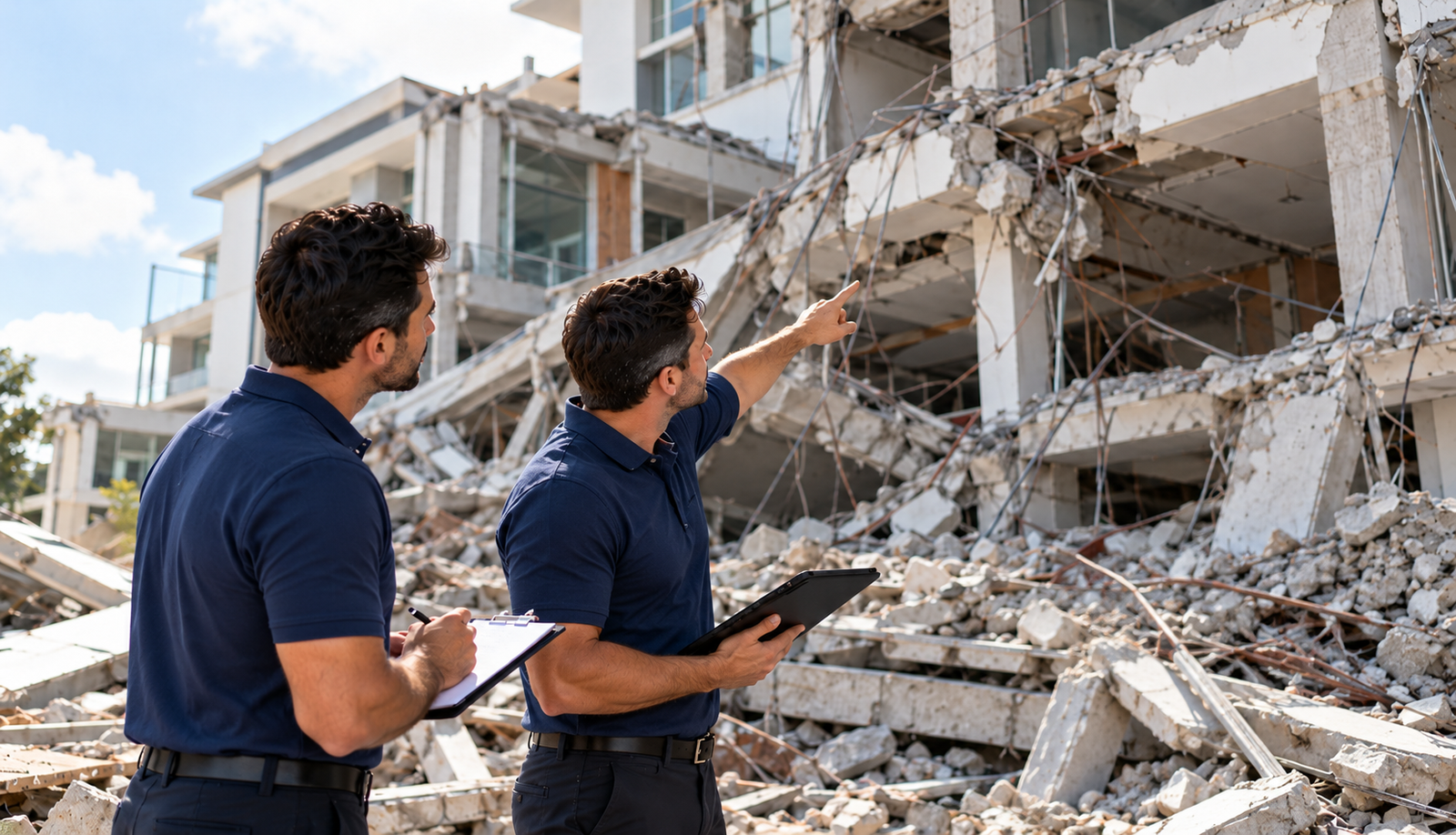
A building collapse investigation examines more than the debris remaining after an event. Engineers evaluate the building’s configuration, available evidence, potential initiating failures, and the sequence through which damage may have spread.
For claims professionals, the investigation helps distinguish conditions that may have contributed to collapse from damage caused during the collapse or subsequent site operations.
A forensic engineering investigation develops supported technical findings within the agreed scope. The available evidence may establish a probable mechanism or sequence while leaving some questions unresolved.
What Is a Building Collapse Investigation?
A building collapse investigation is an engineering evaluation of a partial or complete collapse involving structural components or systems.
Depending on the assignment, its purposes may include:
- Documenting remaining conditions and the distribution of debris
- Identifying and preserving relevant information and physical evidence
- Reconstructing the building’s structural configuration
- Evaluating potential initiating failures and contributing factors
- Analyzing the probable sequence of damage
- Reporting supported findings and limitations
Significant structural damage does not automatically establish a collapse. Engineering descriptions of the physical event are also distinct from any policy definition of collapse.
Why Collapse Investigations Require a Systematic Approach
Evidence may be altered by weather, rescue operations, stabilization, debris removal, demolition, or other site activity.
The investigation therefore considers not only what is present at inspection, but also what may have changed since the event. Available photographs, footage, records, and component identification can help establish that chronology.
Investigation activities are coordinated with the parties controlling the site and any emergency-response or stabilization operations. Documentation and evidence collection proceed within authorized access conditions, with attention to remaining structural instability.
Evidence preservation is coordinated with necessary rescue, stabilization, and hazard-control work. The sequence below is a framework adapted to the assignment, site access, and evidence available.
Step 1: Document the Site and Coordinate Evidence Preservation
Engineers document accessible conditions relevant to the collapse, including:
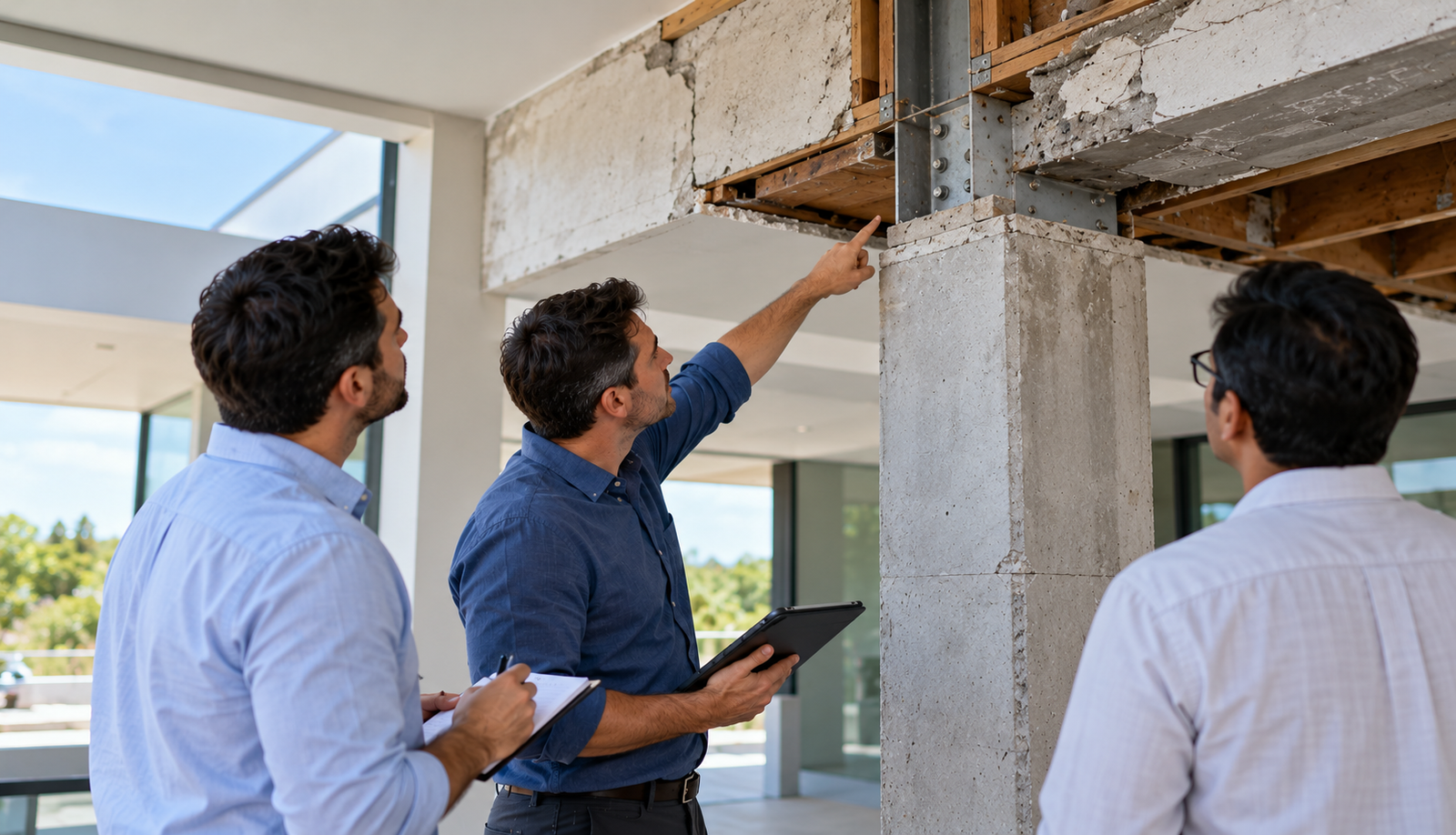
- Remaining members, connections, and supports
- Collapse boundaries and debris distribution
- Fractures, deformation, separation, and impact marks
- Material deterioration and associated conditions
- Adjacent structures and relevant site conditions
- Signs of changes from stabilization or debris removal
Documentation may include photographs, measurements, field notes, location mapping, and component identifiers.
Where components are retained for examination, record their identification, original location where known, condition, and collection circumstances. Appropriate handling and transfer records help maintain traceability.
Removal, storage, and testing are coordinated with the responsible parties. The engineer’s role in evidence custody depends on the assignment; it should not be assumed from involvement in the investigation.
Step 2: Review Records and Reconstruct the Event Chronology
Engineers review information about the building’s condition, use, and activities before, during, and after the event.
Relevant sources may include:
- Design drawings and construction records
- Inspection, maintenance, and repair documentation
- Previous engineering evaluations
- Records of alterations or changes in use
- Loading, occupancy, and construction activity at the time
- Temporary supports or work in progress
- Surveillance footage, photographs, and videos
- Witness accounts, identified as reported information
Emergency-response, stabilization, and debris-removal records
The review distinguishes documented facts from recollections or unverified reports. It also identifies missing records and inconsistencies requiring follow-up.
Step 3: Reconstruct the Structural System
Engineers establish the building configuration relevant to the assignment using available records and physical evidence.
The evaluation may address:
- Framing and foundation arrangements
- Gravity, lateral, and uplift load paths, where relevant
- Member-to-member and member-to-support connections
- Structural materials and construction details
- Alterations, temporary conditions, and support changes
The configuration encountered may differ from the drawings. Engineers identify known differences and explain assumptions where original conditions cannot be fully reconstructed.
Step 4: Evaluate Loads and Structural Behavior
Structural analysis examines how relevant demands acted on the system and how members, connections, and supports may have responded.
Depending on the evidence and scope, engineers may consider:
- Loads present before and during the event
- Member and connection capacity
- Stability and support conditions
- Changes in loading or configuration
- Loss of support and redistribution of forces
- Effects of local failure on adjacent components
Calculations or modeling may be appropriate to test proposed mechanisms. Their complexity depends on the technical questions; not every investigation requires a detailed computer model.
Analytical results are compared with observations and records. A model alone does not establish the actual failure sequence.
Step 5: Examine Materials and Components
Component examination may help distinguish pre-existing deterioration, initiating damage, and damage sustained during collapse.
Relevant observations may include:
- Fracture locations and characteristics
- Deformation and connection damage
- Corrosion, section loss, or decay
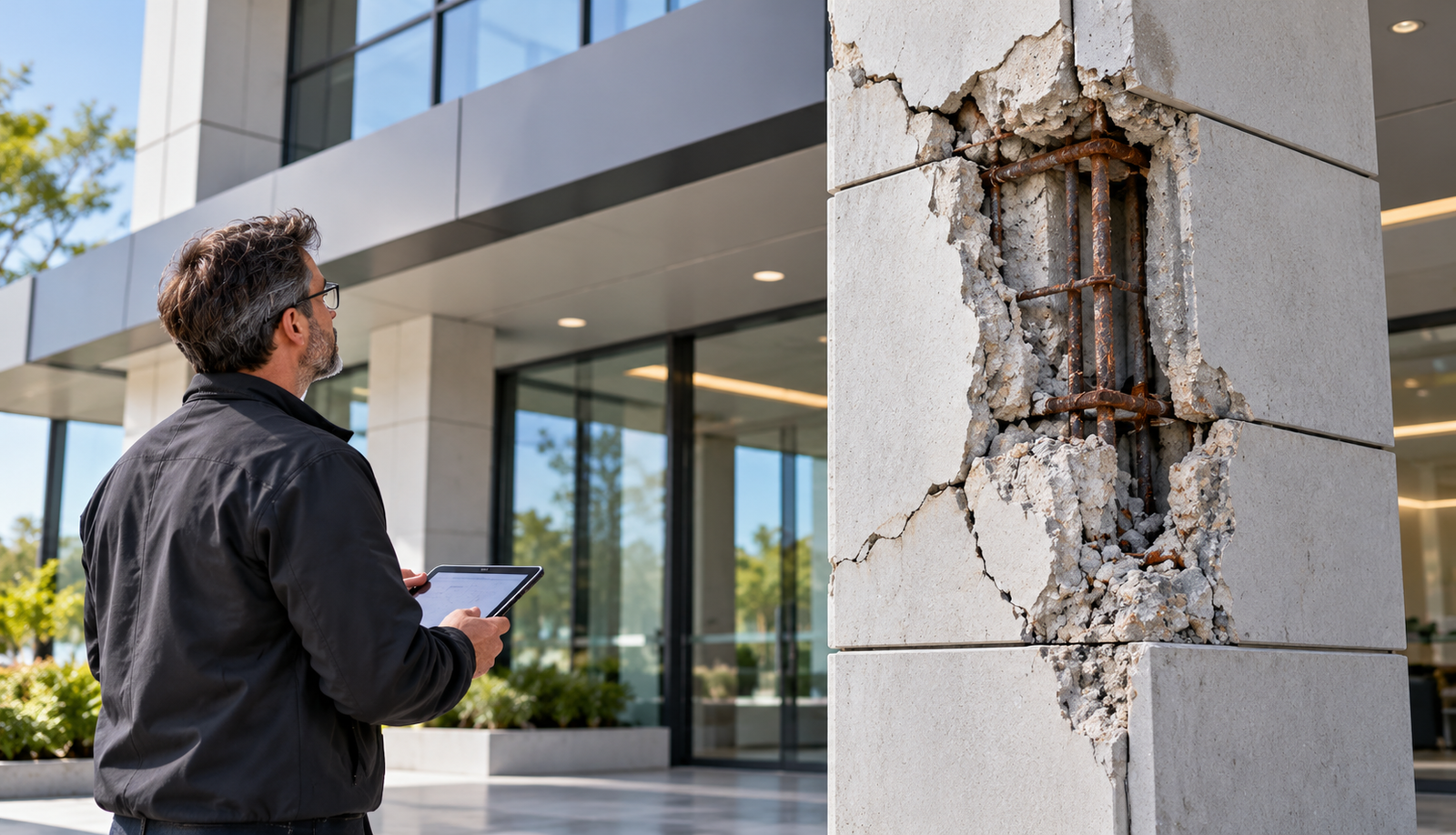
- Concrete cracking, spalling, and reinforcement condition
- Construction or installation details
- Impact or handling damage
Targeted testing may be considered when it can address a defined question. Sample selection, identification, and testing procedures are coordinated within the agreed scope.
The findings explain what the examination establishes and where damaged, missing, or altered evidence limits interpretation.
Step 6: Evaluate Competing Mechanisms and the Collapse Sequence
Engineers compare potential initiating failures and contributing factors against the physical evidence, event chronology, and structural behavior.
The analysis distinguishes:
- Conditions that existed before the event
- Potential initiating failures
- Damage propagation and load redistribution
- Damage from falling debris or impact between components
- Changes caused by emergency operations or subsequent site activity
The most severely damaged component is not automatically the point where collapse began. Engineers evaluate whether its condition reflects initiation, subsequent damage, or both.
Alternative explanations are examined for consistency with the evidence. Findings may support a probable sequence without establishing every step conclusively.
The report should identify uncertainty, competing scenarios that remain plausible, and questions requiring further investigation.
Step 7: Report Findings and Limitations
A clear report connects the evidence to the reasoning behind the conclusions.
It may include:
- Assignment scope and technical questions
- Information reviewed and evidence examined
- Investigation and testing methods
- Supported mechanisms and contributing factors
- Probable collapse sequence, where supported
- Alternative explanations considered
- Access restrictions, assumptions, and evidence limitations
- Unresolved questions and further investigation needs
Observations, reported information, and engineering opinions are distinguished throughout.
Engineering findings address physical conditions and mechanisms. They do not independently determine whether the event meets a policy’s definition of collapse or whether coverage applies.
The Role of Multidisciplinary Investigation
Some assignments require expertise beyond structural analysis.
Depending on the questions involved, specialist input may address:
- Material properties and fracture behavior
- Supporting soil or rock conditions
- Fire effects
- Relevant mechanical or other building systems
Each discipline addresses defined questions, and its findings are considered alongside the structural evidence and event chronology.
The need for specialist involvement depends on the evidence and scope rather than an assumption that every collapse investigation requires the same team.
Florida Considerations in Building Collapse Investigations
Florida investigations may involve coastal exposure, storm-related loading, moisture pathways, material deterioration, or particular building and construction configurations.
These factors provide context, not predetermined explanations. A coastal location does not establish corrosion as the cause, and a reported storm does not establish storm-induced collapse.
Engineers evaluate the property-specific evidence and consider competing mechanisms. Florida examples illustrate regional conditions within a forensic practice serving claims assignments more broadly.
What Claims Professionals Can Provide
Useful assignment information includes:
- The reported event and available chronology
- Early photographs or footage before site conditions changed
- Available drawings, inspections, repairs, and prior evaluations
- Known alterations, construction activity, or changes in loading
- Contact information for the parties controlling site access
- Records of stabilization, debris removal, or retained components
- The specific technical questions requiring evaluation
Identify information gaps and distinguish reported accounts from independently documented conditions. Early coordination can help determine what evidence remains available without delaying necessary emergency work.
Why Documentation Quality Matters in Collapse Investigations
Documentation allows readers to understand where evidence came from, what changed after the event, and how the findings were developed.
A useful technical record identifies:
- Observed conditions and component locations
- Sources and timing of photographs or records
- Evidence handling and examination, where applicable
- The relationship between analysis and physical evidence
- Conclusions and their practical limitations
For claims professionals, this provides a clearer basis for understanding the event and evaluating unresolved technical questions.
Frequently Asked Questions
What is included in a building collapse investigation?
Depending on the scope, it may include site documentation, evidence coordination, review of records, reconstruction of the structural system, material examination, and analysis of potential failure mechanisms and sequence.
Why do engineers document collapse sites?
Documentation records conditions that may change during response, stabilization, or debris removal. It supports analysis of the structural configuration, damage distribution, and possible sequence of events.
Are collapse investigations always performed by structural engineers?
Structural engineers often address the building’s structural behavior. Materials, geotechnical, fire, or other specialists may be needed for specific questions, depending on the evidence and assignment.
What information do engineers review during a collapse investigation?
Sources may include construction and repair records, inspection reports, photographs, footage, reported witness accounts, loading information, and records of site operations. Their reliability and limitations are considered during analysis.
Discuss an Assignment with Our Forensic Engineering Team
Prema Consulting Group evaluates structural collapse events through field investigation, structural analysis, and evidence review, and identifies when materials, geotechnical, or other specialist input may be appropriate.
Our forensic engineering team supports claims professionals with documented findings addressing the assignment’s technical questions, supporting evidence, and limitations.
Contact Prema to discuss a building collapse investigation assignment.
Recent Blogs



Our Related Services
Need Expert Forensic Engineering & Building Assessment Insights?
Get our accurate, evidence-based analysis to identify root causes, assess structural integrity, and make confident decisions.
Get in Touch →