

Load Path Failure: What Claims Professionals Should Understand
Structural systems transfer loads through members, connections, and supports to the foundation and supporting ground. Damage, deterioration, or alterations can raise questions about whether that transfer remains effective.
For claims professionals, understanding the building’s load paths helps explain why an investigation may need to examine connections and adjacent components rather than only the visibly damaged area.A load path failure occurs when a member, connection, or support cannot transfer the required forces along the structural load path. Visible damage or a missing connection may raise concerns, but engineers evaluate the affected system before concluding that a failure occurred.
What Is a Load Path?
A load path is the route through which loads are transferred from their point of application through structural components to the foundation and supporting ground.
Buildings may have multiple interacting load paths for:
- Gravity loads
- Lateral loads, including wind and seismic forces
- Uplift forces, including wind-induced roof uplift
A complete load path depends on both continuity and adequate capacity. Connected components must be capable of transferring the relevant forces, not simply remain physically attached.
Understanding Gravity Load Paths
Gravity loads act downward and include the weight of the building, occupants, furnishings, stored materials, and equipment.
Depending on the structural system, a gravity load path may pass through:
- Roof or floor decking and framing
- Beams or other supporting members
- Columns or load-bearing walls
- Foundation elements
- Supporting soil or rock
Engineers evaluate the affected members, connections, and supports in relation to the loads they carry. Deterioration, removed supports, or added equipment may change demands or the way loads are distributed.
Understanding Lateral Load Paths
Lateral loads act horizontally on a building and may arise from wind, seismic activity, or other applied forces.
A lateral load path may involve:
- Roof and floor diaphragms
- Connections transferring forces between diaphragms and resisting systems
- Shear walls, braced frames, or moment frames
- Anchorage and foundation elements
- Supporting ground
Engineers examine how the forces enter the system, transfer between components, and reach the foundation. The configuration and relevant loads depend on the building and assignment.
Understanding Wind Uplift Load Paths
Wind pressures can generate upward forces on roof components. The associated load path may extend from roof sheathing or decking connections through roof framing, roof-to-wall connections, wall connections, and foundation anchorage to the ground.
Engineering evaluation considers:
- Connections between sheathing or decking and framing
- Roof-to-wall attachments
- Continuity through walls and intervening floors
- Anchorage to foundations
- Capacity of the affected members, connections, and supports
Wind can impose uplift and lateral demands at the same time. A connection adequate for one loading direction is not automatically adequate for every relevant demand.
Distinguishing a Concern, a Deficiency, and a Failure
These terms describe different findings:
- Load path concern: an observation or information gap that warrants evaluation
- Load path deficiency: an inadequacy in configuration, capacity, or detailing relative to the relevant requirements
- Load path failure: inability of an affected member, connection, or support to perform the required force-transfer function
A deficiency can exist before the reported event. Its presence does not, by itself, establish that it failed during that event or caused the observed damage.
The report should explain what the evidence establishes, which part of the system is affected, and any unresolved questions.
Conditions That Can Affect Load Paths
Connections and Anchorage
Connections transfer forces between structural elements. Depending on the building, these may include bolts, welds, nails, screws, straps, anchors, and bearing connections.
Relevant conditions may include:
- Fractured, displaced, or withdrawn fasteners
- Damaged welds or connection plates
- Missing or inadequate anchorage
- Corrosion or deterioration affecting connection capacity
- Movement or separation between connected components
Engineers consider installation, configuration, material condition, and the forces the connection must transfer. The appearance of a connector alone does not establish its capacity.
Structural Component Damage
Damage to beams, columns, walls, diaphragms, or other members can affect load transfer.
The evaluation considers:
- The component’s structural role
- Location and extent of damage
- Remaining capacity and support conditions
- Effects on adjacent members and connections
- Potential redistribution of loads
Alterations or Modifications
Changes that may affect structural demands or continuity include:
- Removal of members or supports
- New openings in walls or diaphragms
- Added equipment or changes in building use
- Modified framing or connections
Engineers evaluate the actual configuration and available records rather than assuming that every alteration disrupts the load path.
Deterioration and Material Degradation
Corrosion, wood decay, section loss, and deteriorated connections may reduce available capacity or affect load transfer.
Exposure conditions, including coastal salt and moisture exposure in Florida, may be relevant to particular materials and mechanisms. Regional exposure alone does not establish the cause or structural significance of a condition.
Load Path Evaluation After Reported Storm Damage
A storm-related investigation may examine roof connections, diaphragms, wall anchorage, framing continuity, and other components relevant to the reported damage.
Engineers compare:
- Observed damage patterns and displacement
- Member and connection behavior
- Available event information
- Prior photographs, repairs, and construction records
- Potential deterioration or installation deficiencies
A missing, deteriorated, or damaged connection discovered after a storm is not automatically storm-caused. Engineers evaluate the evidence for its condition, history, and consistency with the reported loading event.
Determining structural significance is separate from establishing cause or timeframe. The findings should explain the basis and limitations of each opinion.
How Engineers Evaluate Load Path Conditions Field Investigation
Engineers document accessible members, connections, supports, damage locations, and associated conditions. Measurements and photographs help establish the configuration and distribution of distress.
Comparison with adjacent or unaffected areas may provide context. Access restrictions and concealed connections are identified as limitations.
Review of Available Information
Relevant information may include:
- Structural drawings and construction documents
- Pre-loss and post-loss photographs
- Prior engineering or inspection reports
- Repair and maintenance records
- Records of alterations or changes in use
- Information about the reported event and chronology
Reported information is distinguished from independently documented conditions.
Structural Analysis
Depending on the assignment, engineers may:
- Identify the affected load path and structural function
- Evaluate relevant loads and member or connection capacity
- Examine anchorage, support conditions, and continuity
- Consider load redistribution and adjacent-component effects
- Compare potential damage mechanisms with the evidence
- Identify questions requiring further access, testing, or analysis
The extent of calculations, testing, or selective openings depends on the assignment and available evidence. Examination of accessible connections does not establish the condition of every concealed connection.
The report connects the observations to the analysis and explains supported findings, contributing factors, and limitations.
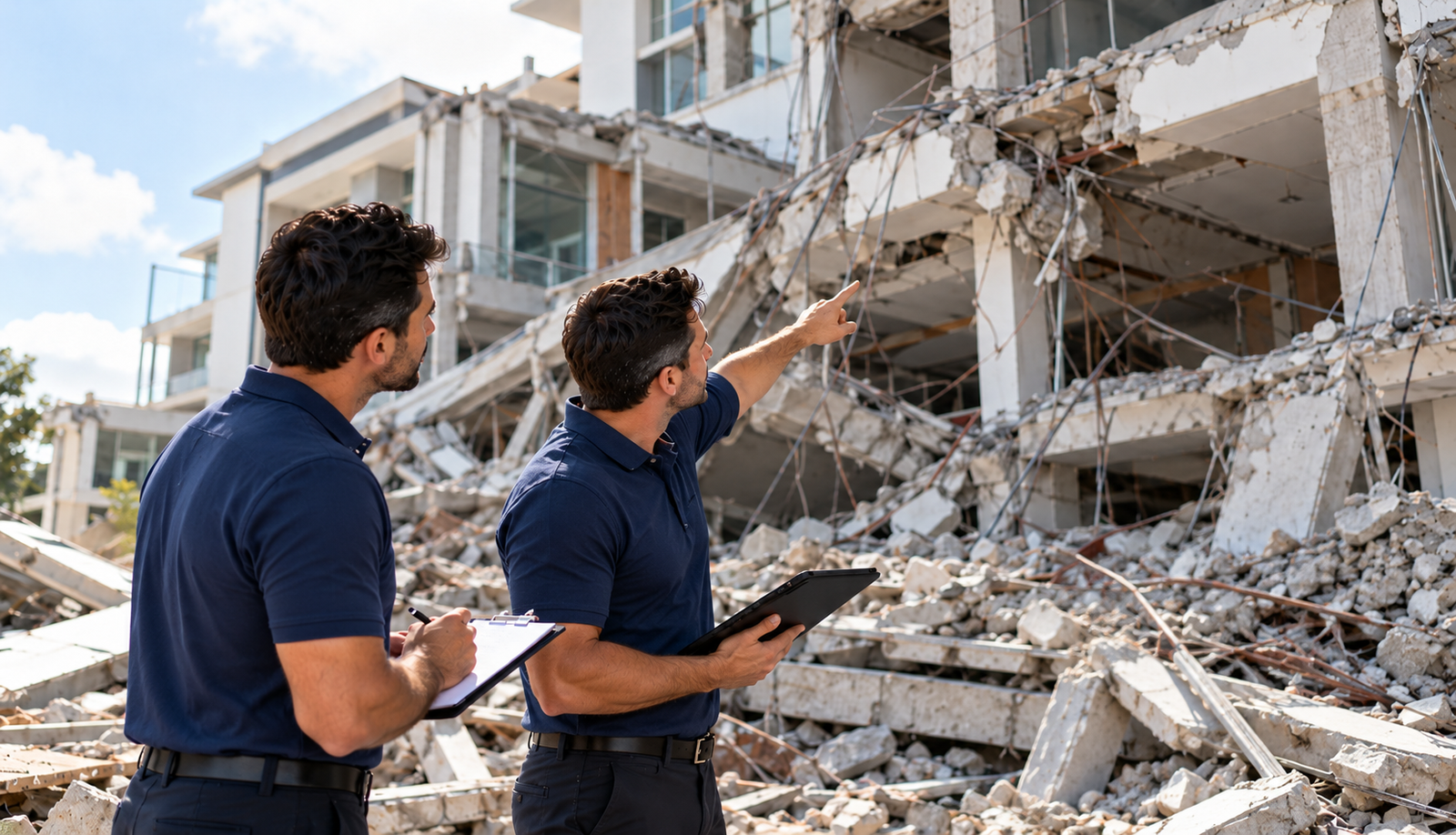
Load Path Failure Does Not Always Mean Structural Collapse
A localized load path failure can occur without complete building collapse. Remaining members or alternate load paths may redistribute forces, but the absence of collapse does not establish adequate remaining capacity.
Engineers evaluate:
- The affected component or connection
- The extent of lost or reduced force-transfer capability
- Demands on remaining members and connections
Implications for the broader structural system
Findings should distinguish localized failure from system-level failure and identify where additional evaluation is needed.
What Claims Professionals Should Document
Useful assignment information includes:
- The affected member or connection and its location
- Overview and close-up photographs of visible damage or displacement
- Related conditions in adjacent areas
- Available drawings, prior photographs, and repair records
- Known alterations or changes in loading
The reported event and specific technical questions
Record reported changes separately from observed conditions. Identify concealed areas, access restrictions, and missing information relevant to the investigation.
Why Claims Professionals Should Understand Load Paths
Load path concepts help explain why visible damage may require examination of a wider structural system.
An engineering evaluation can clarify:
- Which components transfer the relevant forces
- Whether damage affects continuity or capacity
- Whether a concern, deficiency, or failure is supported
- How alterations or deterioration may have contributed
- What evidence supports conclusions about the reported event
Technical findings inform the claims review. They do not independently determine coverage or policy-related repair and replacement obligations.
Frequently Asked Questions
What is a load path failure?
A load path failure occurs when a member, connection, or support cannot transfer the required forces along the structural load path. Engineers identify the affected function and explain the supporting evidence.Why are connections important in load path evaluation?
Connections transfer forces between members and supports. Their configuration, installation, condition, and capacity affect whether the system can transfer relevant loads.Why are load paths evaluated after hurricanes?
Wind can impose lateral and uplift forces on members and connections. Engineers may examine those load paths to assess observed damage and whether the evidence supports a relationship to the reported event.
Does a load path concern mean a building has failed?
No. A concern may involve visible damage or incomplete information requiring evaluation. Engineers determine whether the evidence establishes a deficiency, localized failure, or broader system effect.
Discuss an Assignment With Our Forensic Engineering Team
Prema Consulting Group evaluates structural load paths, member and connection conditions, and the significance of observed damage or alterations.
Our forensic engineering team supports claims professionals with documented investigations and technical findings addressing the assignment’s questions, supporting evidence, and limitations.
Recent Blogs




Our Related Services
Need Expert Forensic Engineering & Building Assessment Insights?
Get our accurate, evidence-based analysis to identify root causes, assess structural integrity, and make confident decisions.
Get in Touch →