
Executive Summary
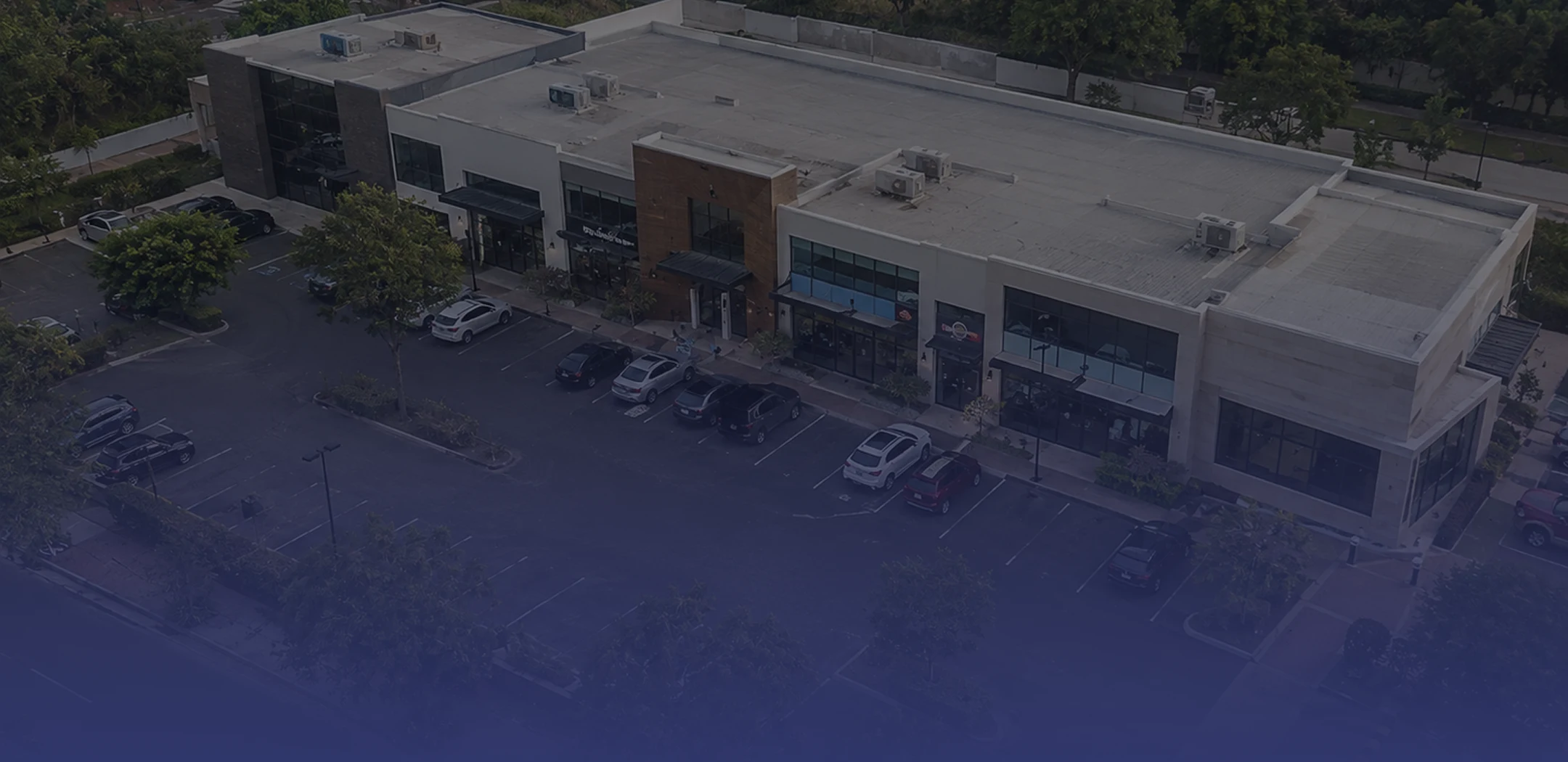
The property sustained significant damage due to a severe storm event. The assessment revealed compromised roofing systems, water intrusion through the building envelope, and deficiencies in site drainage that contributed to interior impacts. A systematic engineering approach was applied to document conditions, evaluate risks, and recommend repair strategies. This case study demonstrates the importance of proactive facility condition assessments in guiding property owners toward effective recovery and long-term asset management.
Situation
- A severe storm event caused widespread damage to the property, impacting multiple building systems.
- Roofing materials were displaced, leaving areas vulnerable to water intrusion. The building envelope exhibited compromised seals, allowing moisture penetration.
- Site drainage deficiencies contributed to pooling and infiltration, which in turn led to localized interior damage.
- The owner required a clear, engineering-driven evaluation to understand the scope of these issues, prioritize repairs, and plan for capital planning.
Prema's Approach
Prema applied a structured methodology to evaluate the storm-damaged property, ensuring that findings translated into actionable owner priorities.
- Property Condition Assessment: Conducted a comprehensive inspection of roofing, envelope, site drainage, and interior finishes to document storm impacts.
- Engineering Evaluation: Analyzed observed deficiencies, quantified risks, and identified system vulnerabilities.
- Capital Planning: Developed repair recommendations with cost and priority considerations to guide owner decision-making.
- Targeted Engineering Services: Provided specialized repair strategies for roofing, envelope sealing, drainage improvements, and interior restoration.
This structured approach ensured that the assessment not only addressed immediate storm damage but also supported long-term asset management goals through clear repair strategies and capital planning guidance.
Observations
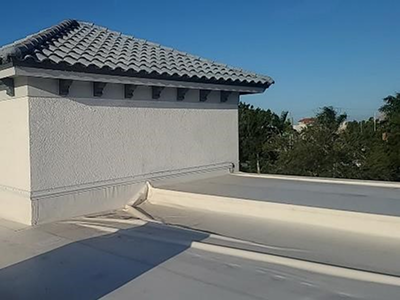
The TPO roofing membrane was loose, undulated, and wrinkled, with punctures, tears, and abrasion marks.
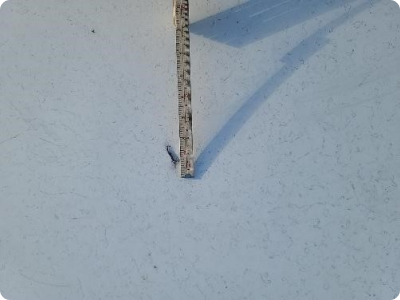
Randomly oriented punctures and/or tears on several areas of the TPO roofing membrane.
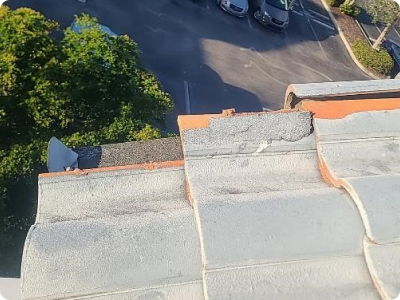
Several missing rake tiles.
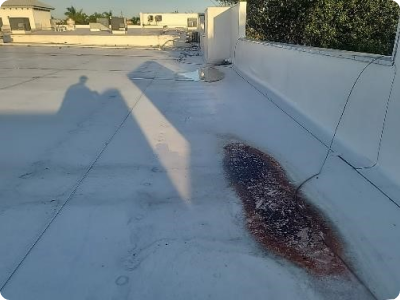
Dark spots and water accumulation in several areas of the TPO roofing membrane.
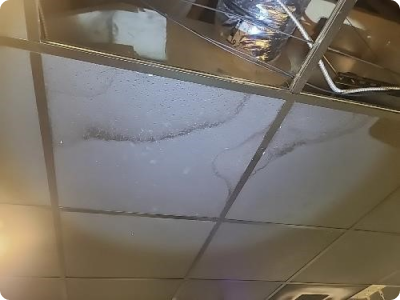
Dark brown stains on the acoustic ceiling panels.
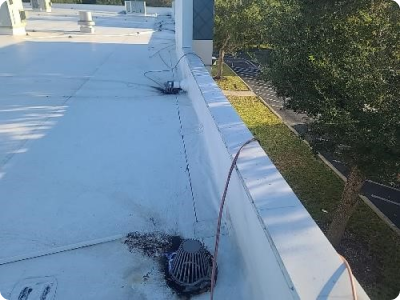
Dark spots were on the TPO roofing membrane around the roof drain on the roof above the interior stains.
Repair Strategy
- Property Condition Assessment: Documented roofing displacement, envelope water intrusion, drainage deficiencies, and interior staining.
- Engineering Evaluation: Confirmed no structural distress, quantified roofing and envelope vulnerabilities, and identified drainage risks.
- Capital Planning: Prioritized roofing replacement, envelope sealing, and drainage improvements to guide owner investment decisions.
- Targeted Engineering Services: Developed repair strategies including membrane replacement, tile reattachment, sealant upgrades, regrading, and interior restoration.
Conclusions
- The storm event caused widespread but repairable damage, primarily affecting roofing, envelope, site drainage, and interior finishes.
- Through the Property Condition Assessment, deficiencies were documented and verified. The Engineering Evaluation confirmed no structural distress, while highlighting vulnerabilities in roofing and drainage systems.
- Findings were translated into Capital Planning priorities, guiding the owner toward cost‑effective recovery.
- Finally, Targeted Engineering Services provided actionable repair strategies to restore performance and safeguard future property value.
Why This Matters
This case study highlights the value of proactive engineering assessments in storm recovery. By documenting roofing, envelope, drainage, and interior impacts, the evaluation provided owners with clarity on system vulnerabilities and actionable repair strategies. Beyond immediate restoration, the findings supported informed decision‑making, helping owners protect property value, extend system durability, and reduce future risk.
Evaluating Engineering Partners?
We can provide representative redacted reports that demonstrate
our documentation approach, technical analysis structure, and
reporting methodology.