
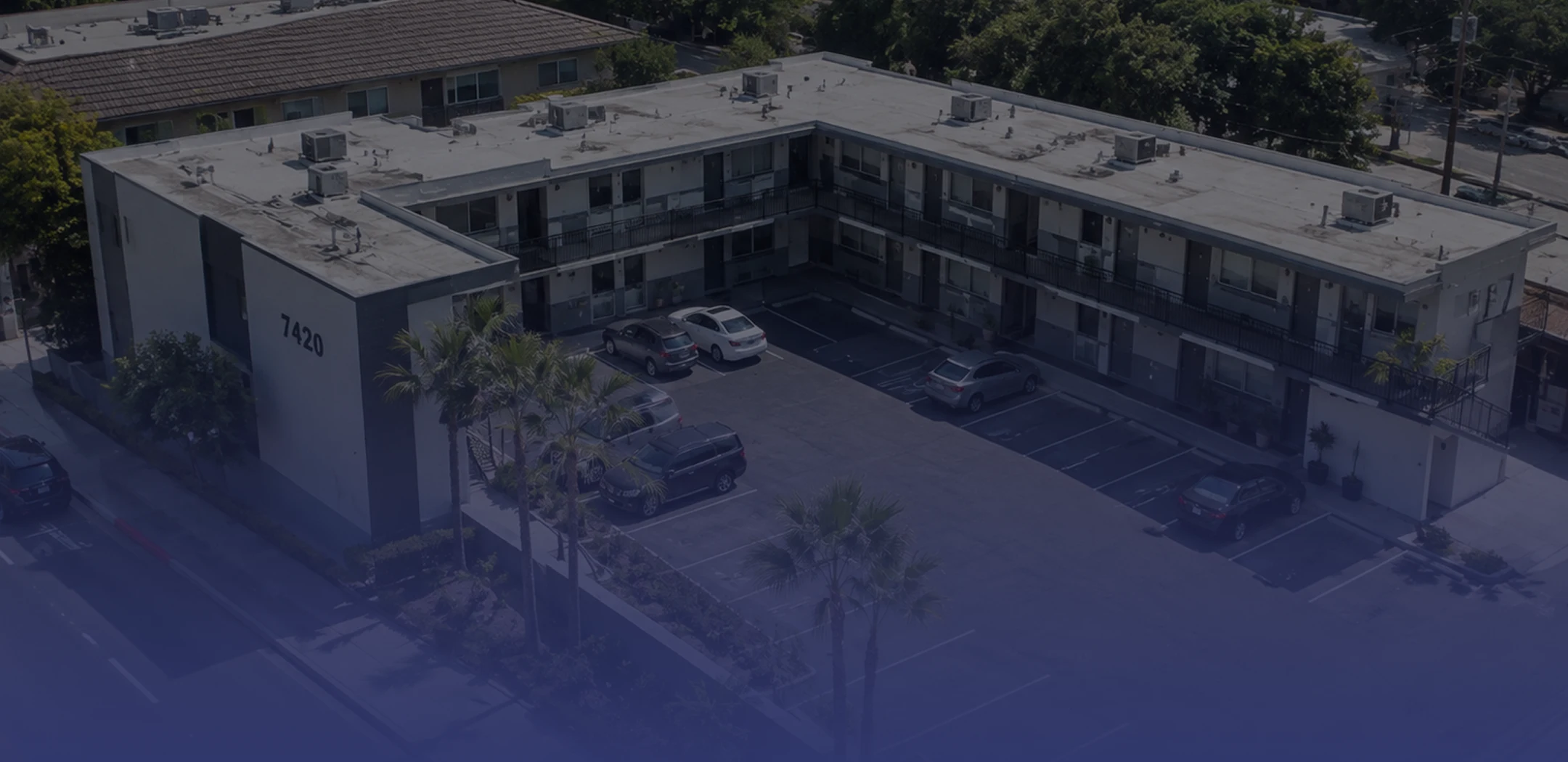
Executive Summary
A representative Property Condition Assessment (PCA) was performed to support commercial real estate due diligence for a hospitality property under consideration for acquisition. The assessment evaluated major building systems, identified deferred maintenance, documented moisture intrusion and building envelope deficiencies, and provided stakeholders with objective engineering information to better understand anticipated repair obligations before completing the transaction.
Practical repair strategies were outlined to reduce risk, restore reliability, and guide capital planning. The evaluation equips stakeholders with evidence to protect investments and sustain operational continuity.
Situation
- Multiple guest units exhibited ceiling stains, wall deterioration, and flooring delamination.
- Moisture intrusion was traced to roof ponding, uninsulated plenum spaces, and inadequate ventilation.
- Deferred maintenance and age‑related deterioration compounded the damage, with repeated exposure events affecting ceilings, walls, and finishes.
- The prospective purchaser required an objective Property Condition Assessment to identify deferred maintenance, evaluate major building systems, and better understand anticipated repair obligations that could influence acquisition decisions, transaction negotiations, and future ownership costs.
- The owner’s priorities centered on clarifying root causes, distinguishing storm impacts from maintenance issues, and establishing a defensible repair plan.
Prema's Approach
- Comprehensive Property Condition Assessment: A systematic evaluation of roofing, building envelope, structural, and representative building systems was performed to document existing conditions, identify deferred maintenance, and support commercial real estate due diligence.
- Integrated Service Lines: Roofing Consulting, Building Envelope Evaluation, and Structural Assessment documented system performance and identified deterioration.
- Targeted Forensic Engineering: Forensic methods, supported by representative photographs, confirmed moisture intrusion was due to age‑related deterioration and construction deficiencies, not storm forces.
- Remediation and Compliance: Findings synthesized into phased remediation strategies, aligned with long‑term asset management goals and supported by Engineer of Record services.
Observations
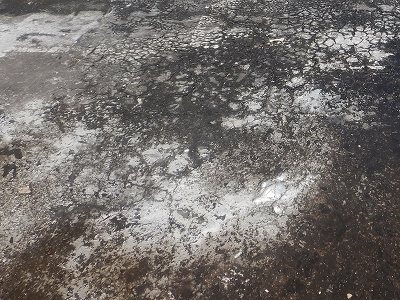
Roof coverings exceeded expected service life, with cracks, bubbled textures, and undulations from prolonged UV exposure.

Water ponding on low‑slope roofing surfaces contributed to repeated moisture intrusion.
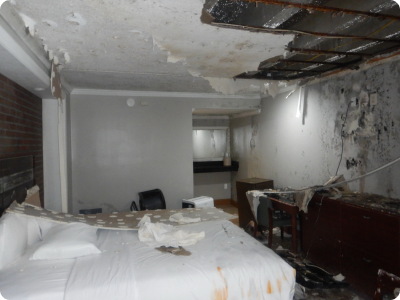
Ceilings, walls, and flooring in multiple guest units exhibited stains, delamination, and suspected biological growth.
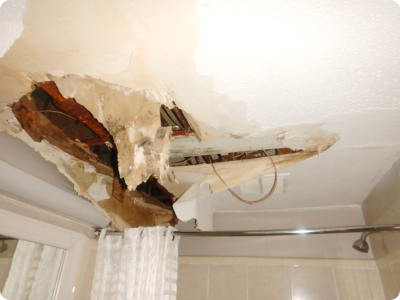
Plumbing leaks and inadequate ventilation in bathrooms exacerbated interior humidity and condensation.
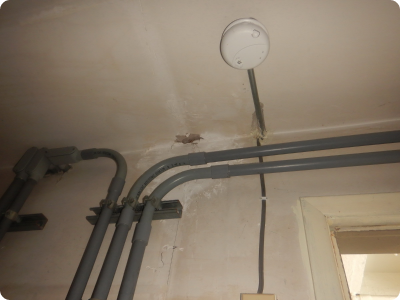
Historical repairs were inconsistent, leaving vulnerabilities unaddressed.
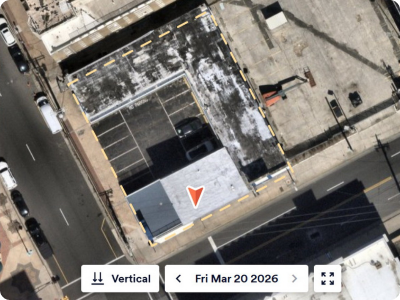
Aerial image showing extensive dark spots in several areas of the roof
Repair Strategy
- Roofing System: Age-related deterioration and drainage deficiencies identified. Strategy included targeted replacement of compromised roof sections and improved drainage design. These observations helped transaction stakeholders understand anticipated repair timing, potential replacement costs, and future ownership obligations associated with the roofing system.
- Building Envelope: Moisture intrusion through construction deficiencies required sealing breaches and reinforcing protective coatings.
- Structural Systems: Moisture-related sagging and delamination required reinforcement and remediation to ensure long-term reliability.
- Interior Systems: Ventilation improvements and plumbing repairs recommended to reduce condensation and humidity-related damage.
- Remediation Planning: Phased repair strategies developed to address roofing, envelope, and structural deficiencies, aligned with capital planning and guest safety.The resulting repair priorities provided prospective ownership with a clearer understanding of anticipated capital expenditures following acquisition.
Conclusions
- The Property Condition Assessment provided transaction stakeholders with an objective understanding of existing building conditions, deferred maintenance, and anticipated repair needs to support informed acquisition decisions.
- Forensic Investigation distinguished systemic deterioration from storm‑related impacts.
- Engineering analysis validated concerns about roof drainage, envelope breaches, and interior humidity.
- Remediation planning focused on phased repair strategies to restore reliability and improve resilience.
- Engineer of Record Services ensured compliance with building codes and supported implementation of remediation strategies.
Why This Matters
Property Condition Assessments provide buyers, sellers, lenders, and investors with an independent engineering evaluation of a property’s physical condition before a commercial real estate transaction. By identifying deferred maintenance, documenting existing deficiencies, and highlighting anticipated repair obligations, a PCA helps reduce uncertainty, support negotiations, and improve investment decisions.
Evaluating Engineering Partners?
We can provide representative redacted reports that demonstrate
our documentation approach, technical analysis structure, and
reporting methodology.